
This Week’s ABC
Advice of the Week: 3 actionable strategies for communicating tradeoffs like a pro.
Breakthrough Recommendation: 1 tool I’ve found incredibly useful to frame decision making
Challenge: Try the tool in 5 minutes
📖 Advice: 3 Tactics for Communicating Tradeoffs
After weeks of work, I made my recommendation.
It was based on data, informed by research, and backed by receipts.
I knew the tradeoffs inside and out:
- One product had all the bells and whistles—open source, future-proofed—but required a massive internal investment in staffing and capabilities.
- Another had fewer features but offered FedRAMP compliance for our public sector needs, albeit at a higher cost with vendor lock-in.
Then I had to communicate those tradeoffs.
Communication of tradeoffs is an essential skill.
Distilling complexities into simplicity to align understanding is the skill behind this, coupled with quantitative and qualitative analysis (mixing product requirements, user research, and business skills).
Unless you’re the CEO and ultimate decision maker, you will oftentimes be in the position of communicating tradeoffs and justification for your decision making.
This process taught me three invaluable lessons about how to communicate tradeoffs effectively when making decisions like this.
3 Strategies for Communicating Tradeoffs
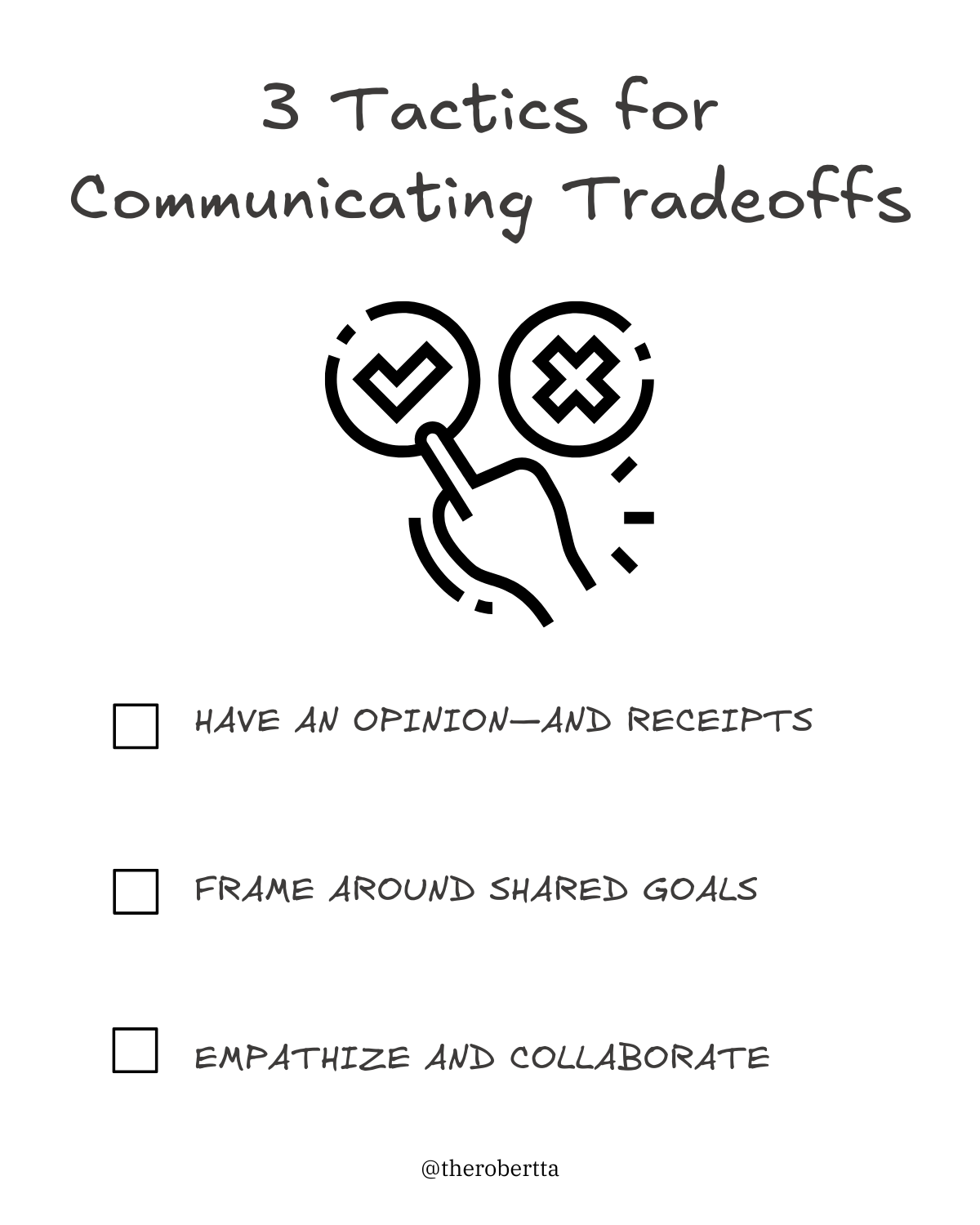
1. Have an Opinion—and Receipts
When you’re making a tough call, people generally want to know three things:
- How much value is there, and what’s the cost?
- Do you understand the landscape?
- Are you the right person to make this decision?
Questions 2 and 3 are really implicit questions. Only very radically candid executive teams may ask questions 2 and 3 explicitly (rare).
All other teams, from my experience, really just want to get data points on whether you know your shit and/or whether you’re capable enough to be the decision maker.
Here’s how I did it:
Well the first step of discovery for something like this never changes—talk to customers.
Interview them.
Listen to the pain points.
Empathize with their experience.
Understand their requirements.
Document—EVERYTHING.
- Survey data from stakeholders on requirements was publicly available.
- Vendor demos, product capability assessments—these were also all documented publicly and transparently.
- My analysis, meeting notes, and tradeoff considerations were stored in one accessible page for all to see.
Why It Works:
Transparency builds trust.
When you show your work and make your thought process available, people may not always agree with your decision—but they’ll respect how you got there.
2. Frame Around Shared Goals
I anchored every discussion on what mattered most to the organization:
- Long-term sustainability.
- Value versus cost over time.
- Compliance for public sector clients.
- Balancing developer experience with business priorities.
Instead of saying, “We can’t have both,” I framed it as:
“If we prioritize the open-source solution, we’ll be slow to build the internal capabilities to innovate faster long-term but delay FedRAMP compliance for potentially over a year.”
“If we choose the FedRAMP-compliant product, we’ll get to market faster but face feature limitations and vendor lock-in which may limit our architectural flexibility and speed.”
Why It Works:
Framing tradeoffs in terms of shared goals shifts the focus from what you’re sacrificing to what you’re achieving as a team. It unites teams around a common purpose instead of fueling debates over individual preferences.
3. Empathize and Collaborate
Making a decision in a conservative, high-stakes environment meant navigating a lot of emotions.
Some stakeholders were hesitant about the risks.
Others were frustrated by the fact that there was a decision making process at all—we were going to slow by their eyes.
Instead of shutting down those concerns, I acknowledged them:
“I know the open-source option means more work for your team. Let’s talk about how we can support that transition.”
“I understand the compliance concerns with the first product. Let’s map out the timeline and risks to address them proactively.”
“I know we’re going slower than we would all like, and I also know this is a big decision that intersects with our long term product strategy so taking the time to get confident about the decision is key.”
Then, I invited input:
Why It Works:
Empathy shows people you value their perspective, and collaboration turns skeptics into allies.
When people feel heard, they’re more likely to back your decision—even if it’s not their first choice.
Because they were involved, so they will better understand your perspective and decision.
“In any moment of decision, the best thing you can do is the right thing, the next best thing is the wrong thing, and the worst thing you can do is nothing.” –Theodore Roosevelt*“Are there edge cases I haven’t considered?”* “What additional data would make you feel more confident in this decision?”
Most people do not like change.
A Hiccup In The Process
After everything and after all was said and done and months of discussion and debate and back and forth, we finally moved ahead.
And then…
Everybody on the team working on this, could just feel how annoying this was. We were moving fast and now we’re halting progress again.
Sigh.
And then, we turned it all around with one simple and powerful question that I wish I had at the beginning.
And that brings us to the Breakthrough this week.
🚀 Breakthrough: Backcasting
Ultimately with the hiccup in implementation, the decision got elevated to the CTO at this point.
This was my simple question, posed to a big audience of our CTO, SVPs, and Sr. Staff ICs after a few big debates and discussions over two weeks.
It flips forecasting on its head.
In other words, imagine yourself in the desired future state and figure out the steps it took to get there.
Then do those.
We all knew where we wanted to be in 10 years.
Decision. Made.
So now if I were to start again, I would’ve framed more of my discovery process from this tactic called backcasting.
Don’t make it too complicated.
Here is one way to get started…
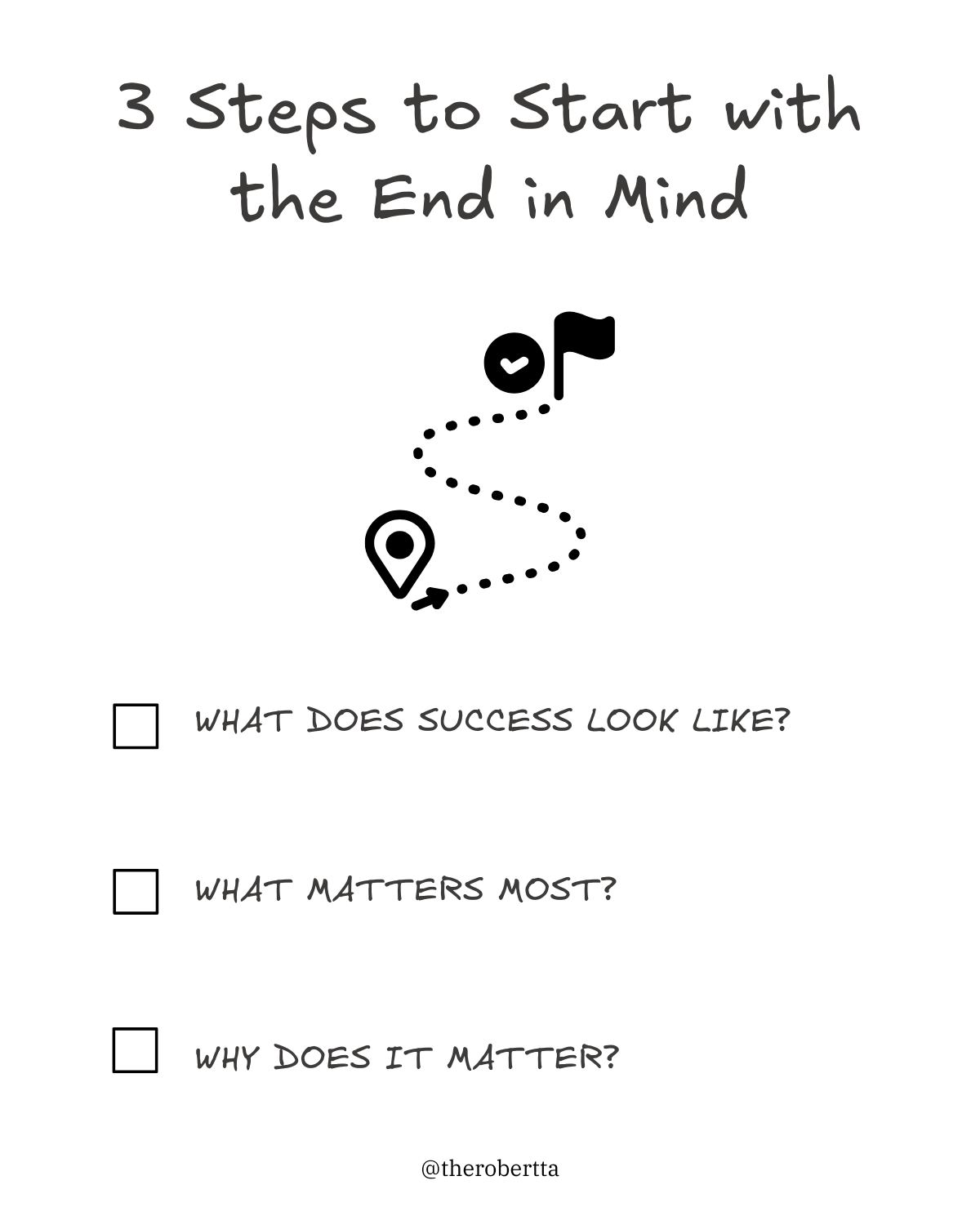
3 Steps to Start with the End in Mind
Imagine your ideal future and define it with crystal clarity.
Really sit there and visualize it.
- What does success look like? Paint a vivid picture of your long-term goal—ideally specific, measurable, and time-bound.
- What matters most? Identify the key factors or dimensions that define success, like technology, skills, capabilities, growth, impact, or more.
- Why does it matter? Anchor your vision in purpose to inspire buy-in, alignment, and commitment.
That’s it. Now you’ve successfully backcasted.
“Begin with the end in mind.” –Stephen R. Covey, The 7 Habits of Highly Effective PeopleAnd then the answer hit us all so obviously: it WILL HAVE to be a core capability in 10 years. “Hey, we all know what kind of company we want to look like in 10 years. In that kind of company, would this be a core capability or would it be a tertiary capability?” —RobertSome vendor issues stalled us in the implementation cycle. NOOOOOOO.
“If you don’t know where you are going, you’ll end up someplace else.” –Yogi BerraWe were back to the drawing board with an open decision again. NOOOOOOO.
A method in which the future desired conditions are envisioned and steps are then defined to attain those conditions, rather than taking steps that are merely a continuation of present methods extrapolated into the future.Progress was halted for MONTHS.
This is a form of backcasting:
After that question in that executive leadership meeting, EVERYBODY aligned on one answer.
Continue reading
Get the full newsletter, free.
Join founders and builders who read Self Aligned every week.
What I Did This Week
I have some big projects ahead of me: a transformation project that evolves the way we work across 1600 engineers, and picking apart a use case and delivering a personalized AI for my startup.
It’s been a bit overwhelming to juggle everything.
This week, I meditated everyday to help with the anxiety.
I decided to focus one session imagining the future for what I’m working on, and for my own personal life.
I followed the backcasting steps above.
I then realized what was overwhelming: the open decisions that felt so big and required much more discovery.
But the backcasting made those decisions irrelevant.
Then, my anxiety went away.
ABC Meditation Challenge
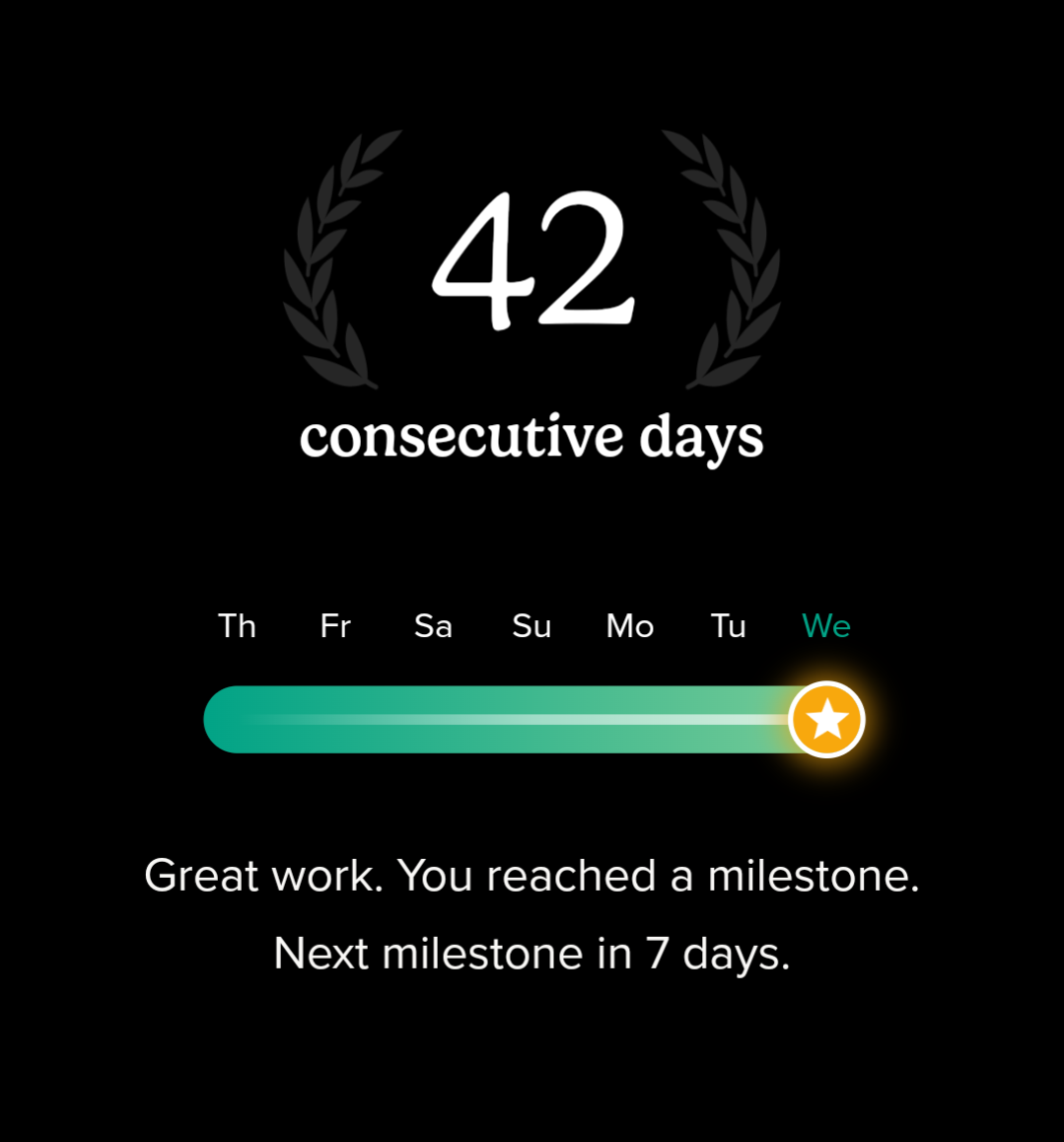
I’ve been meditating at least 30 minutes a day for 42 days straight! I started including this section in last week’s newsletter, and I can proudly say I’ve kept up the streak!
Join me on this challenge, I’ll be posting weekly updates.
And if you’re newer to meditation, check out this article I wrote with the EASIEST ways to get into meditation.
Let’s grow our mindfulness together (:
Challenge: Backcast At Least Once
This week, for one problem or project, try backcasting.
Try it for 5 minutes! It won’t take long.
Then share with me what you got out of it!
I read every email (:
You got this!
Liked this article?
💚 Click the like button.
Feedback or addition?
💬 Add a comment.
Know someone that would find this helpful?
🔁 Share this post.
ABCs for Growth by Robert Ta is a reader-supported publication. To receive new posts and support my work, consider becoming a free or paid subscriber.
P.S. If you haven’t already checked out my other newsletter, ABCs for Building The Future, where I reflect on my founder’s journey building a venture in the open. Check out my learnings on product, leadership, entrepreneurship, and more—in real time!
P.S.S. Want reminders on entrepreneurship, growth, leadership, empathy, and product?
Follow me on..