
The First Time I Named It
For a long time, I thought my struggles with marketing meant I wasn’t a “real” founder. And I was definitely not a good first time CEO, which I write more about here.
Real founders seemed to instinctively know how to pitch, sell, and generate buzz.
Real founders can go viral on command.
With that mental positioning in my head, I obviously felt like I was faking it. I didn’t know how to go viral.
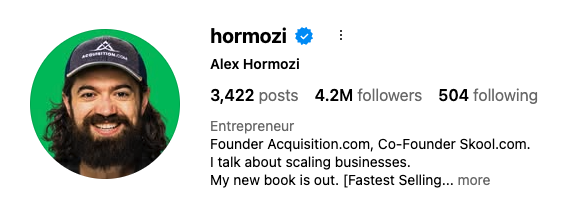
It wasn’t until I saw Alex Hormozi, who has millions of followers across socials, talk about how when he started making content he pledged 5 years of trying hard at it knowing that success comes from compound effort.
And then I saw Mr. Beast say that to make good YouTube videos, make 100 videos and try to get better.
To get better at the thing, go do the thing, and get better at doing the thing.
It wasn’t an identity thing like I originally laid out.
That single reframe changed everything.
Of course I can go viral, and build my brand. It just takes consistent reps like anything else. There is no magic. The magic is the effort.
“Just like anything else!”, I realized.
I recognized it then. My dear old friend.
Imposter Syndrome.
You were just wearing a different set of clothes, I barely recognized you!
Being self-aware and naming why you feel certain ways, is so key. Because then you can take the appropriate action to resolve your situation.
And I also realized, I was stuck in the Valley of Despair.
What’s that?
First, let’s start with how I view Imposter Syndrome.
This Week’s ABC…
📖 Advice:* *The Equation of Self-Doubt
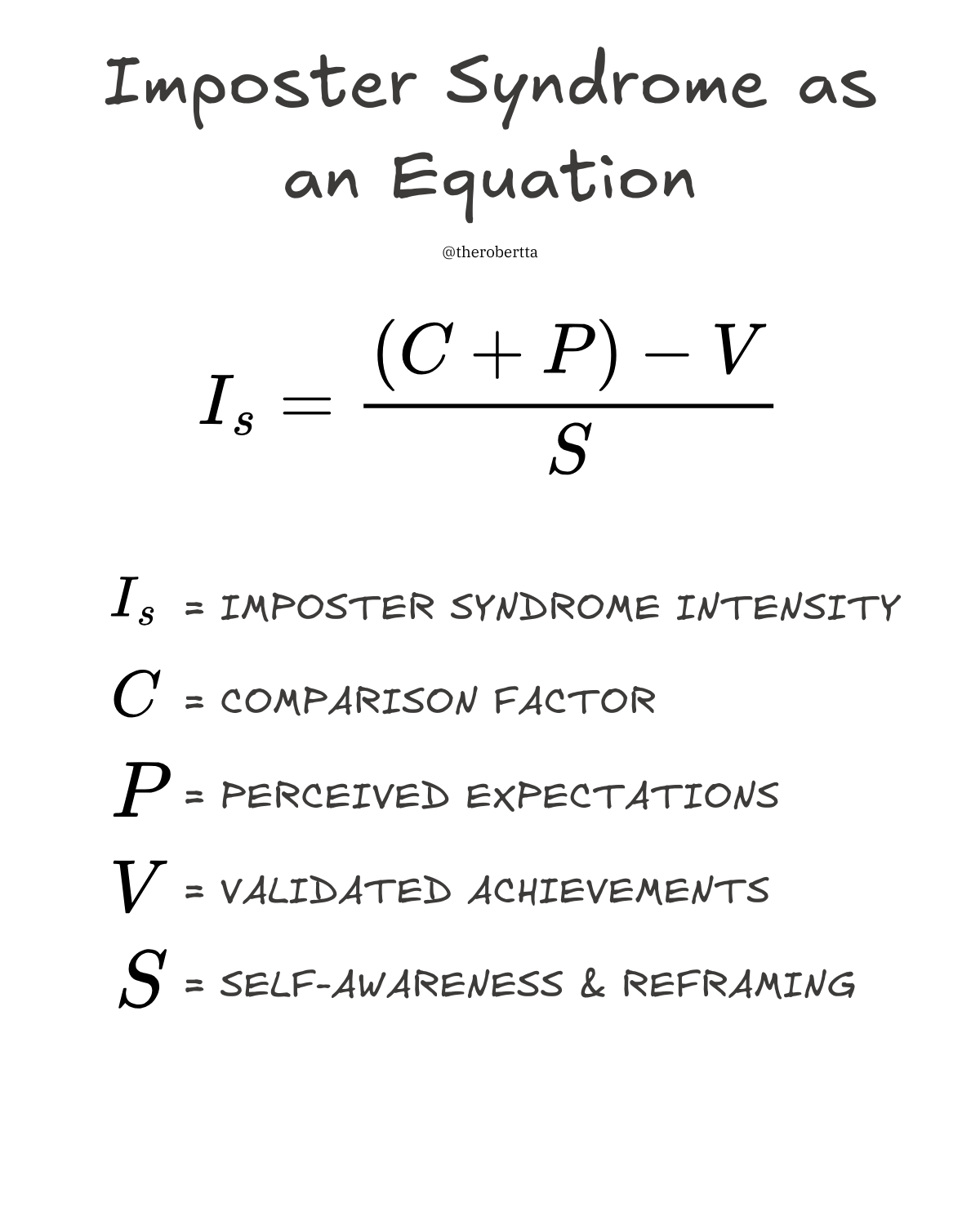
I like thinking about imposter syndrome like a math problem:
Imposter Syndrome Intensity = (Comparison × Perceived Expectations) ÷ (Validated Achievements × Self-Awareness & Reframing).
- Comparison (C): How much you measure yourself against others.
- Perceived Expectations (P): How high you set the bar.
- Validated Achievements (V): Evidence of your wins.
- Self-Awareness & Reframing (S): Your ability to catch imposter thoughts and reframe them.
When Achievements and Reframing rise, it shrinks.
I was comparing myself to Founders who figured out how to go viral.
I put my perceived expectations insanely high to start, instead of reframing that all content I put out now versus 5 years from now will just be reps.
Just like when I first learned any of the basics or fundamentals of my skills in product or architecture work—there’s a learning curve and I must embrace it.
And the best part?
Those levers are all in your control.
Building Armor Against Imposter Thoughts
With this pseudo math formula in mind, there are a few ways we can approach Imposter Syndrome knowing it’s really a sign that you’re in a period of discomfort that will lead to growth.
He says: “My first 500 videos didn’t deserve to get a million views.” And I finally saw the underlying pattern that’s driven me in my whole career:
Advice: The Equation of Self-Doubt
Breakthrough: The 5 Emotional Cycles of Change
Challenge: Reframe and go
When Comparison and Expectations rise, imposter syndrome grows stronger.
Stop comparing, start doing.
Then go do it.
Reframe in real-time.
🚫 “I don’t belong here.”
Seek and love discomfort.
The best leaders don’t avoid it—they chase it. Run into the discomfort, and you will find your better self.
And when my brain still won’t listen, I use one last weapon: the Smile File. Don’t measure yourself against the top 1%.
✅ “I’m in the middle of growth.”
If you feel like an imposter, you’re probably in the room that will stretch you most.
Ask instead: What can I do right now to contribute?
Continue reading
Get the full newsletter, free.
Join founders and builders who read Self Aligned every week.
The Smile File
The Smile File is simple: a folder where I save every kind message, thank-you note, or small win I’ve earned.
I got this one from a friend of mine, an awesome tech executive leader.
Here’s a sneak peek, my favorite one is at the top of when someone first told me they adopted a dog because of my past dog-son Nibbler being such a great boy.
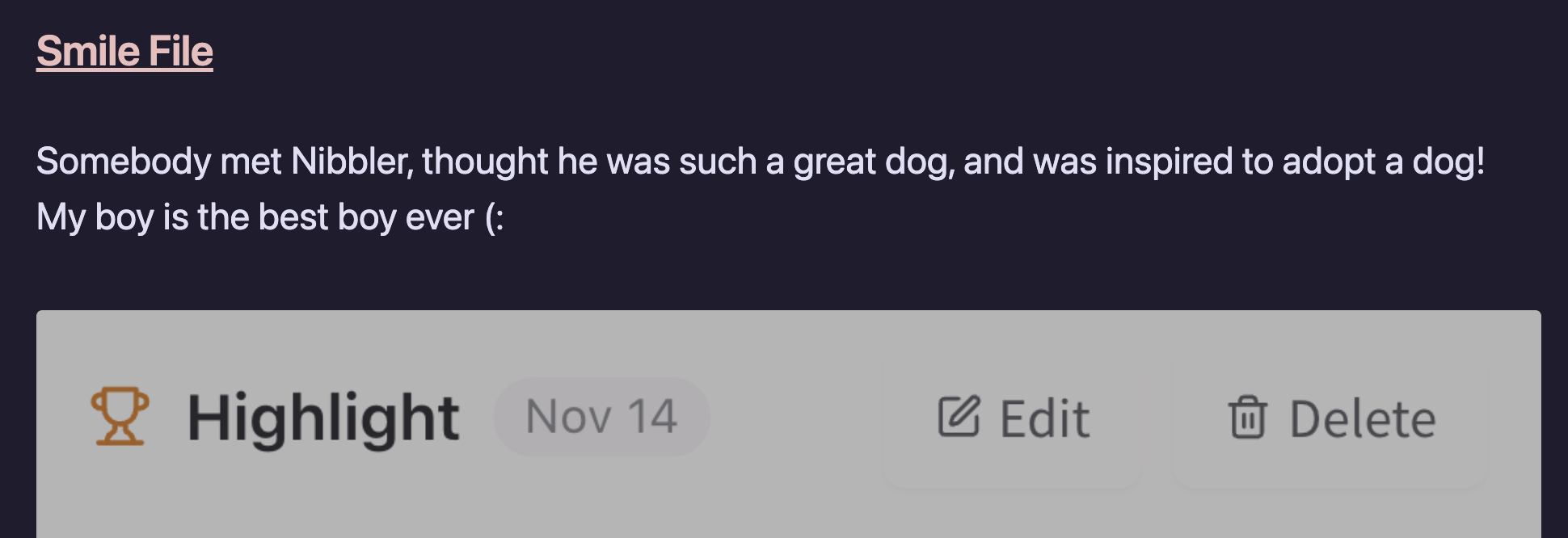
When doubt strikes, I open it.
It reminds me I’ve done hard things before (like parent a puppy into an inspirational dog or bootstrapping to 1M in revenue or getting a technical patent), and I’ll do them again.
At first, it felt awkward—like bragging to myself. I didn’t like that.
But over time, it’s become my anchor.
Instead of spiraling deeper into doubt, I remind myself that I’ve already proven I can grow.
My Smile File is the definitive antidote to Imposter Syndrome getting the best of me.
***🚀 Breakthrough: ***The Valleys We All Walk Through
Don Kelley and Daryl Conner’s “Emotional Cycle of Change” is basically the founder’s life story:
- Uninformed Optimism: “We got this!”
- Informed Pessimism: “Wait, this is harder than I thought.”
- Valley of Despair: “Maybe I should quit.”
- Informed Optimism: “Finally, traction.”
- Success & Fulfillment: “We made it.”
Anytime you’re doing ANYTHING new, you are going through these 5 stages.
Starting a book? Running? Hitting the weights? New tool or technology? New hard problems?
Anything new.
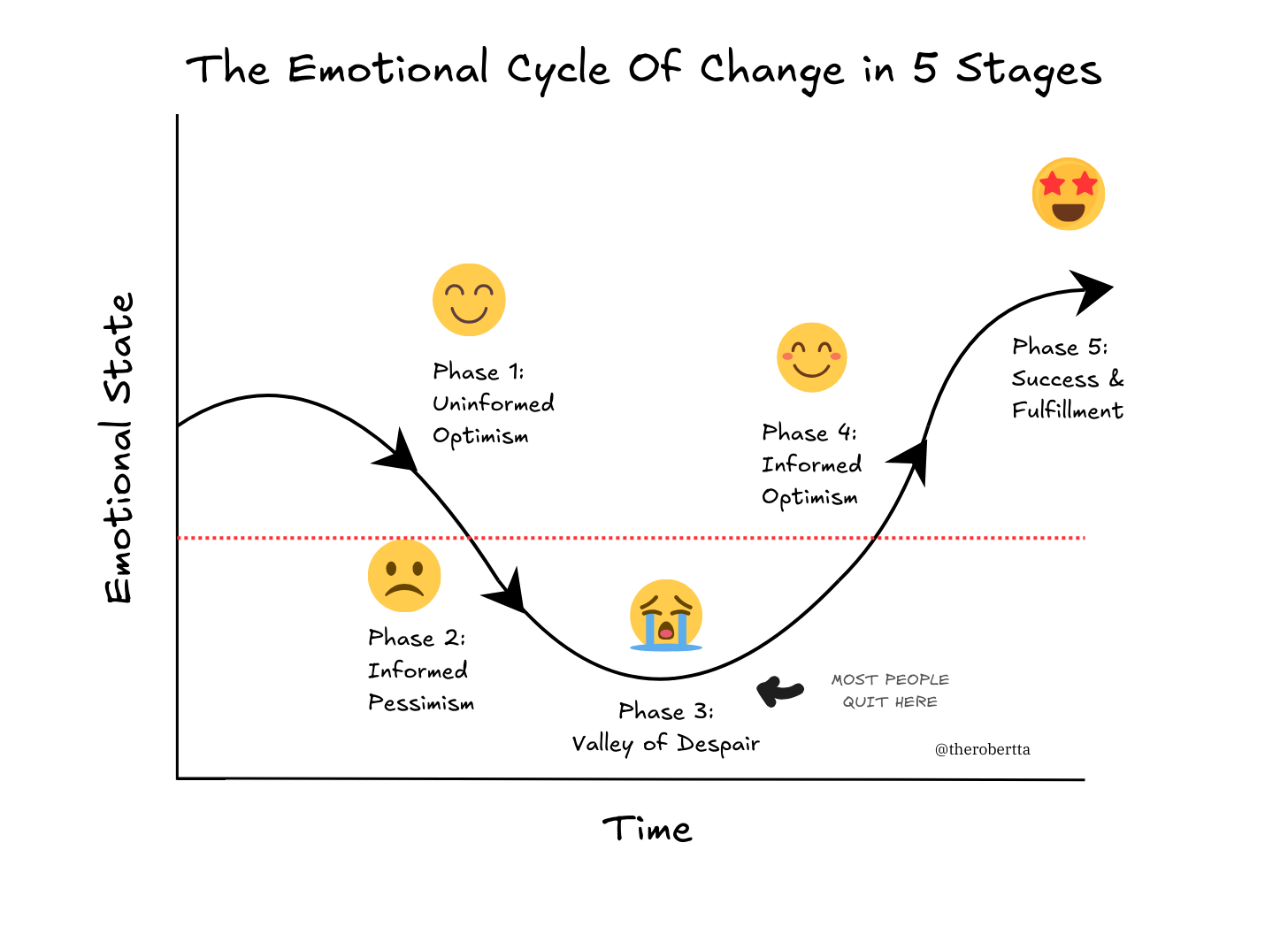
Imposter syndrome hits hardest in the Valley of Despair. That moment when your skills don’t yet match the challenge, and quitting feels easier than pushing through.
I spent months in that valley with marketing.
I thought I’d never get it.
But instead of quitting, I decided to treat marketing like any other skill: books, courses, practice, repetition.
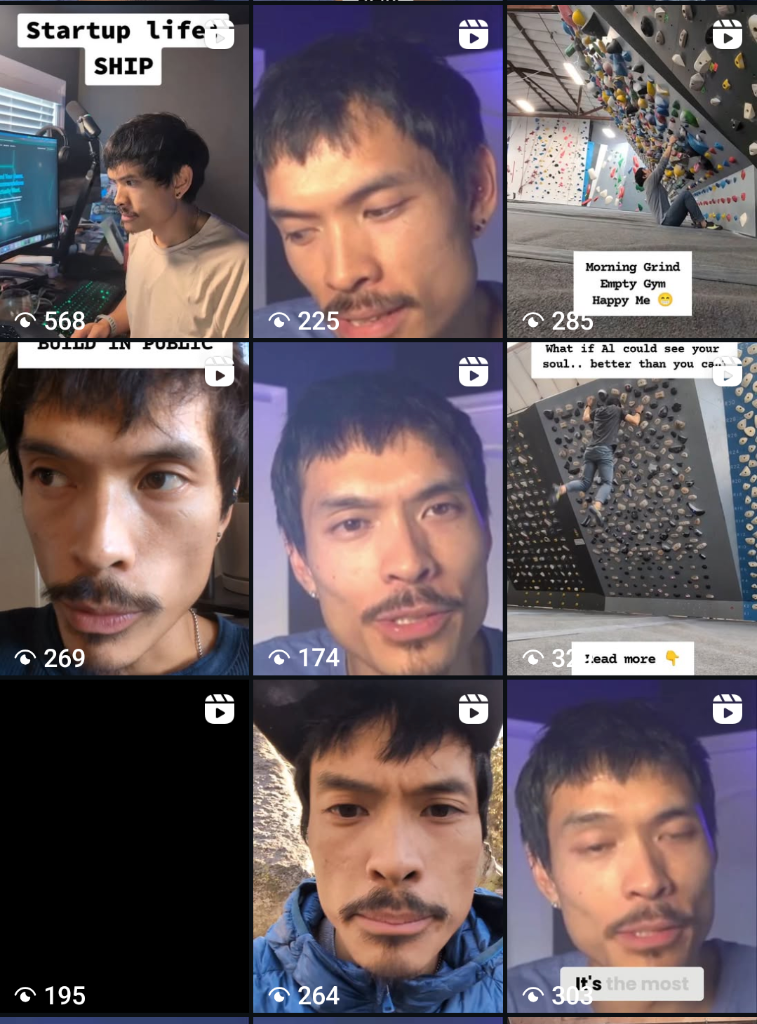
At first, I was terrible—like F-minus terrible.
I was getting only a few hundred views pretty consistently and wasn’t really sure what was working and not working:
Now, I’ve been able to get 1000s+ of views:
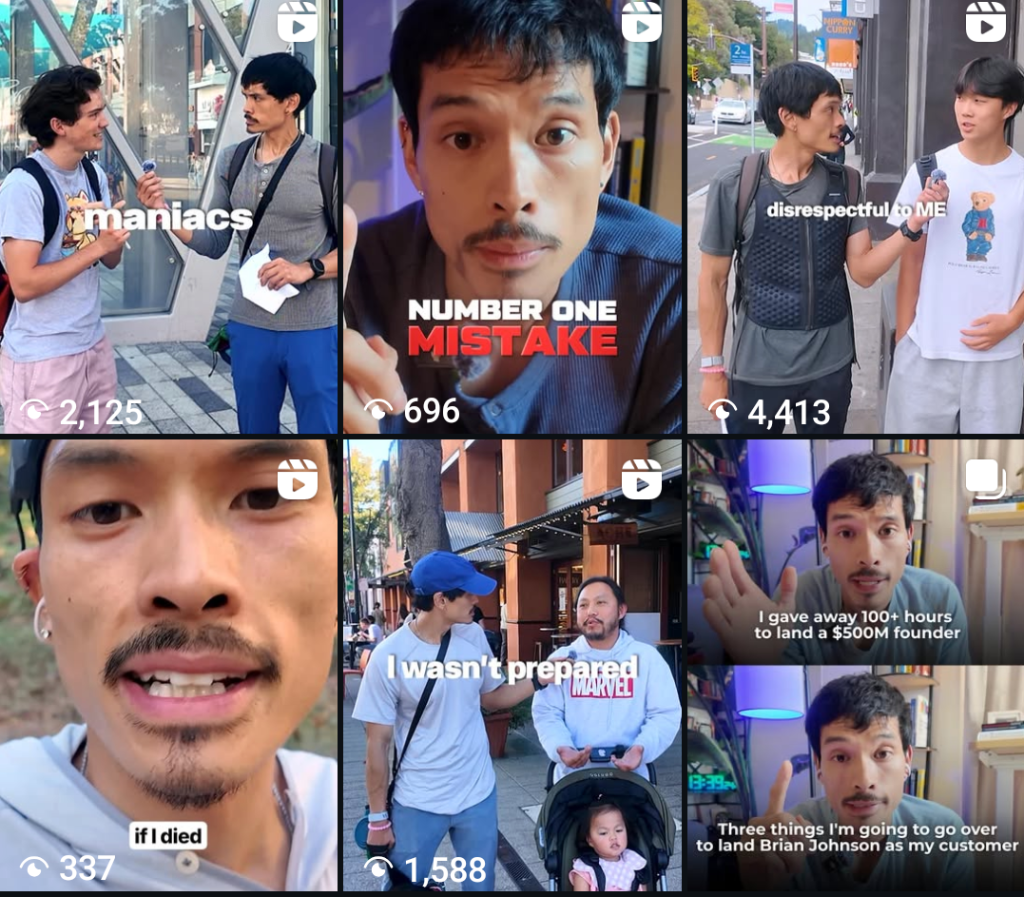
Today, I’d give myself maybe a D+.
Not great.
But definitely not an F-.
And every piece of content I publish gets me a little closer to a C, then a B, then eventually an A.
Each content is just another rep, where I learned to do better.
Next stop, 10k+ views, then 100k+ views, then 1M+ views.
That’s the lesson: you don’t need to be perfect.
You just need to keep trying hard, and do better than before over time.
💥 Challenge: Reframe
Imposter Syndrome isn’t the enemy.
Quitting because of it is.
Whatever you’re avoiding is really where growth lives.
The skill you avoid, the role you don’t feel ready for. The better you lives on the other side of trying hard anyway.
Every entrepreneur, every person, battles imposter syndrome.
So the next time you catch yourself thinking, “I don’t belong here, I don’t know what I’m doing.”…
Smile.
Because you will.
“I can’t”
becomes
“I can’t, yet.”
And every rep you put in proves you will one day.
I believe in you.
Go get after it.
Liked this article?
💚 Click the like button.
Feedback or addition?
💬 Add a comment.
Know someone that would find this helpful?
🔁 Share this post.
Self-Aligned by Robert Ta is a reader-supported publication. To receive new posts and support my work, consider becoming a free or paid subscriber.
P.S. If you haven’t already checked out my podcast, ABCs for Building The Future, where I reflect on my founder’s journey building my AI startup in the open and invite awesome guests building the future to talk about theirs. Check out my learnings on product, leadership, entrepreneurship, and more—in real time!
P.S.S. Want reminders on entrepreneurship, growth, leadership, empathy, and product?
Follow me on..