
“I never said that!”
“That’s not what I meant!”
“You’re not listening to me!”
Sound familiar?
We’ve all been there—locked in a frustrating loop where talking doesn’t seem to help.
How does this usually get resolved?
From my past experience…
- Option 1: I double down, repeating myself louder, as if volume will suddenly make my point clear. (Silly younger me)
- Option 2: I get frustrated and shut down, assuming the other person just doesn’t get it. (Silly younger me)
- Option 3: I walk away, but the tension lingers, turning into resentment or over-analysis of what I should have said. (VERY silly younger me)
None of these actually solve the problem—they just kick the misunderstanding further down the road.
Saying it intentionally.
This is where Nonviolent Communication (NVC) changed everything for me.
I learned how to get clarity, reduce conflict, and actually be heard.
Let’s break it down.
🔤 This Week’s ABC
Advice: How I stopped reacting and started communicating with clarity using NVC.
Breakthrough: The book that changed how I handle difficult conversations.
Challenge: A 5-minute exercise to defuse tension in your next tough conversation.
📖 Advice: The 4 Steps for Better Communication
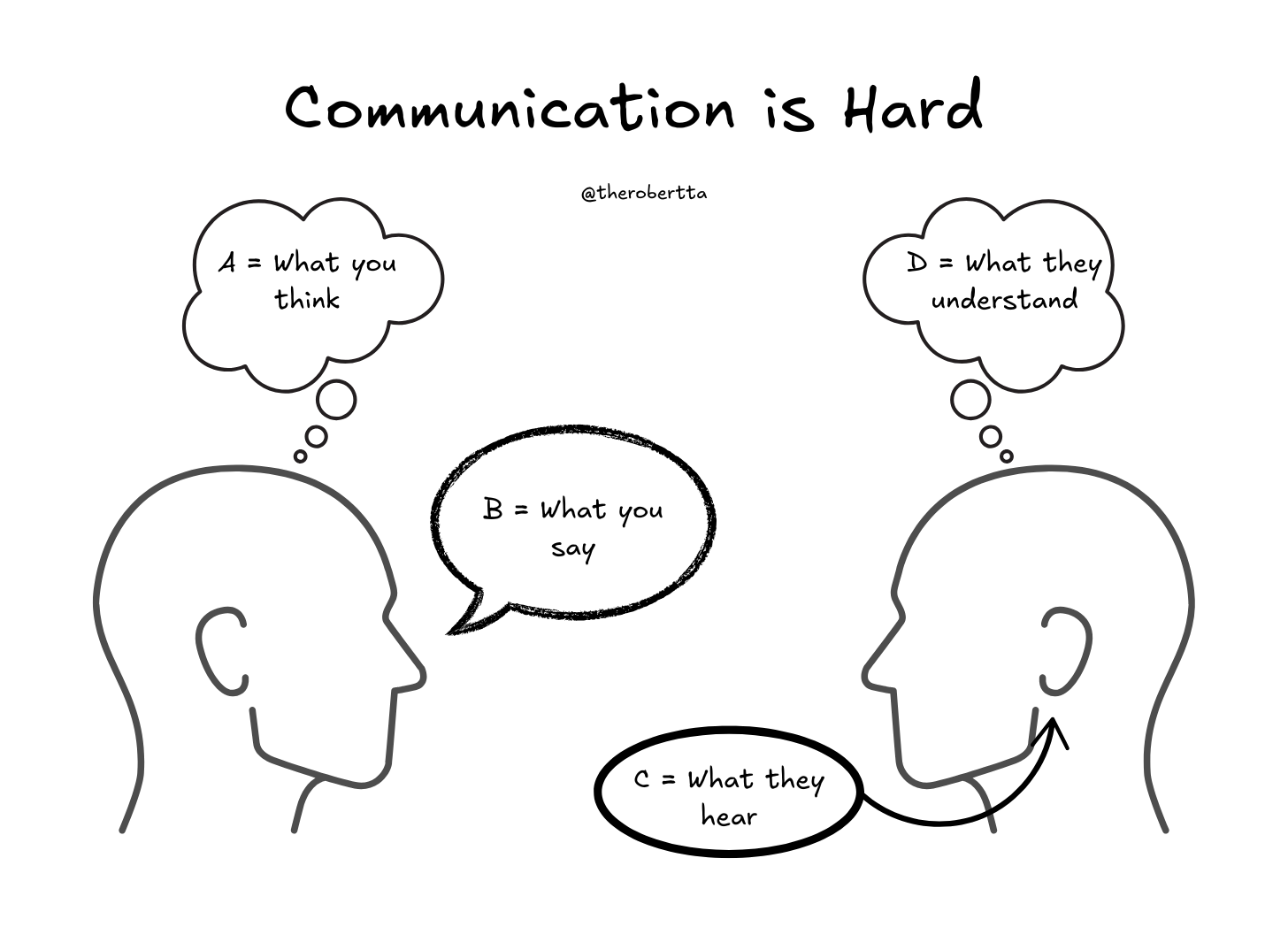
Why Communication is So Hard: The Formula for Misunderstanding
Most conflicts don’t come from bad intentions.
They come from bad communication.
If you’ve ever felt like you’re speaking clearly but not being understood, you’re not alone. The gap between what you mean and what the other person hears is often wider than we realize.
Let’s break it down into a pseudo-mathematical formula. This is how I think about it:
The Ideal Communication Formula (What We Want)
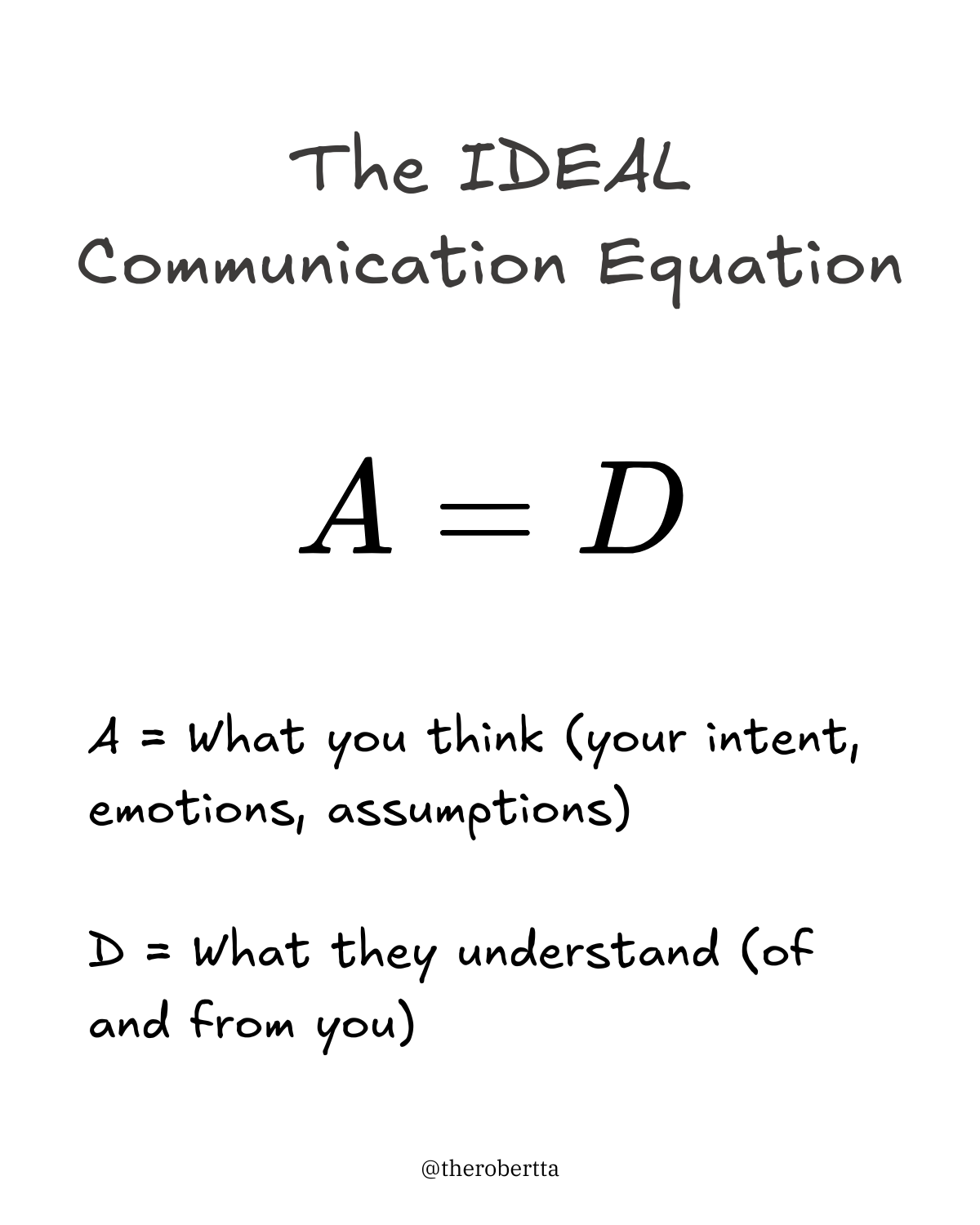
Ideally: A = D
Where:
- A = What you think (your intent, emotions, assumptions)
- D = What they understand (of and from you)
If A = D, then communication is perfect—but in real life, this rarely happens.
“We are dangerous when we are not conscious of our responsibility for how we behave, think, and feel,” –Dr. Marshall B. RosenbergFor years, I thought the key to being understood was explaining myself better.
Turns out, it’s not about saying more—it’s about saying it differently.
The Reality: Why A ≠ D
In most conversations, distortion creeps in at multiple levels. Let’s add in other factors, B and C:
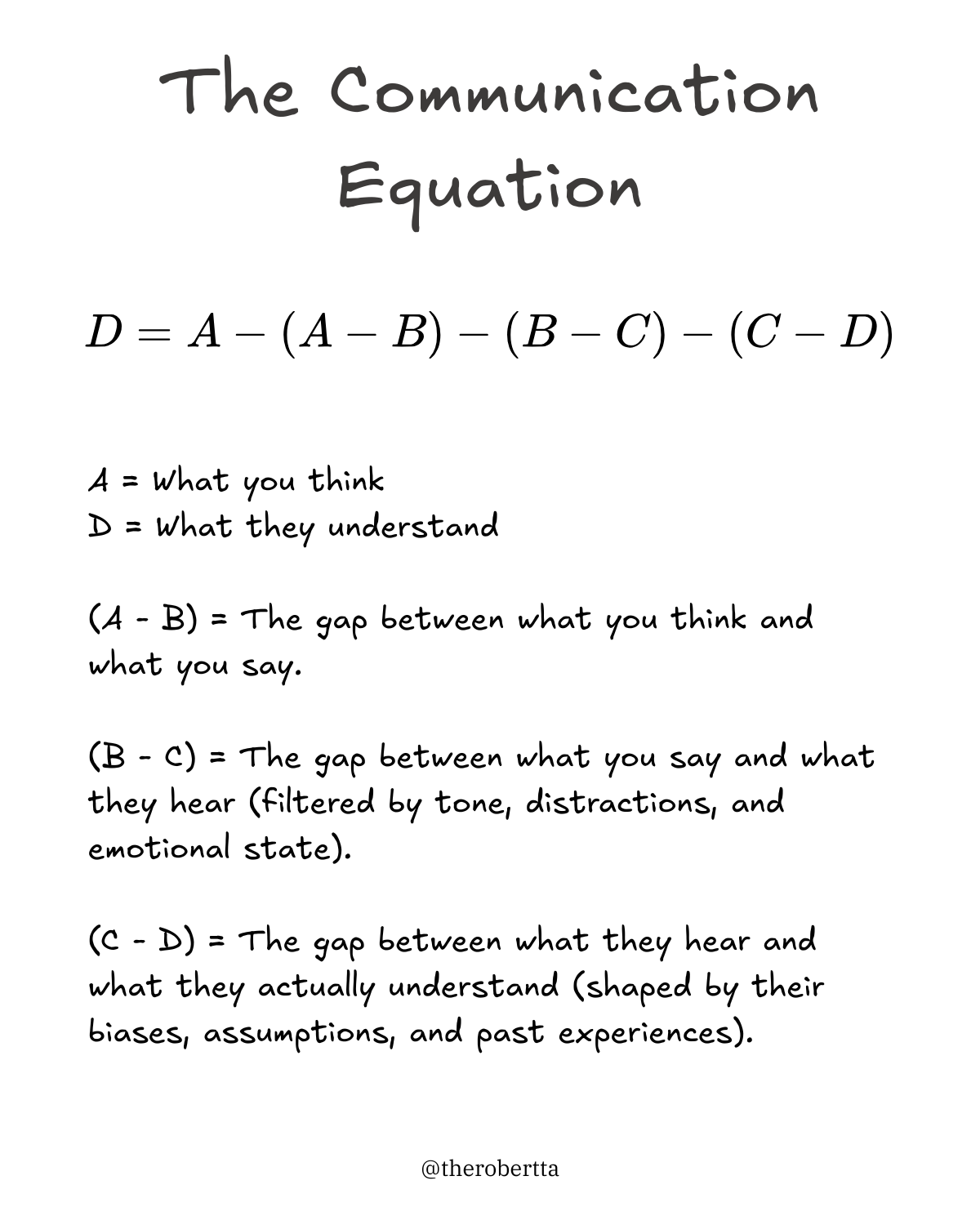
Where:
- A - B = The gap between what you think and what you say (words can never fully capture your thoughts).
- B - C = The gap between what you say and what they hear (filtered by tone, distractions, and emotional state).
- C - D = The gap between what they hear and what they actually understand (shaped by their biases, assumptions, and past experiences).
Each of these subtractions pulls D further away from A, meaning what they understand is often far from what you intended.
- Internal filters: Your emotions, biases, and assumptions shape what you say.
- Expression limits: Words can only capture so much of your intent.
- Listener’s filters: Their emotions, past experiences, and biases color how they hear you.
- Cognitive processing: Their brain makes meaning based on their own understanding—not necessarily yours.
By the time your words travel through both your filters and theirs, they might not even resemble what you actually meant.
- We make assumptions instead of observations. (“You never listen to me!”)
- We state opinions as facts. (“You’re being rude!”)
- We mix up feelings with thoughts. (“I feel like you don’t care about me.”)
Nonviolent Communication aids this process by giving you a four-step formula to express yourself clearly, avoid misunderstandings, and actually get your needs met.
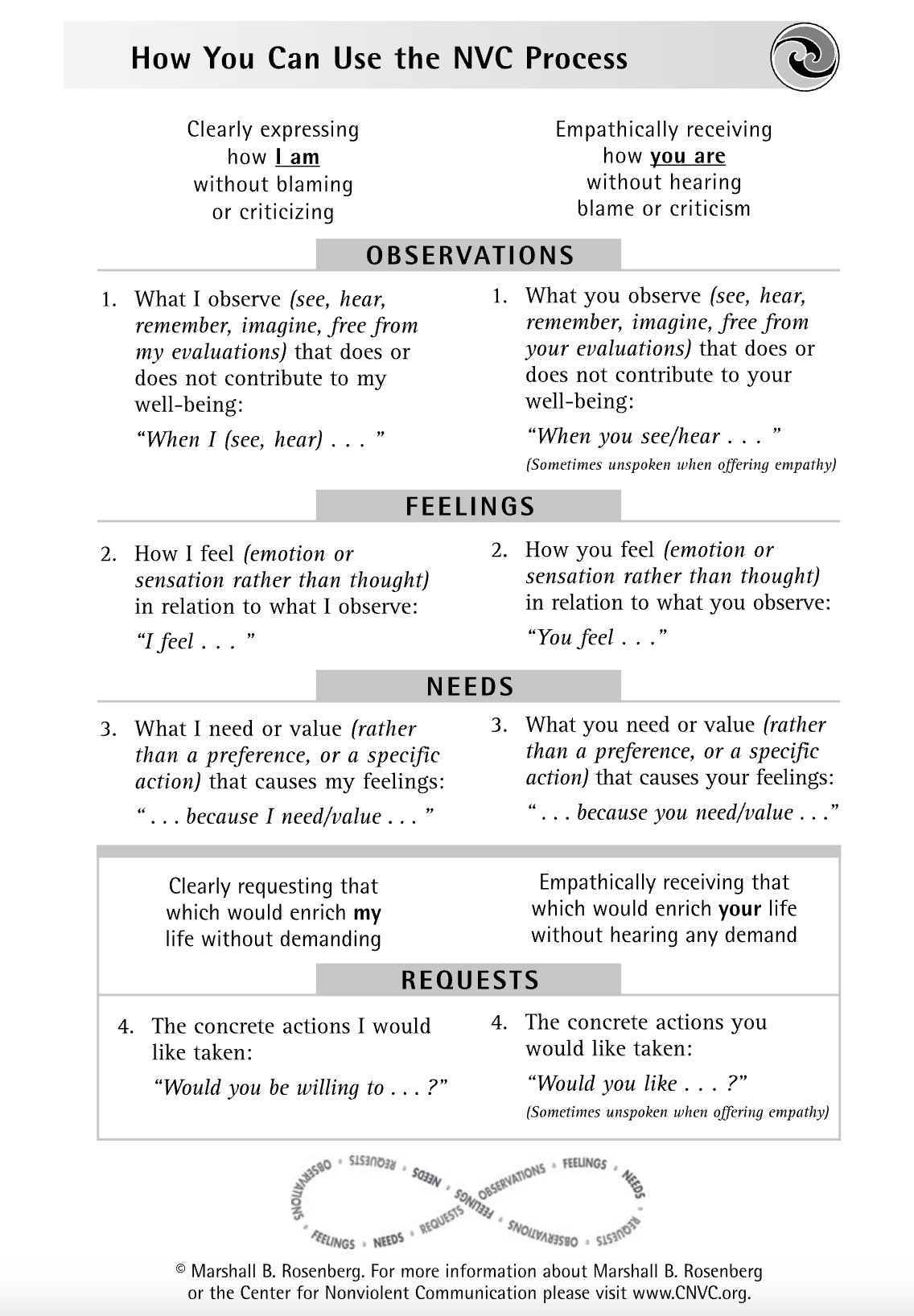
The Four Steps of Nonviolent Communication (NVC)
1. Observation (Just the facts, no judgment)
❌ “You always interrupt me.”✅ “I noticed that you started speaking while I was still finishing my thought.”
Why?
- Facts reduce defensiveness.
- Judgments trigger resistance.
2. Feelings (Own your emotions, don’t blame)
Why?
3. Needs (Clarify what actually matters to you)
❌ “You need to stop being so rude.”✅ “I need to feel heard when I speak.”
Why?
Instead of criticizing behavior, focus on what you actually need.
Each step introduces distortion because of: And bad communication usually follows this pattern:
Here’s a useful worksheet from Dr. Marshall B. Rosenberg, the author of NVC.
And here are some examples in writing (for accessibility).
❌ “You make me so frustrated.”✅ “I feel frustrated when I’m interrupted.”
Nobody makes you feel anything. Naming your feelings takes ownership of your response.
Continue reading
Get the full newsletter, free.
Join founders and builders who read Self Aligned every week.
4. Request (Make a clear, do-able ask, not a demand)
❌ “You should stop talking over me.”✅ “Would you be willing to let me finish before responding?”
Why?
A request invites cooperation.
A demand invites resistance.
When I applied this framework, conversations stopped feeling like fights.
And here’s the wild part: this works everywhere.
At home with a roommate: “When I see dishes in the sink (observation), I feel overwhelmed (feeling) because I need order in my space (need). Would you be willing to clean up after eating? (request)”
With your partner: “When you don’t respond to my texts for hours, I feel anxious because I need reassurance. Could we agree to check in during busy days?”
With your colleagues: “When timelines change suddenly, I feel stressed because I need time to adjust my workload. Could we agree to more advance notice, when possible?”
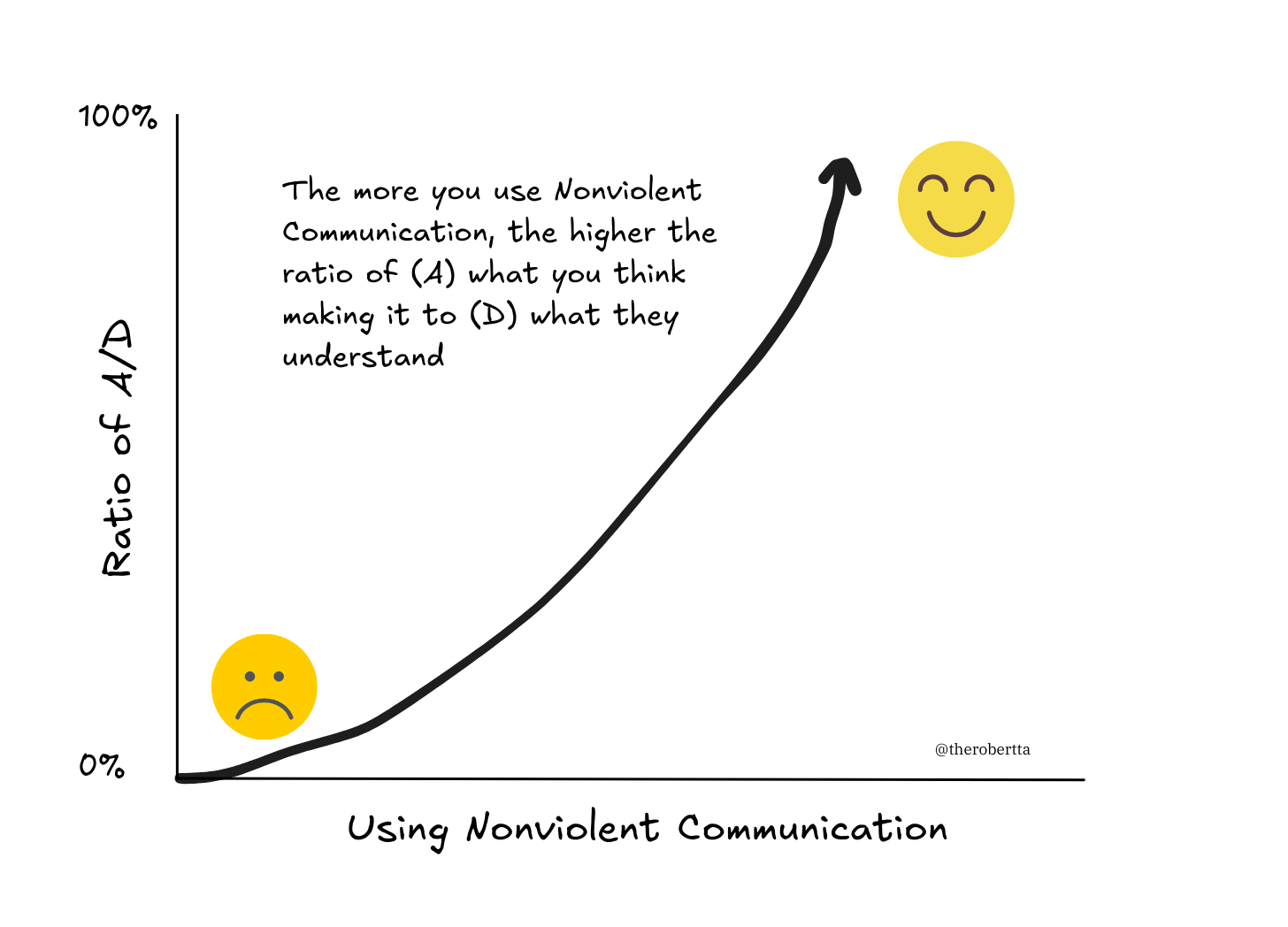
Key Takeaway:
Use the Nonviolent Communication framework. It will make your life better. Trust me.
*🚀 Breakthrough: *Nonviolent Communication
“Every criticism, judgment, diagnosis, and expression of anger is the tragic expression of an unmet need.” –Dr. Marshall B. Rosenberg
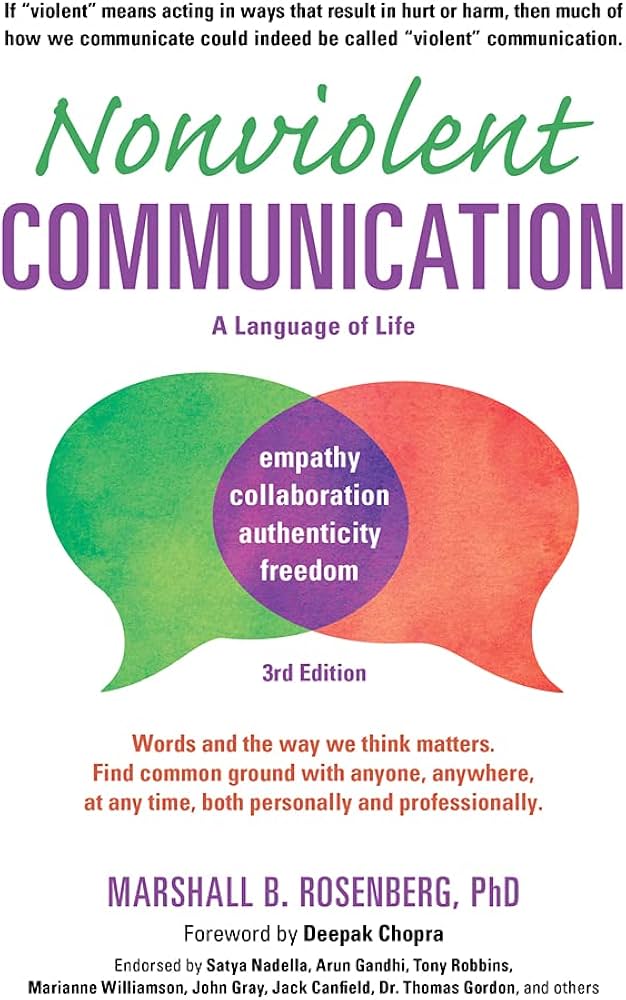
Why I love this book
This book helped me stop reacting and start responding intentionally.
It taught me how to ask for what I need without guilt and handle conflict without making it worse.
When communication is done right, it’s a bridge to deeper understanding and better relationships.
But knowing the framework is one thing—applying it in the heat of the moment is another.
For that, I recommend previous tools I covered here and here.
💥 Challenge: 5 Minute Challenge
Here’s your challenge for the week:
The next time you feel misunderstood or frustrated in a conversation, pause and try this:
- Take a deep breath.
- Use the four steps of NVC to reframe what you want to say.
- Deliver it calmly and see how the other person responds.
That’s it.
Five minutes.
One small shift in how you communicate can change the outcome of an entire conversation.
And potentially, your life and career trajectory.
You got this.
Liked this article?
💚 Click the like button.
Feedback or addition?
💬 Add a comment.
Know someone that would find this helpful?
🔁 Share this post.
ABCs for Growth by Robert Ta is a reader-supported publication. To receive new posts and support my work, consider becoming a free or paid subscriber.
P.S. If you haven’t already checked out my other newsletter, ABCs for Building The Future, where I reflect on my founder’s journey building a venture in the open. Check out my learnings on product, leadership, entrepreneurship, and more—in real time!
P.S.S. Want reminders on entrepreneurship, growth, leadership, empathy, and product?
Follow me on..