
This Week’s ABC
📖 Advice: Differences for Men and Women in Emotional Flooding
→ Disclaimer:* I will say upfront, I will be making broad generalizations on gender in the following writing. Not all men and not all women fit so neatly in words in an email, and there are always exceptions—I understand that. I know gender can be a sensitive topic. I want to say not everyone fits in boxes, and we’re all unique snowflakes. And snowflakes are also made of water, so it’s important to look at the science and research on “our water” and appreciate each others’ differences. Always happy to learn more information and evolve my perspective and knowledge. Moving on…*
Emotional flooding is “a sensation of feeling psychologically and physically overwhelmed during conflict, making it virtually impossible to have a productive, problem-solving discussion.”
In the book Emotional Intelligence, Daniel Goleman explains how childhood experiences lay the foundation for how men and women handle emotions in adulthood.
How their triggers for emotional flooding and the subsequent reactions are shaped, all come from childhood.
Nature and nurture.
The section “His Marriage and Hers: Childhood Roots”, from the book, breaks it down with a simple story:
*“When girls play together, they do so in small, intimate groups, with an emphasis on minimizing hostility and maximizing cooperation, while boys’ games are in larger groups, with an emphasis on competition. *
One key difference* can be seen in what happens when games boys or girls are playing get disrupted by someone getting hurt. *
If a boy* who has gotten hurt gets upset, he is expected to get out of the way and stop crying so the game can go on.*
If the same happens among a group of girls* who are playing, the game stops while everyone gathers around to help the girl who is crying.*
This difference between boys and girls at play epitomizes what Harvard’s Carol Gilligan points* to as a key disparity between the sexes: boys take pride in a lone, tough-minded independence and autonomy, while girls see themselves as part of a web of connectedness. *
Thus boys are threatened by anything that might challenge their independence, while girls are more threatened by a rupture in their relationships.”
The author goes on to make the reasonable argument that the difference in societal schooling in emotions develop different skills.
Girls: “adept at reading both verbal and nonverbal emotional signals, at expressing and communicating their feelings”
Boys: “adept at minimizing emotions having to do with vulnerability, guilt, fear, and hurt”
It’s interesting to note that Goleman found hundreds of studies have found that on average women are more empathic than men. That tracks.
Another data point that shows how our skills can be largely based on our environment—in this case societal and cultural biases creeping into how we treat kids growing up.
Nature & Nurture Affect Emotional Communication and Expectations
What I learned is that how you were treated—as a boy or girl—growing up (in simplistic terms) affects your expectations and skill in emotional communication.
In childhood…
Boys are taught to suppress their emotions, particularly vulnerability. (I learned this the hard way) Crying? That’s for girls. Fear? Shake it off. Boys quickly learn to equate emotional expression with weakness, especially in cultures that prize toughness over tenderness.
Girls, on the other hand, are encouraged to explore and articulate their feelings. Caregivers often engage daughters in emotional conversations, teaching them to process and express feelings while also prioritizing harmony.
By the time boys and girls grow up, these emotional “rules” are hardwired into how they respond to stress, conflict, and connection.
In adulthood…
For men, emotional expression, validation, and connection are NOT normalized. Shutting down or stonewalling, or refusal to cooperate or communicate, becomes a defense mechanism (to protect independence and perceived threat to it).
For women, emotional expression, validation, and connection are normalized. There is that innate desire, need, and expectation for that connectedness through emotional connection.
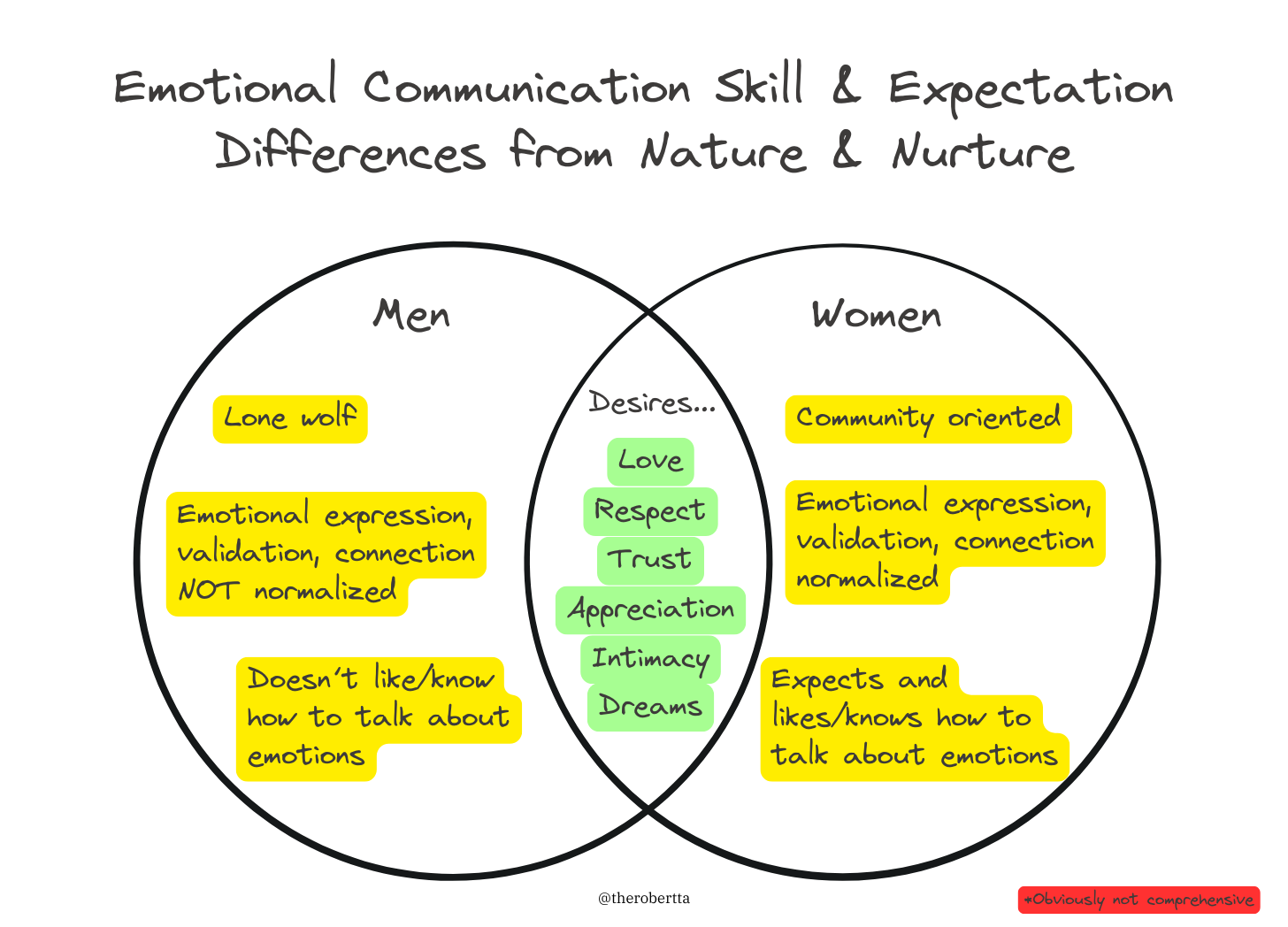
Neither approach is better or worse—they’re just different responses to the same human needs.
Now, what can we do with this knowledge?
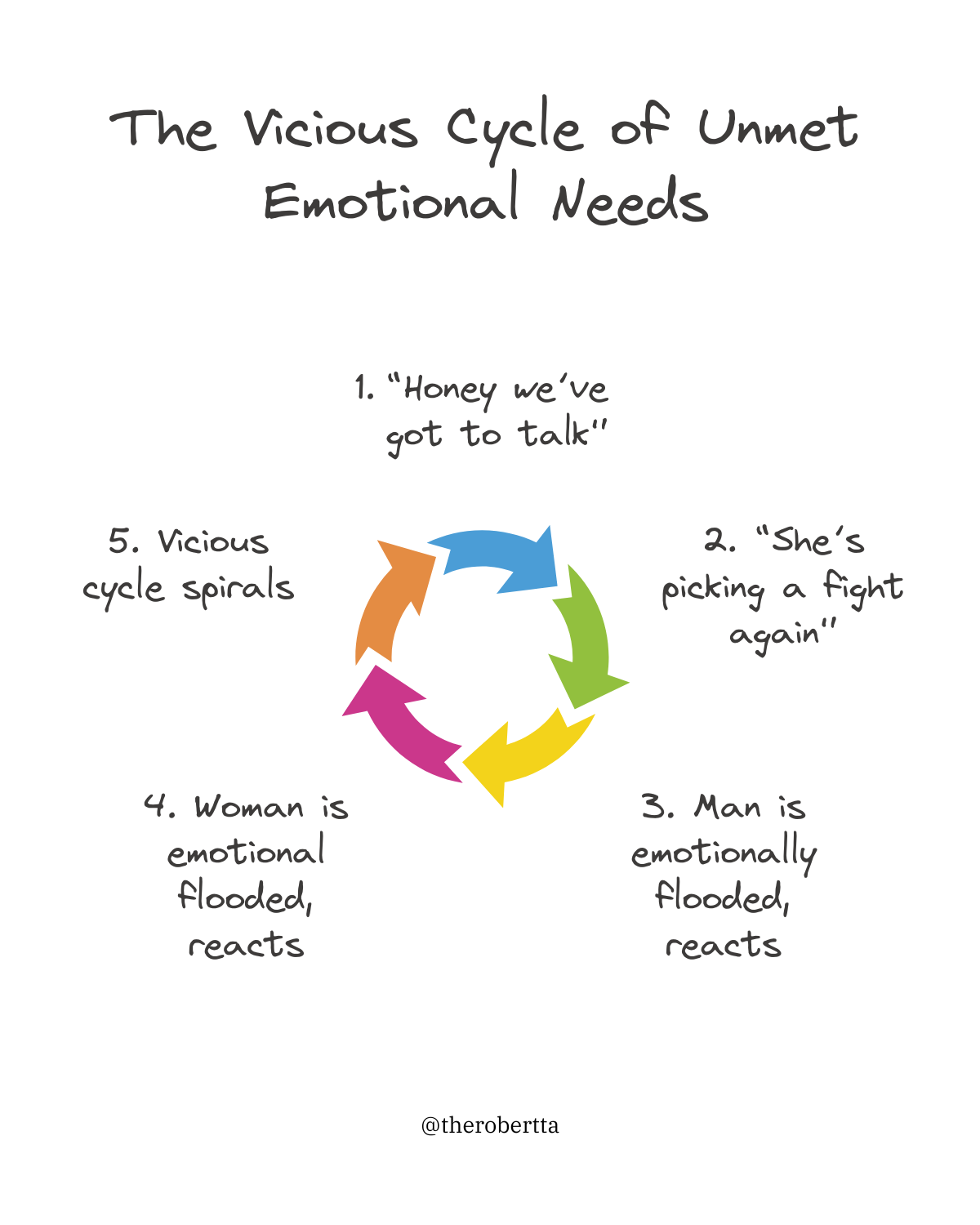
Another insight from the book is that because of the above, people can find themselves unconsciously getting into vicious cycles of differences in emotional communication skill and expectations in relationships (the book focuses on intimate relationships, but I can see parallels to other relationship types too).
Basically the cycle goes like this:
- Woman says something like: “Honey, we’ve got to talk.” → not triggered (yet)
- Man thinks something like: “She’s picking a fight again” → triggered and emotionally flooded
- Man stonewalls and ignores → because he flooded and feels fear
- Woman gets further triggered and emotionally flooded
- Man gets further triggered and emotionally flooded
- And the cycle continues and spirals
Then as the cycle worsens, it gets more difficult to make each other feel heard and seen.
If this sounds familiar to you, you might be interested to know this is quite normal. Understanding and accepting that is key to progressing.
It was very validating for me to read about this from research and not just anecdotes.
This really solidified the concept for me that men and women (right or wrong, good or bad) are different in our emotional communication skills and expectations due to differences in our nature and nurture.
There can be individual specific differences of triggers or expressions of flooding depending on unique experiences and backgrounds.
It’s a systemic thing, and it’s an individual thing—there are patterns to be aware of, and we are unique so learning to spot the patterns within ourselves and others is key.
This insight has applications at home, and at work, to be a better person and leader.
→ Takeaway: Implement strategies for healthier emotional communication in all relationships.
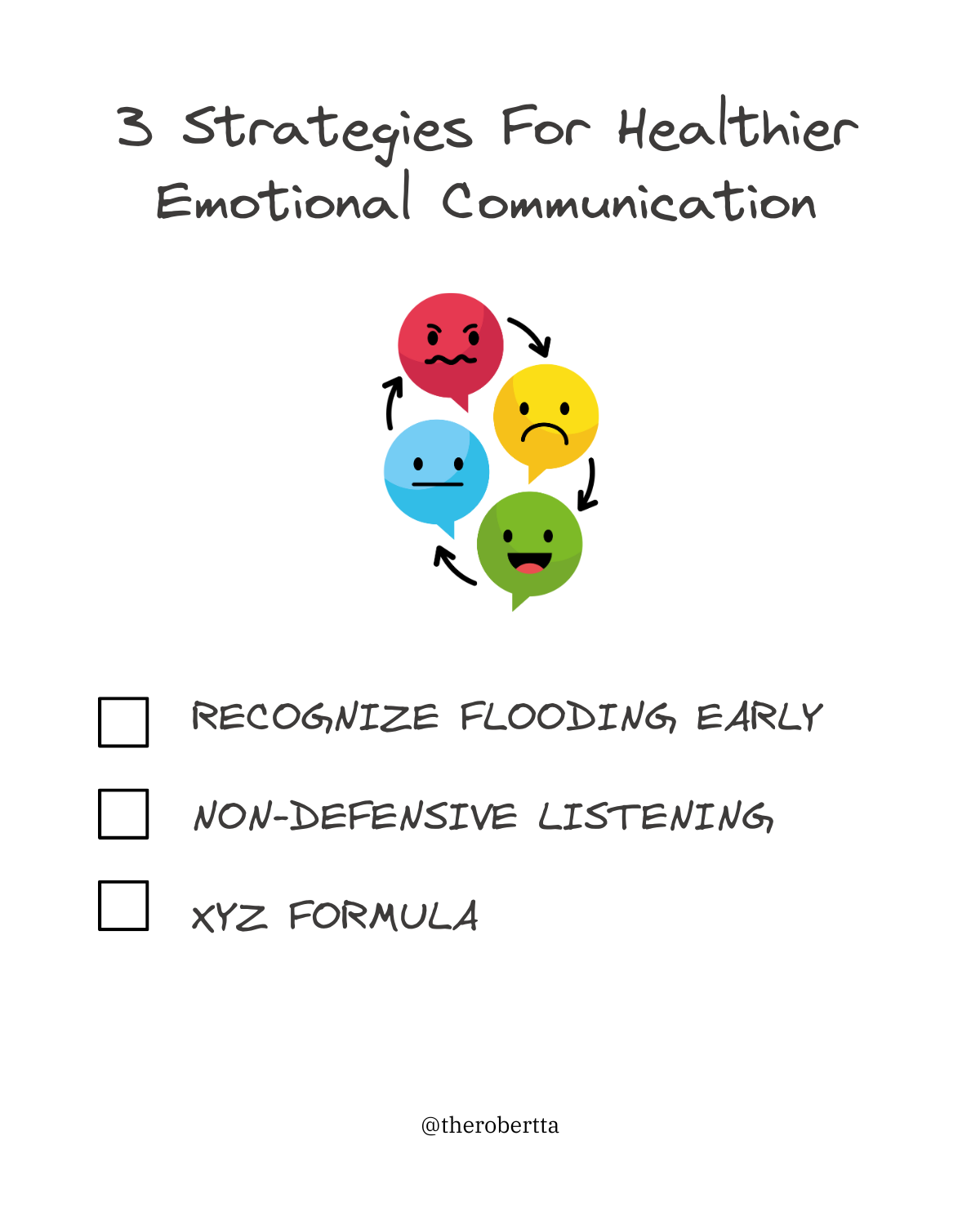
3 Strategies For Healthier Emotional Communication
“What lies behind us and what lies before us are tiny matters compared to what lies within us.” —Ralph Waldo Emerson→ Takeaway: Understanding the differences, helps us be better people and better leaders.
Advice: Nature affects our emotional resilience and expectations.
Breakthrough: Explore Tonglen Meditation from a game changing book.
Challenge: Spend 5 minutes practicing a transformative meditation this week.
→ Takeaway: boys are taught to be lone wolves, girls are taught to be community oriented.
1. Recognize Emotional Flooding Early
Understand the physiological expressions of your emotions—racing heart, clenched fists, a feeling of “shutting down”—to best understand yourself and others.
How to Apply:
- When tension rises, take a physical or mental “pulse check.”
- If you feel overwhelmed, pause the conversation and agree on a time to revisit the issue.
- Use the 20-minute rule: disengage for at least 20 minutes before engaging again. Focus on breathing. Try some of the methods from my part 1 newsletter.
2. Practice Non-Defensive Listening
Conflict escalates when we hear a partner’s complaint as an attack. The trick is to separate the emotion from the message. Often, the person raising the issue just wants to feel heard and validated.
How to Apply:
- Mirror back what the other person says. For example, “You feel frustrated because I didn’t follow through on what I committed to. Is that right?”
- Acknowledge emotions even if you don’t agree with the point. For example, “I can see this has been frustrating for you.”
- Focus on their feelings, not their tone. Imagine their frustration as an underline, not an attack on you.
3. Communicate with the XYZ Formula
Instead of escalating a complaint into a personal attack, focus on specific actions and their impact. The “XYZ Formula” keeps the discussion constructive:“When you do X, I feel Y, and I’d like Z instead.”
How to Apply:
- Replace “Why weren’t you thoughtful?” with: “When you didn’t communicate with me that you’d be late, I felt unimportant. I’d really appreciate a heads-up next time.”
- Practice this during low-stakes moments to make it second nature in heated situations.
🚀 Breakthrough: Search Inside Yourself
![Search Inside Yourself: The Unexpected Path to Achieving Success, Happiness (and World Peace) [Book]](https://substack-post-media.s3.amazonaws.com/public/images/aba61ebd-e93d-4c56-b20a-a31992881770_665x1000.jpeg)
Tan, an early Google engineer, combines mindfulness, emotional intelligence, and neuroscience in a way that’s easy to understand and incredibly practical.
He breaks down how we can all train our brains to stay calm, focused, and aware—so we can respond more effectively to life’s challenges.
Tan has an awesome goal of bringing about world peace with the emotional regulation and mindfulness techniques he writes about.
I’ve recommending his book before in my previous newsletter, and it has a particular suggested meditation which is why I’m recommending it again for today’s newsletter.
Emotional flooding disrupts your ability to listen, think, or respond clearly. It’s the emotional equivalent of a short circuit.
Awareness (as with everything) is the first step to breaking the cycle.
Continue reading
Get the full newsletter, free.
Join founders and builders who read Self Aligned every week.
Compassion Training—Tonglen Meditation
One of the gems I discovered in Search Inside Yourself was Tonglen Meditation—a powerful tool for reframing emotional challenges and building resilience.
In Tonglen, you breathe in discomfort and transform it into compassion or clarity as you exhale.
It’s the exact opposite of what we instinctively do—run from negativity—but that’s why it’s so transformative.
Here’s where we go deeper: Tonglen Meditation.
Tonglen is a Tibetan practice that flips our usual mindset.
Instead of avoiding discomfort, you breathe it in.
Counterintuitive? Maybe.
Transformative? Absolutely.
Why It’s Awesome:
- Transforms Stress: Instead of running from negative emotions, Tonglen teaches you to face them head-on and reframe them as opportunities for growth.
- Boosts Empathy: This practice builds your capacity to connect with others by cultivating compassion in real-time.
- Practical for Leaders: Whether dealing with a heated team meeting or personal stress, Tonglen provides a tool to process emotions constructively.
Tonglen Meditation in 6 Steps
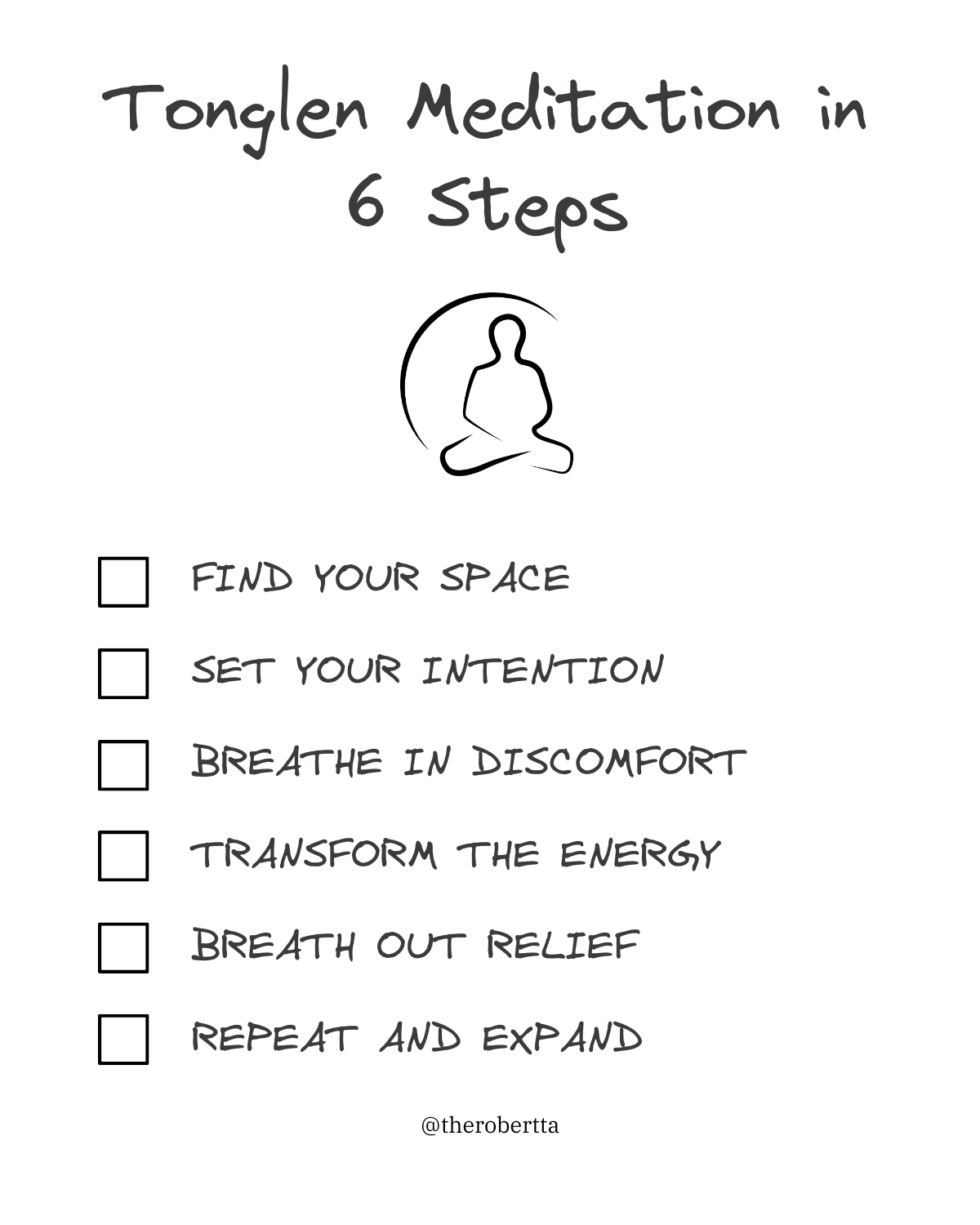
Note: This is abbreviated from the book, if you want the full section from the book you can email me and I’ll send it to you. Or grab it from the library!
Step 1: Find Your Space
- Choose a quiet, comfortable spot where you won’t be interrupted. Sit in a chair or on the floor with your back straight but relaxed.
- Close your eyes or keep them softly focused on a single point.
Step 2: Set Your Intention
- Take a moment to identify a challenge, emotion, or situation you want to work with.Example: Frustration during a team meeting, anxiety about a project deadline, or a conflict with a loved one.
- Say to yourself: “I will transform this discomfort into compassion and clarity.”
Step 3: Breathe In the Discomfort
- Inhale deeply through your nose. As you do, imagine breathing in the discomfort, stress, or negative emotions.
- Visualize it as a thick, dark cloud entering your lungs. Stay present with it—don’t push it away.
Step 4: Transform the Energy
- Pause briefly after your inhale. Picture the dark cloud dissolving as it reaches your heart.
- Imagine your heart transforming the negativity into something positive—like calm, strength, or compassion.
Step 5: Breathe Out Relief
- Exhale slowly through your mouth. Picture yourself sending out light, warmth, or clarity to yourself and others.
- Visualize this as a bright, clean light spreading outward, replacing the dark cloud.
Step 6: Repeat and Expand
- Repeat this cycle for 5-10 breaths, staying focused on the transformation.
- If you’re ready, expand your intention. Breathe in not just your own discomfort, but the pain of others who might be experiencing something similar. Exhale relief and positivity for everyone affected.
This last expansion step is where most of the benefits come, for me. When I get emotionally triggered by a situation involving others, I use this meditation to relieve the flooding.
What I Did This Week
This week, I applied Tonglen meditation on a situation where I was thoroughly annoyed.
After just 5 minutes, I felt so much better.
So I thought, “Why not do another 5 minutes?”
So I did.
And I felt EVEN better.
💥 Challenge: Compassion Training in 5 Minutes
This week, I challenge you to try 5 minutes of Tonglen Meditation.
- Find a quiet space.
- Identify a challenge or emotion you’re facing.
- Practice breathing it in as smog and transforming it as you exhale.
That’s it.
No fancy setup or apps required.
Just you, your breath, and a commitment to growth.
You got this!
Know someone that would find this helpful? 🔁 Share this post.
ABCs for Growth by Robert Ta is a reader-supported publication. To receive new posts and support my work, consider becoming a free or paid subscriber.
P.S. Want reminders on growth, empathy, and leadership? Follow me on LinkedIn, Threads, and Twitter.