
This Week’s ABC
📖 Advice: The 1 Protocol I Wish I Knew 20 Years Ago
❌ They don’t think they’re “writers.”
❌ They’re afraid of what they’ll find.
❌ They’d rather “power through” their emotions.
But that’s the problem.
Unprocessed emotions are like a pressure cooker, waiting to blow up (that’s what I learned in therapy).
Turns out, writing is for anyone who wants to be…
✅ A better leader
✅ A clearer thinker
✅ Less of a reactive mess under pressure
Which, checks notes, should be everyone.
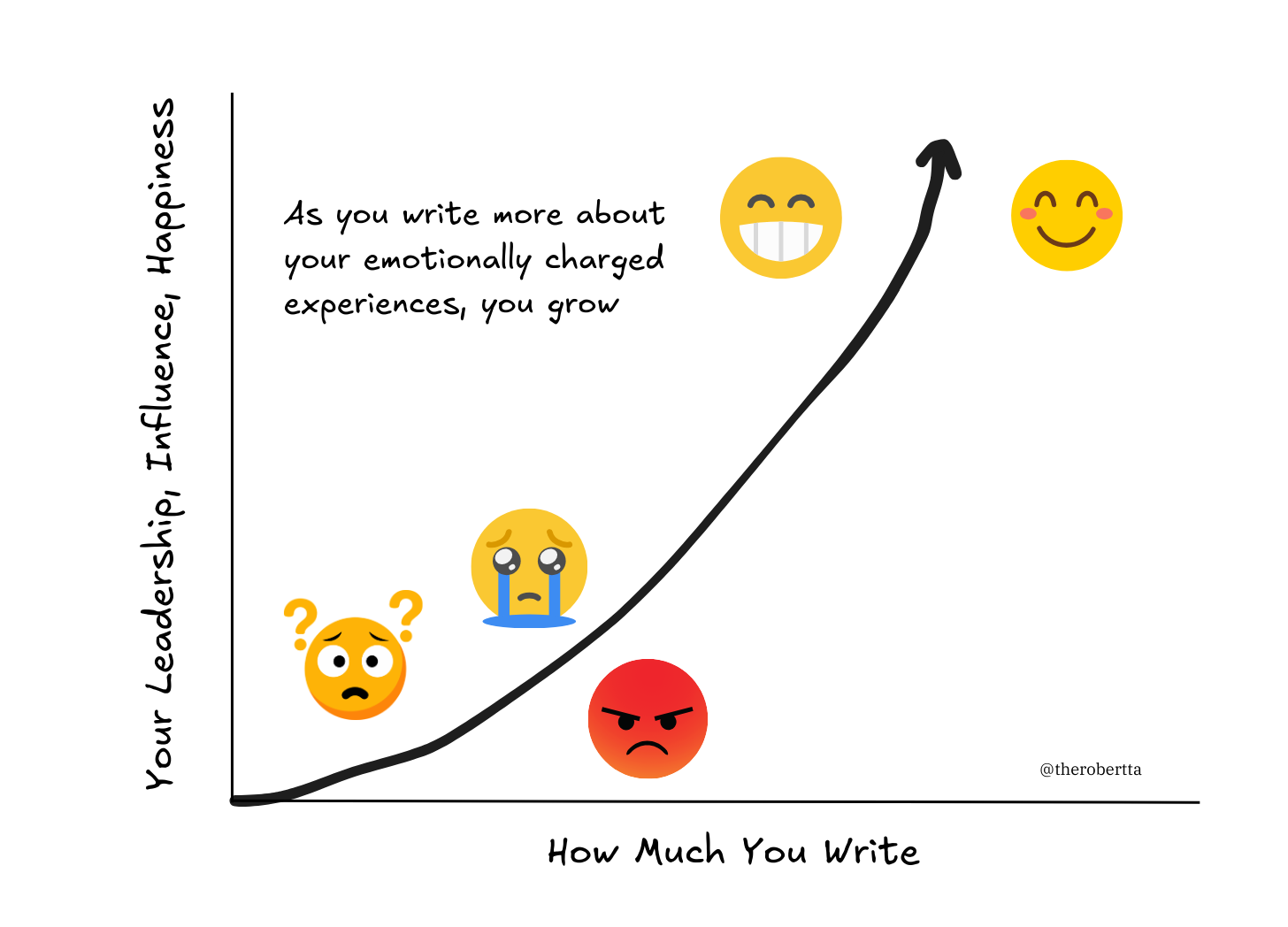
Here’s my favorite protocol to write through emotionally difficult times (and I find it works for intellectually challenging chaos too!).
The 4-Day Expressive Writing Protocol (Backed by 200+ Studies)
Dr. James Pennebaker, a psychology researcher, found that people who wrote about their most emotionally charged experiences for just four days saw…
- Lower stress & anxiety
- Stronger immune function (yes, really)
- Improved emotional intelligence
“Writing forces a person to organize and structure an event, which helps them gain insight into their experience.” —James PennebakerMost people avoid writing down their thoughts because…
Advice: How I use expressive writing to process emotions and lead with clarity.
Breakthrough: A podcast episode that will change the way you think about writing and emotions.
Challenge: Use the writing protocol, and level up your mental game.
I used to think writing was for writers.
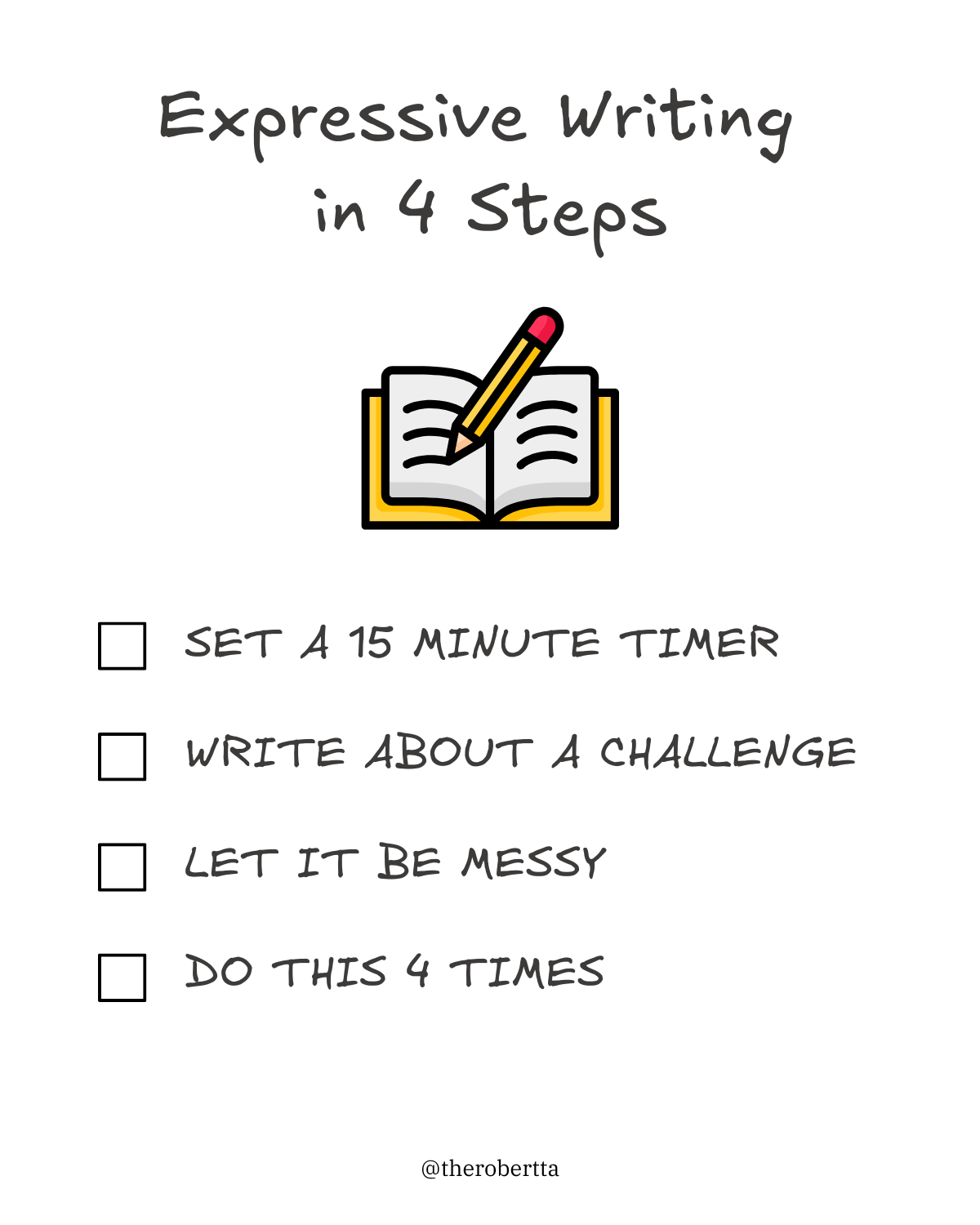
Here’s How To Do it:
- Set a Timer for 15 Minutes: No distractions. Just you and the page.
- Write About a Challenge You’re Facing: Work-related, personal, whatever.
- Let It Be Messy: No structure. No editing. Who cares about grammar, or spelling. Write like no one will ever read it. This is just for you.
- Repeat for Four Days: Each day, go deeper. Look at the event from different angles. Ask yourself, What did I learn? How has this shaped me?
My Personal Template
I’ve used this for all of my traumatic and emotionally challenging experiences, to great effect.
- Facts: What were the facts about the experience?
- Feelings: What did I feel about the experience? What do I feel now thinking about it?
- Links: What other memories or experiences come up when thinking and writing about this experience?
What Happened When I Tried This
Through December and January, I found myself stuck in my own head when my dog, Nibbler, passed away.
He was my little son. My gift from the world.
My heart felt like it didn’t exist during this time period.
And I kept ruminating…
Every time this happened, I wrote about it. It was painful.
No filter.
sadness,
depression,
and guilt.
It wasn’t easy. The emotions were intense. Buckets of tears were shed.
I named all my feelings.
I gave structure to the chaos inside me.
It takes the unprocessed mess in your head and turns it into something you can actually deal with.
I’ve found that when you confront the demons inside of you, they become angels.
Now, I can think about Nibbler and 99.99999% of the time I’m just happy I ever had my baby boy.
He was the best, and I am so lucky I got to be his dad.
I truly feel this way.
My little Nibbler, you are still with me in my heart.

“Why did I go to the gym that day?” *“What could I have done differently?”*I know I just said no structure, but here’s my lightweight structure. Key Takeaway: Writing doesn’t erase pain, but it helps you integrate it—so you can move forward.This is why expressive writing works.
That type of helpless, ceaseless rumination.
Just raw, unpolished frustration,
Though, every single session—I could feel something shift.
And it brought me a clearer mind and a fuller heart.
Continue reading
Get the full newsletter, free.
Join founders and builders who read Self Aligned every week.
🚀 Breakthrough: A Writing Protocol For Health
If you want to go deep into the neuroscience of why this writing protocol works, you need to listen to this episode of the**Huberman Lab Podcast.**
Dr. Andrew Huberman, a neuroscientist at Stanford, breaks down how expressive writing changes your brain and builds emotional resilience.
Why It’s Awesome
This podcast…
- Explains how writing literally rewires your brain for emotional regulation.
- Covers the biological mechanisms behind stress, emotions, and cognitive processing.
- Gives science-backed techniques to maximize the benefits of expressive writing.
If you ever needed a reason to start writing, let it be this.
💥 Challenge: WRITE
Here’s your challenge for the week:
- Set a 15-minute timer.
- Write about a personal or professional challenge that’s been weighing on you.
- No overthinking. No filtering. Just write.
Do this for four days straight, and see what shifts.
And if you try it, reply to this email—I’d love to hear how it goes.
This takes just 15 minutes, but the impact can last for years.
You got this!
Liked this article?
💚 Click the like button.
Feedback or addition?
💬 Add a comment.
Know someone that would find this helpful?
🔁 Share this post.
ABCs for Growth by Robert Ta is a reader-supported publication. To receive new posts and support my work, consider becoming a free or paid subscriber.
P.S. If you haven’t already checked out my other newsletter, ABCs for Building The Future, where I reflect on my founder’s journey building a venture in the open. Check out my learnings on product, leadership, entrepreneurship, and more—in real time!
P.S.S. Want reminders on entrepreneurship, growth, leadership, empathy, and product?
Follow me on..