
This Week’s ABC…
- Advice of the Week: How I trained myself to respond, not react, in high-pressure situations.
- Breakthrough Recommendation: A book that evolved how I manage my emotions—Search Inside Yourself by Chade-Meng Tan.
- Challenge: One small action you can take this week to start responding more intentionally.
Advice of the Week: Respond, DON’T React
When you react, you’re letting your emotions drive the car.
When you respond, you’re in the driver’s seat, making intentional choices.
We ALL have moments where we experience being emotionally off-balance. It’s called emotional flooding.
According to psychologist Dr. John Gottman, emotional flooding occurs when you experience a surge of intense emotions that can quickly overwhelm you.
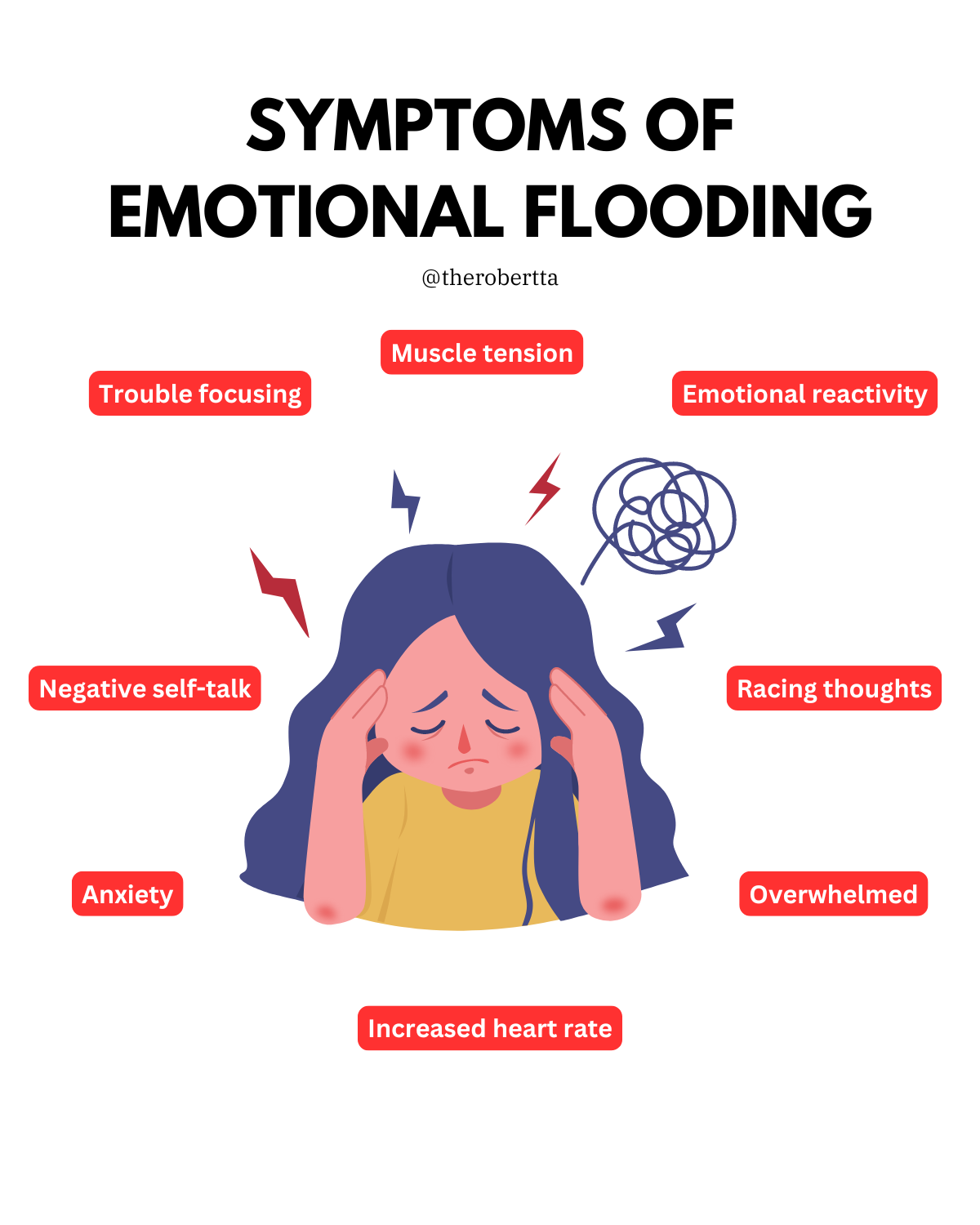
But this is a newsletter about being your best self, so let’s talk strategies to prevent or counteract emotional flooding.
You just need to be intentional, as I learned the hard way after multiple times losing my cool from my parents’ antics as I’ve grown older. (If you’re reading this, I love you mom and dad—truly)
So let’s break down the thinking.
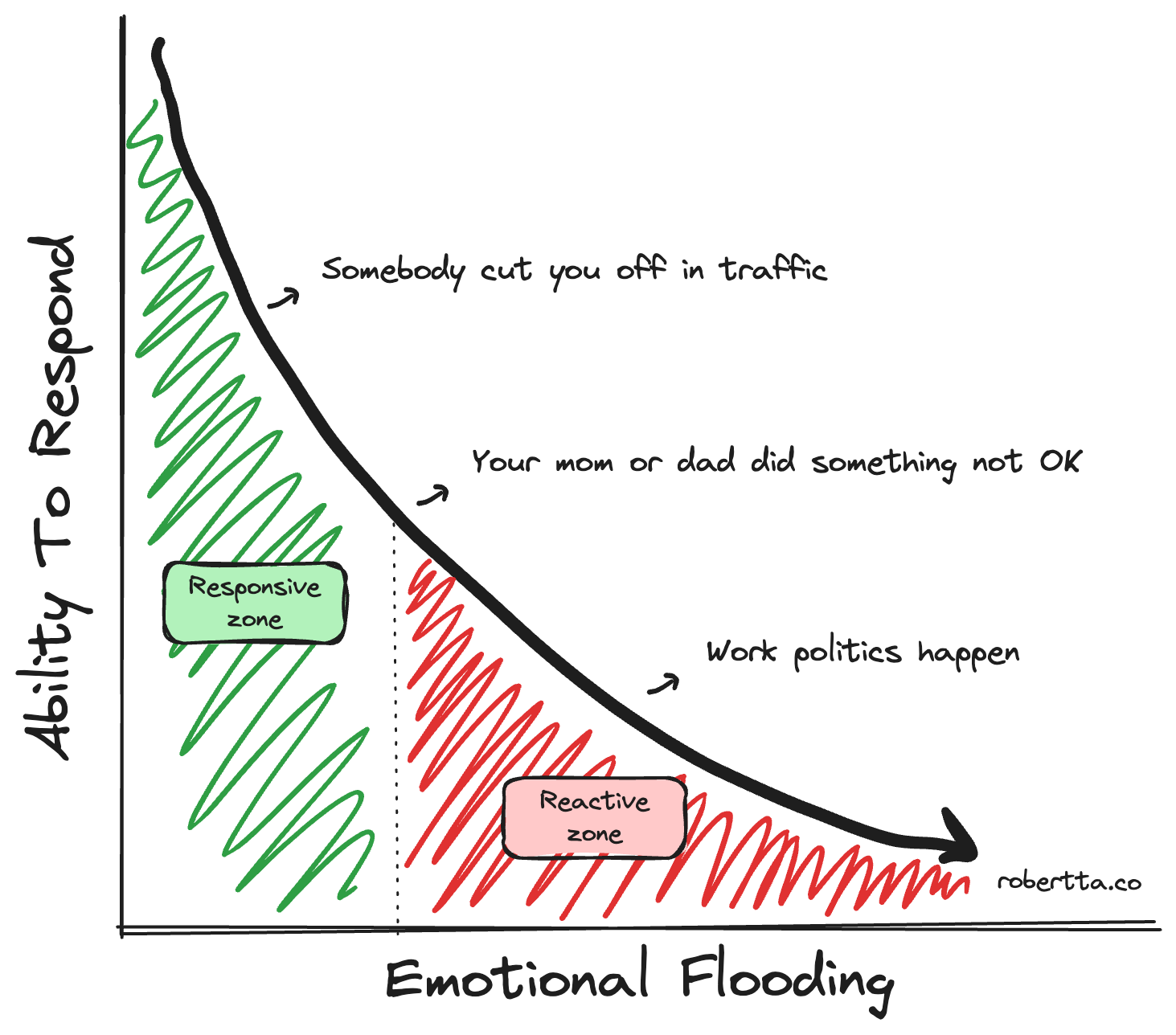
“How can I minimize the recovery time from being emotionally flooded?”
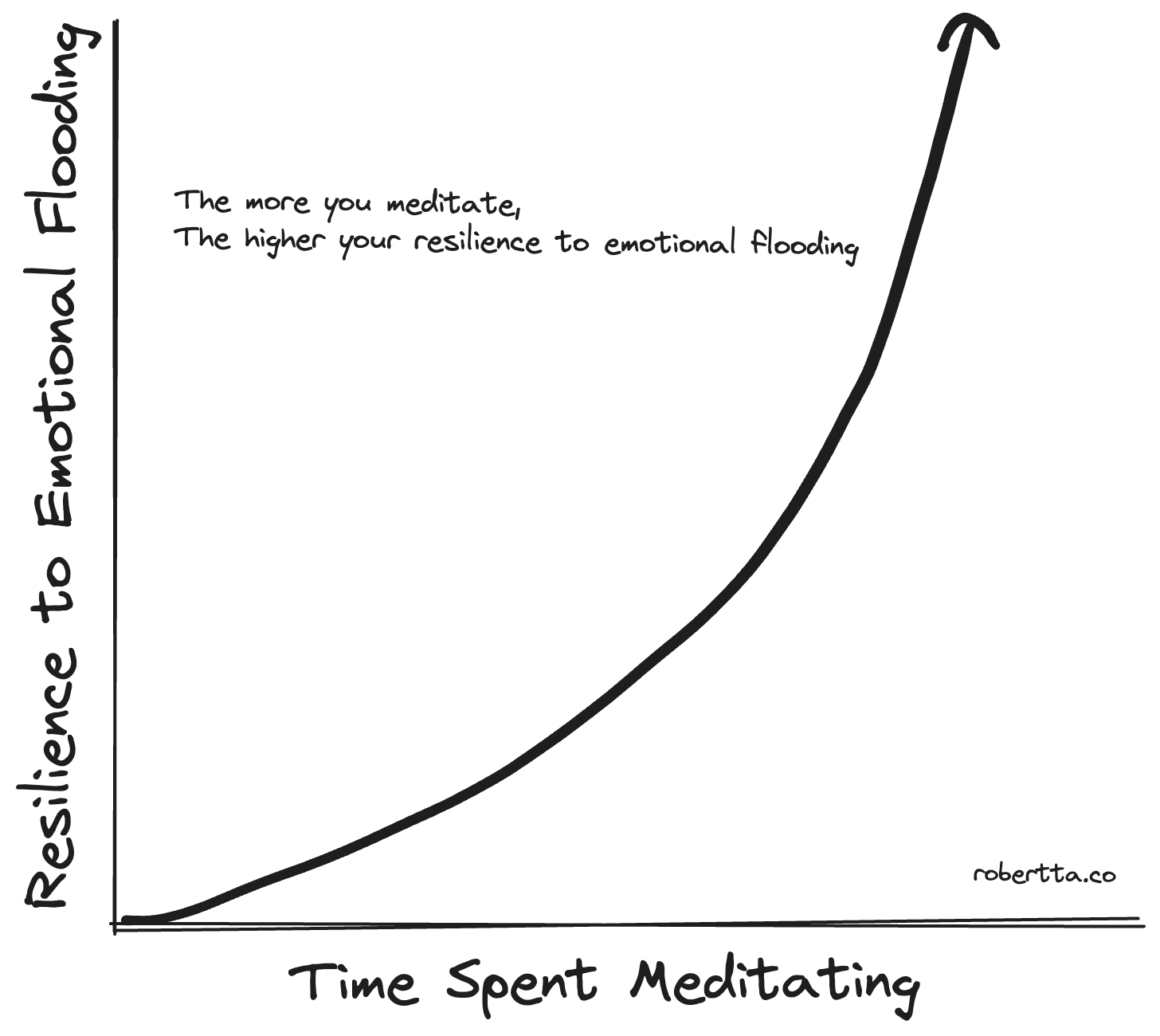
“How can I increase my resilience for emotional flooding?”
Let’s start with the first one: “How can I minimize the recovery time from being emotionally flooded?”
Firstly, emotions are physiological experiences. Dr. Laura Delizonna defines emotion as “a basic physiological state characterized by identifiable autonomic or bodily changes”.
What this means is that…
- Every emotion maps to your body feeling something, and the way you feel these sensations are unique to you as an individual.
- Improving in identifying the physiological sensations of emotions, can help you be aware of potential emotional flooding.
Examples of how feelings manifest in my body:
- Anger: forehead tensing, heart races, chest gets tight
- **Joy: **lightness, warmth, increased energy
- Fear: rapid breathing, trembling, sinking feeling in the chest
- Anxiety: shortness of breath, nausea, lightheaded
And the list goes on.
Takeaway: get good at increasing how well you can perceive your bodily reactions in the moment of emotional flooding so you can consciously recognize it.
Now, how do you do that?
Here’s a 3 step process to regulate yourself and minimize the effects of emotional flooding:
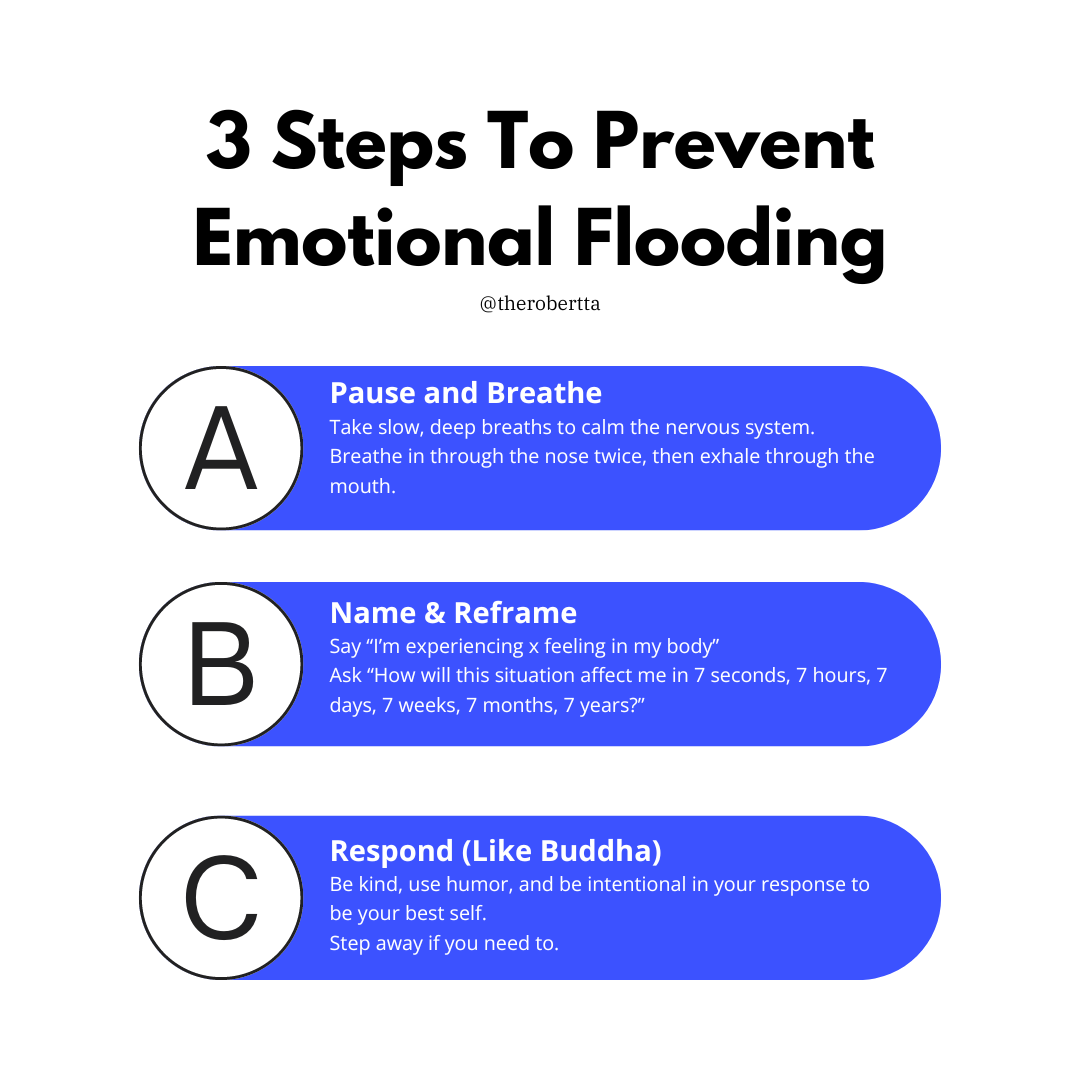
1. Pause and Breathe
When emotions start to flood in, immediately pause.
Take slow, deep breaths to calm your nervous system. Focus on extending your exhale, as this engages your body’s relaxation response.
I like the Psychological Sigh, personally.
You’ll experience *“a sensation of feeling psychologically and physically overwhelmed during conflict, making it virtually impossible to have a productive, problem-solving discussion.”*Here are the answers I’ve come up with from my research and experience.
In this state, you obviously lose some of your capacity for rational thought.
The way I see it, emotional flooding is part of being human.
Remember—you’re in control.
The questions I ask myself are:
2. Name & Reframe
Map those sensations to a feeling, and perhaps use the Feelings Wheel to help you out.
Simply saying “I’m experiencing anger in my body” or “I’m experiencing anxiety in my body” helps you create distance between yourself and the emotion, giving you more control.
Once you’ve identified the emotion, shift your perspective.
Ask yourself, “How can I respond thoughtfully rather than react impulsively?”
3. Respond (Like Buddha)
This is a little game I made up, where I pretend I’m Buddha and I cannot be deterred no matter how ridiculously stupid or triggering the situation is.
It’s quite effective, and it injects some humor into my brain when I’m emotionally flooded which seems to do the trick for me.
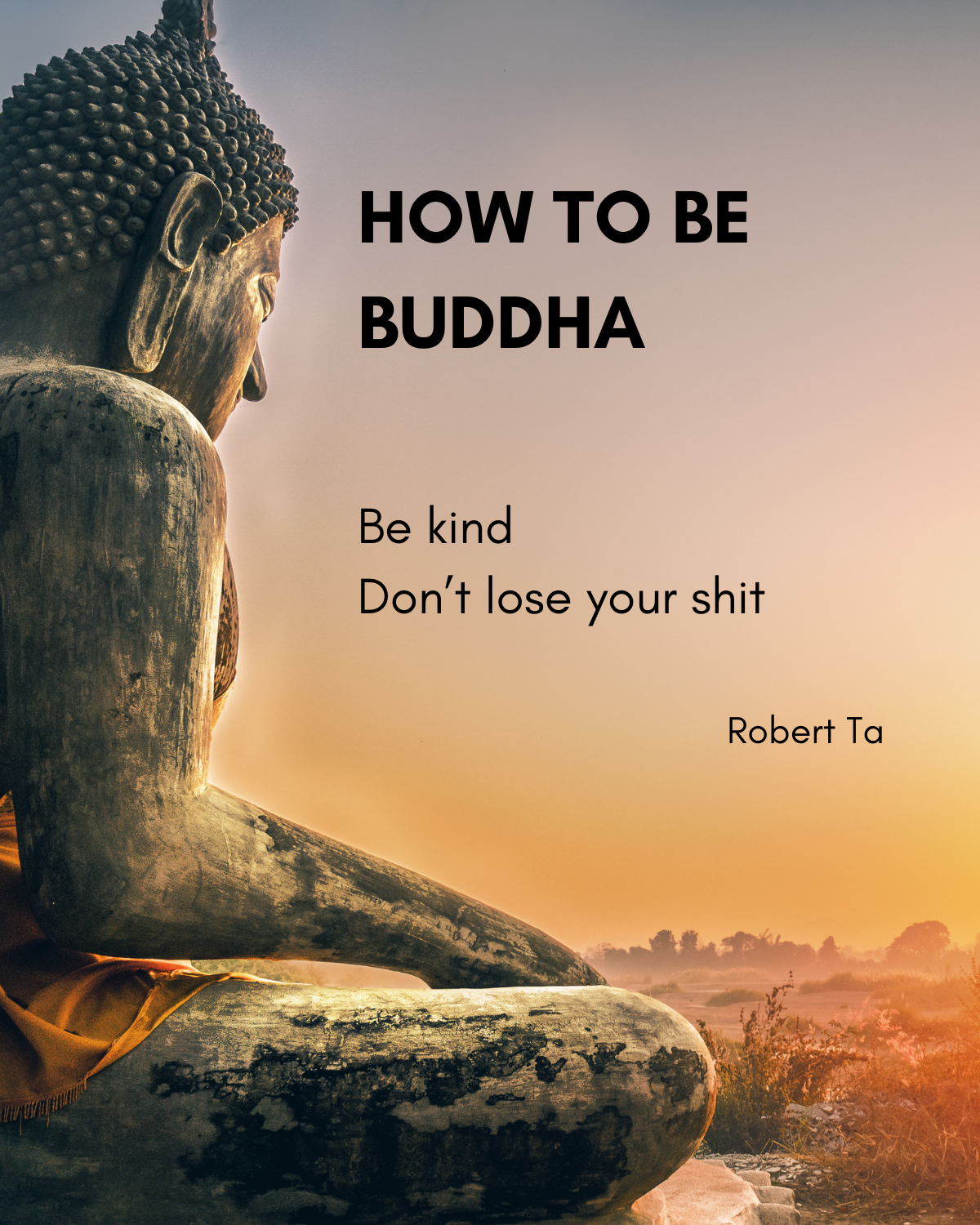
The key is to just respond with kindness and to be your best self, versus giving into emotional flooding.
Excuse yourself and go for a walk to take the necessary time.
Better to do that, than react and regret.
Now let’s move to the second question: “How can I increase my resilience for emotional flooding?”
And that brings us to the Breakthrough for the week…
Breakthrough Recommendation: “Search Inside Yourself” by Chade-Meng Tan
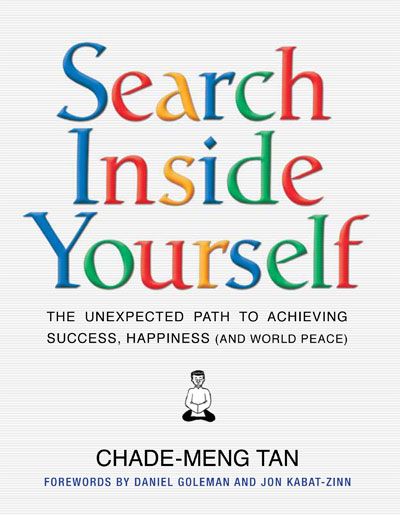
If you want to dive deeper into mastering your emotions and learning how to respond intentionally, Search Inside Yourself by Chade-Meng Tan is the book for you.
Tan, an early Google engineer, combines mindfulness, emotional intelligence, and neuroscience in a way that’s easy to understand and incredibly practical.
He breaks down how we can all train our brains to stay calm, focused, and aware—so we can respond more effectively to life’s challenges.
Tan has an awesome goal of bringing about world peace with the emotional regulation and mindfulness techniques he writes about.
What a noble mission!
I found myself bursting out laughing many times reading this book.
I think you will too!
Why It’s Awesome:
- It teaches you how to manage emotions in real-time, which is critical in high-stress environments.
- It combines mindfulness with actionable strategies grounded in science, perfect for anyone skeptical of “fluffy” self-help advice (like I used to be earlier in my career).
- Tan’s method integrates seamlessly into busy, everyday life—no need for hours of meditation, just intentional practices you can apply now.
My Favorite Quotes:
I love these quotes (and many others in the book) because it shows that emotional intelligence is just a set of skills!
And as I’ve written about before, you can master any skill with deliberate practice.
Another question I like to use to reframe is: “How will this situation affect me in 7 seconds? 7 hours? 7 days? 7 weeks? 7 months? 7 years?” → That generally always calms me down.This reframe helps you move from an emotional reaction to an intentional response. “Emotions are not inherently good or bad; they are just data. What matters is how we act on them.”And the universal answer always is: by being kind and not losing my shit.
I ask myself: *“How would I respond if I were Buddha?”*Pick whoever works for you: Mother Teresa, Gandhi, your sweet grandma, your dog, etc.
“The key to managing your emotions is learning to observe them without being swept away.”It’s also perfectly valid to step away if you cannot respond with kindness!
“Responding to stress is a skill that can be trained, like any other skill.”And his writing is subtly HILARIOUS.
Acknowledge what you’re feeling by naming it. What is your body telling you?
Continue reading
Get the full newsletter, free.
Join founders and builders who read Self Aligned every week.
So, “How can I increase my resilience for emotional flooding?”
Tan introduces a couple key concepts in the book around mindfulness and meditation that are the key to answering this question.
Attention is the ability to focus your mind.
Meta attention is the ability to perceive when your attention wanders. Improving at meta attention and making it stronger will help you recover wandering attention quickly and often, and that leads to the effect of continuous attention, which is true concentration.
When your attention and meta attention become stronger, your mind becomes increasingly focused and stable, but in a way that is relaxing.
TLDR: increasing your tolerance to emotional flooding has to do with improving your attention and meta attention.
I think of it like going to the mental health gym.
I firmly believe you should never skip the gym for work—it’s never worth it.
I believe the same of the mental health gym.
Your health is your foundation to life.
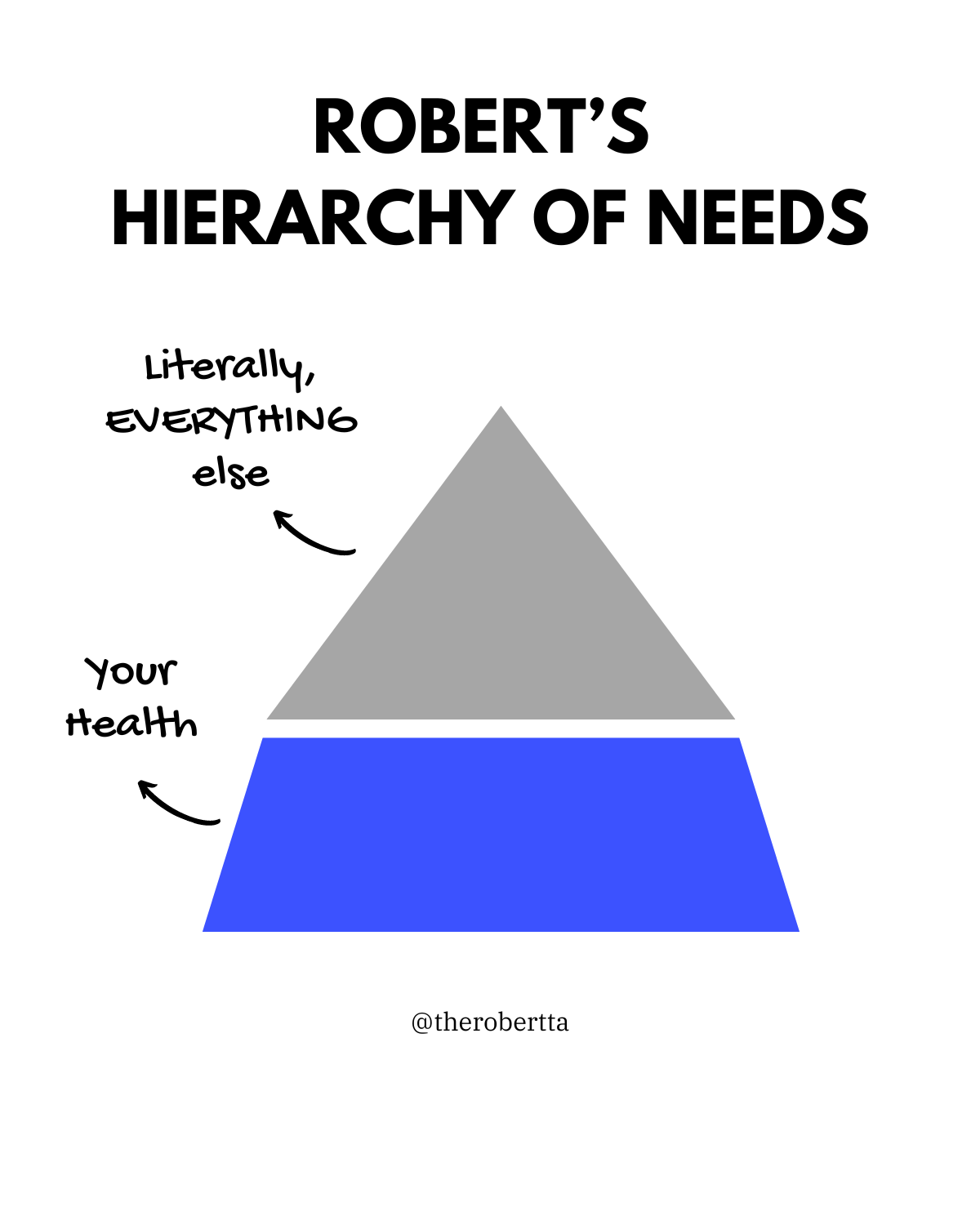
Choosing other things before your health, is the conscious choice of making short term tradeoffs at the detriment of your long term health.
Don’t do it.
It cycles, and you’ll eventually burnout.
Your work, will be there after you take care of yourself.
Whatever else, will be there after you take care of yourself.
So how do you hit the mental health gym given your busy life?
Meditate more, or at all.
Before you stop scrolling—I’m not going to tell you to meditate for hours and become a Shaolin monk (though, I’m not discouraging you to do that if you so wish).
I AM going to tell you that mindfulness and meditation are foundations to this question, and it can be MUCH easier than you think.
In fact, Tan has two methods: The Easy Way, and the Easier Way.
All it takes is 2 minutes.
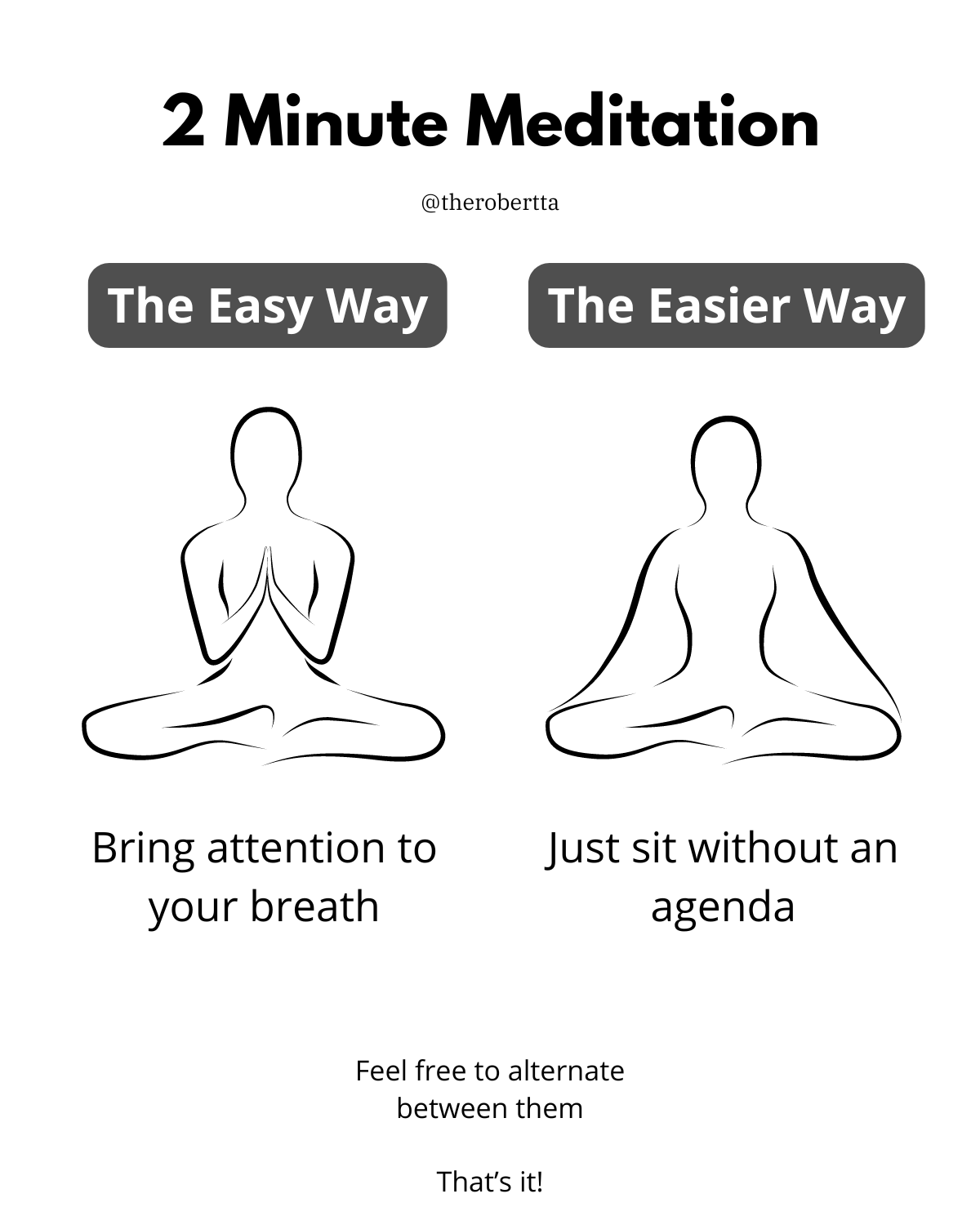
The Easy Way Meditation
The Easy Way is to:
- Simply bring gentle and consistent attention to your breath for 2 minutes
- Start by becoming aware that you are breathing, and then only pay attention to the process of breathing.
- Every time your attention wanders away, just bring it back very gently.
2 minutes of this.
That’s it.
The Easier Way Meditation
The Easier Way, as its name may subtly suggest, is even easier:
- All you have to do is sit without agenda for 2 minutes.
It can’t be much simpler than that.
The idea here is to shift from doing to being, whatever that means for you for just 2 minutes.
Just be.
To make it even easier, you’re free to switch between the easy way and the easier way anytime during these 2 minutes.
So easy!
By trying these easy (and easier) meditations, you will start building your attention and meta attention muscles.
And when high pressure situations come, your resilience to emotional flooding will be higher.
What I Did This Week
I was in a big executive leadership team meeting to present progress on a product.
I believed the product roadmap was being undermined by office politics because key stakeholders had Shiny Object Syndrome.
To be honest, I was pretty frustrated with people derailing the roadmap for new shiny things (I’m sure other Product people can relate to this).
My body language gave me away (dammit body…), and my boss called me out on it saying something to the effect of “Robert you clearly don’t agree with what’s being said through your body language, so why don’t you tell us what’s on your mind?”
I paused, took a breath, composed myself, named the emotions internally (fear and frustration), and responded intentionally without animosity.
All the execs in the room listened and we made the decision to focus on the roadmap we had.
No roadmap derailed this time.
Taking the time to respond instead of react led to a huge win for the product and our customers.
I’m very happy about that.
Challenge: Try The Easy Way or the Easier Way Meditation
This week, just try the Easy Way or Easier Way Meditation!
2 Minutes.
That’s it.
The more you practice this, the easier it becomes to manage your emotions and respond with clarity and intention.
It’s a muscle.
Train it.
Don’t skip the mental health gym.
You got this!
Liked this article? 💚 Click the like button.
Feedback or addition? 💬 Add a comment.
Know someone that would find this helpful? 🔁 Share this post.
Please take a 5 second survey to help me make this newsletter better for you.
P.S. Want reminders on growth, empathy, and leadership? Follow me on LinkedIn, Threads, and Twitter.