
This Week’s ABC…
Advice of the Week: The 5 principles to designing a cooperative environment to reach shared success.
Challenge: One action you can take this week to redesign your environment to support collaboration.
Advice Of The Week: 5 Principles To Design Cooperative Environments
The environment you create has a massive impact on the behavior of your teams. If your goal is to maximize long-term cooperation, your leadership decisions need to reflect that.
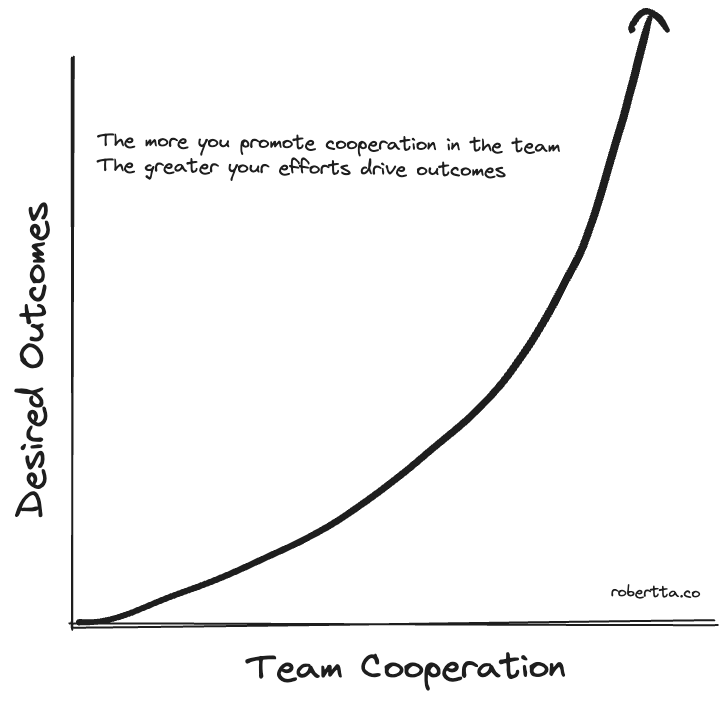
Whether you’re working with cross-functional teams or managing competing priorities, your role as a Product Leader is to architect the environment in which cooperation is embedded.
Here’s how.
1. Enlarge the Shadow of the Future
Why It Works
When people realize they’ll be working together on multiple projects, they’re less likely engage in short term self-serving behavior, and more likely to focus on longer term goals.
Tactic: Write a Team Letter From The Future
This is a fun exercise to do for individual goals, and I believe it can be a strong one for team goals too.
Then send it to your team, and solicit comments from them.
Imagine we are successful 1 year from today. Some questions to use to frame your team’s thinking:
- What were some of the challenges we faced?
- How did we get past them?
- What were the key milestones we hit?
- What did we do on a day to do basis?
- What did the highs and lows look and feel like?
Example:
*“As I sit here in [future date], reflecting on the incredible journey we’ve been on, I can’t help but feel an immense sense of pride in what we’ve accomplished together over the past year. *
Exactly one year ago, we embarked on a mission with a shared goal: to build a groundbreaking product that would not only meet but exceed the expectations of our users. The vision was clear, and the challenge was daunting—but we knew this team was capable of extraordinary things…
and so on…”
2. Change the Payoffs
“Laws are passed to cause people to pay their taxes, not to steal, and to honor contracts with strangers Each of these activities could be regarded as a giant Prisoner’s Dilemma game with many players… What governments do is change the effective payoffs. If you avoid paying your taxes, you must face the possibility of being caught and sent to jail.” —Robert Axelrod
Why It Works:
Often, teams default to uncooperative behavior because the payoff for doing so seems higher in the short term.
You need to design the environment so that cooperation becomes the more rewarding option.
Where Axelrod talks about payoffs, I see it as carrots vs. sticks.
Here are some tactics to change the payoffs.
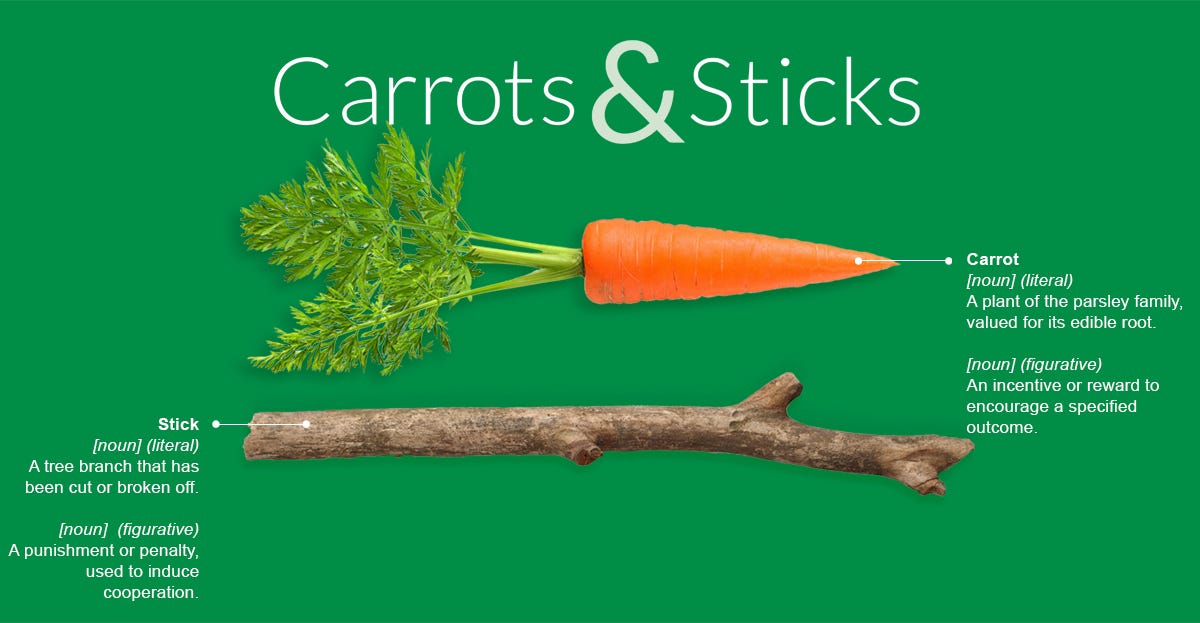
Tactics: Carrots (Reward)
→ Instead of focusing on individual KPIs, structure bonuses around team-wide performance metrics, such as a successful product launch or meeting key product milestones. This shifts the mindset from “me” to “we.” Everyone becomes invested in each other’s success, knowing that their financial reward depends on the whole team’s ability to collaborate and deliver.
Example*:* If the product hits a major milestone (like a feature release or hitting a specific customer satisfaction score), the entire team—developers, designers, marketers—gets a bonus payout. The more they collaborate, the bigger the collective reward.
Fun Team Reward:→ If a product launch is successful and completed on time, reward the team with something fun like an offsite of their choosing. This could be a way to celebrate collective success and reinforce the bonds built through cooperation.
Example*:* A cross-functional team that hits all milestones and releases a product on time gets a three-day company-paid retreat to a fun destination like a resort or adventure camp, fostering more camaraderie.
Recognition & Visibility:→ Public recognition can be a HUGE motivator. Use an internal “Wall of Fame” type of recognition tool to highlight teams that excel at cross-functional collaboration. You could have a “Best Collaborators of the Quarter” spotlight in company-wide meetings or newsletters, with the winning team receiving special perks.
Example*:* A team that consistently shares knowledge and works together across functions (e.g., engineering solving issues in tandem with customer support to improve product) gets a featured story in the company newsletter for wide recognition.
“Mutual cooperation can be stable if the future is sufficiently important relative to the present… There are two basic ways of doing this: by making the interactions more durable, and making them more frequent.” —Robert AxelrodBreakthrough Recommendation: A 10 point checklist to remember as a leader.
Team Based Performance Bonuses:
Teammates are more likely to cooperate if they believe they’ll interact again in the future.
For your team, this means emphasizing long-term collaboration.
It will require you as the leader to get a good draft started.
Tactic: Sticks (Punishment)
Reduced Bonuses or Incentives Tied to Team Performance:→ Kind of the opposite of the first Carrot suggestion, but it is worthwhile to point out. If the measure of success was not reached due to poor cooperation, people don’t get the bonus. Period.
This encourages everyone to push for better collaboration since the success of one is tied to the group.
3. Teach People to Care About Each Other
“An excellent way to promote cooperation in a society is to teach people to care about the welfare of others. Parents and schools devote a tremendous effort to teaching the young to value the happiness of others. In game theory terms, this means that the adults try to shape the values of the children so that the preferences of the new citizens will incorporate not only their own individual welfare, but to some degree at least, the welfare of others” —Robert Axelrod
Why It Works
The strongest teams are those where people genuinely care about their colleagues as people. When teams care about each other, cooperation becomes the default behavior.
Tactic: The Connection Card Exercise
Invest in team-building activities that go beyond work—let them get to know each other on a personal level. Everybody is human, everybody wants to feel seen and heard for who they are. So make space for activities that encourage that.
- Everybody: fills out a card, add it to the same slide deck (15 min)
- Everybody: peruse everybody else’s card (5 mins)
- Everybody: pick one person who has shared values or common interests, and set up a 1:1 with them to further the connection (5 mins)
- Everybody: one person shares their card to the group and everybody else listens, then that person picks the next person. Go until everybody has had time to share. (5 mins)
4. Teach Reciprocity
Why It Works
Cooperation thrives on the principle of reciprocity—if someone helps you, you’re more likely to help them in return.
When team members feel that their contributions are valued and reciprocated, they’re far more likely to invest in helping others.
This cycle of giving and receiving builds trust, strengthens relationships, and fosters a more collaborative environment.
Tactic: 5 Minute Sprint Kudos
The goal here is to foster a culture where team members openly acknowledge when they’ve been helped and by whom.
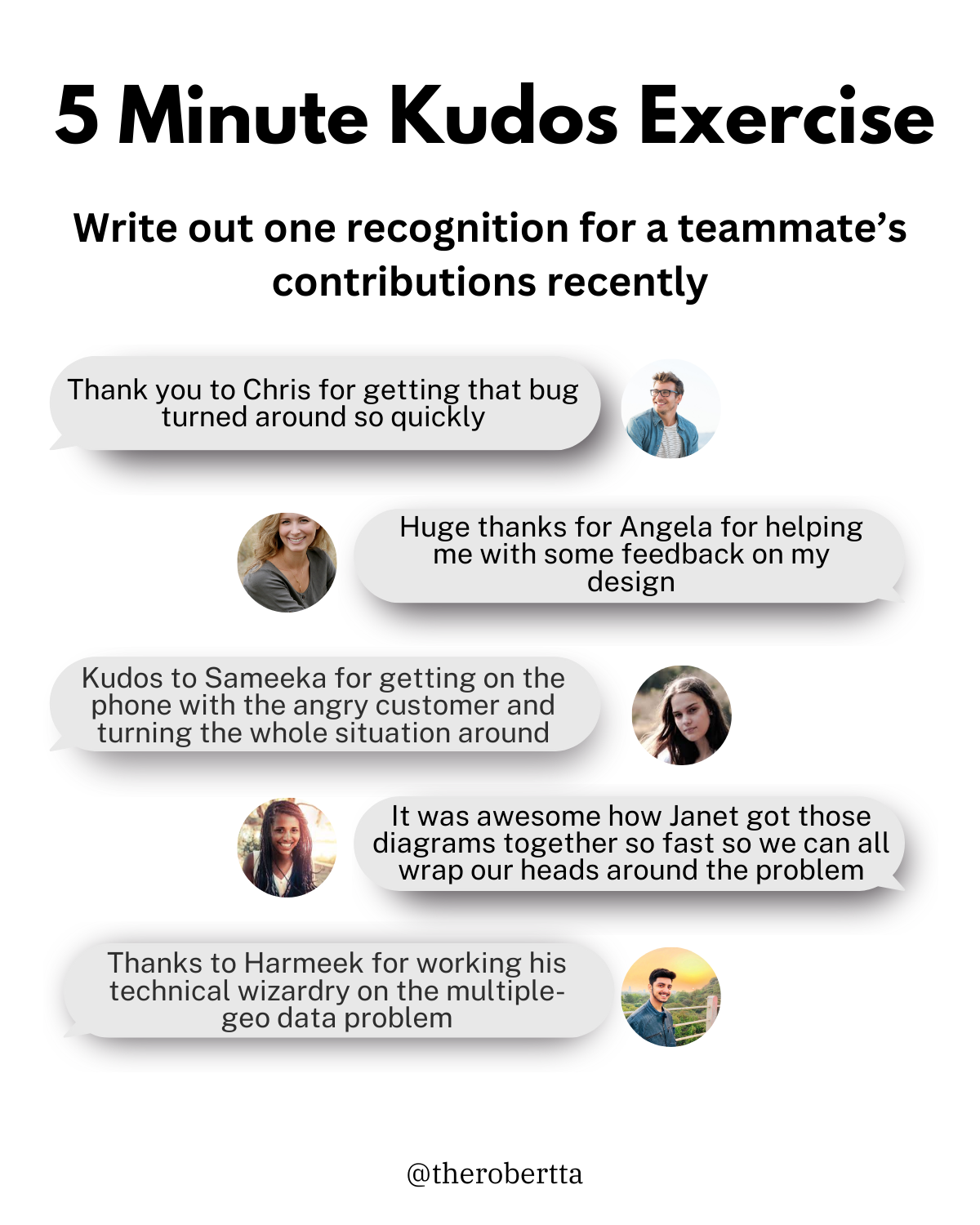
Example*:* At the end of each sprint as part of your retrospective, spend 5 minutes where everybody writes out recognition for a teammate’s contributions in the past sprint. This creates visibility around acts of reciprocity and motivates others to contribute.
Bonus: take screenshots of these, and keep them in a team-wide “Smile File”. Use them for offsites or quarterly reviews.
“So teaching the use of nice strategies based upon reciprocity helps the pupil, helps the community, and can indirectly help the teacher. No wonder that an educational psychologist, upon hearing of the virtues of Tit For Tat, recommended teaching reciprocity in the schools.” —Robert AxelrodThe more this happens, the more reciprocity and cooperation will happen on your team. People loved it. It definitely helped to create a culture of reciprocity and cooperation.
One rule of thumb I lean on in Product: don’t make success “shipping the thing”, make success “customers love the thing”.
Example: A team whose lack of coordination between marketing and engineering led to missed sales goals gets a smaller end-of-year bonus (or none at all). Next time, they know they need to work more closely to avoid this financial loss.
One of my favorites is what I call the “Connection Card” exercise. This can be done virtually or in-person.
In staff meetings I ran for my startup, we always started the meeting with 5 minutes of “kudos”. I just gave everybody 5 minutes to write into chat kudos to someone on the team for something they did.
Continue reading
Get the full newsletter, free.
Join founders and builders who read Self Aligned every week.
5. Improve Recognition Abilities
“The ability to recognize the other player from past interactions, and to remember the relevant features of those interactions, is necessary to sustain cooperation. Without these abilities, a player could not use any form of reciprocity and hence could not encourage the other to cooperate…Therefore, the scope of sustainable cooperation can be expanded by any improvements in the players’ ability to recognize each other from the past, and to be confident about the prior actions that have actually been taken.” —Robert Axelrod
Why It Works
If you’re working on a large team and you don’t really know the other people, you will be less likely to cooperate with them. Even upon repeated interactions.
This makes sense.
This is especially pertinent for global remote teams, where you might never meet your teammates in person.
As a Product Leader, you need to think about how to increase recognition among teammates in your organization.
Tactic: “Just Do It” Leads To Cooperation Of Buying More Nikes
Not enough teams, in my experience, spend enough time on internal marketing and branding.
They fail to realize that internal marketing is NOT just about getting more headcount in the next budget cycle, or to get buy-in cross-functionally.
Brand conveys complexity of feelings tied to trust and confidence. Those underly cooperation.
I would argue that because I’ve heard “Just Do It” my whole life and have athletes like Michael Jordan, Kobe Bryant, and Lebron James, as personal heroes—I cooperate with Nike anytime I buy new Nikes.

That’s the power of branding.
Give your team an identity.
→ Who are they?
→ What are their values?
→ What is their purpose?
Then put it into a tagline.
More recently, I was tasked with turning around a cross functional team of ~50 teammates working on an internal developer facing product—a microservices platform.
The before mission statement had a lot of words about DevOps, shifting left, build pipelines, etc.
Our backlog was a mess, and there wasn’t really a roadmap.
The team had used this mission statement for about a year before I joined. I decided to shake things up.
I boiled it down into one tagline: We empower the future of development.
And a second tagline, for business-oriented stakeholders: We help you ship quality code faster.
That branding made it easy for the team working on it, to rally behind.
Our velocity doubled within a few months. DOUBLED.
I calculated this out, it was ~4M of effort per year of a difference.
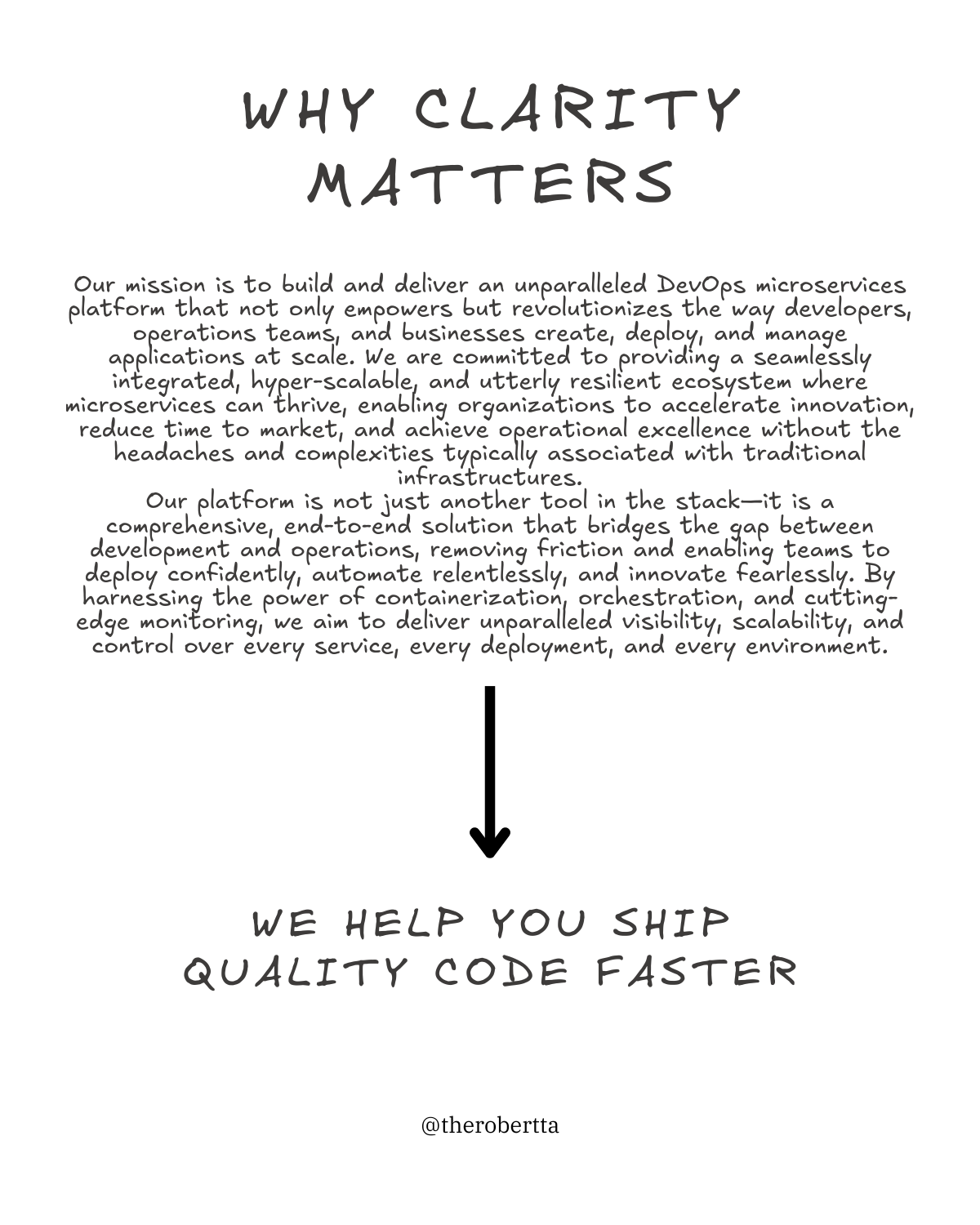
There were many other factors at play, but I have no doubt that giving the team a common purpose to rally behind that was easy and memorable had its role.
Team dynamics changed.
People started laughing in meetings about all the fires happening, and sharing more.
They trusted each other more.
They cooperated more.
**Breakthrough Recommendation: *****10 Strategies for Better Cooperation ***
Axelrod’s study of the Iterated Prisoner’s Dilemma offers critical insights into why cooperation often fails in competitive environments—and how it can be fostered through thoughtful system design.
One key takeaway from Axelrod’s research is that cooperation doesn’t just happen by accident.
It flourishes when the system is designed to reward cooperative behavior and disincentivize selfishness.
Since today’s Advice Of The Week was already packed with information, here’s a small checklist of the things to keep in mind as a Product Leader.
10 Strategies for Better Cooperation - A Leadership Checklist
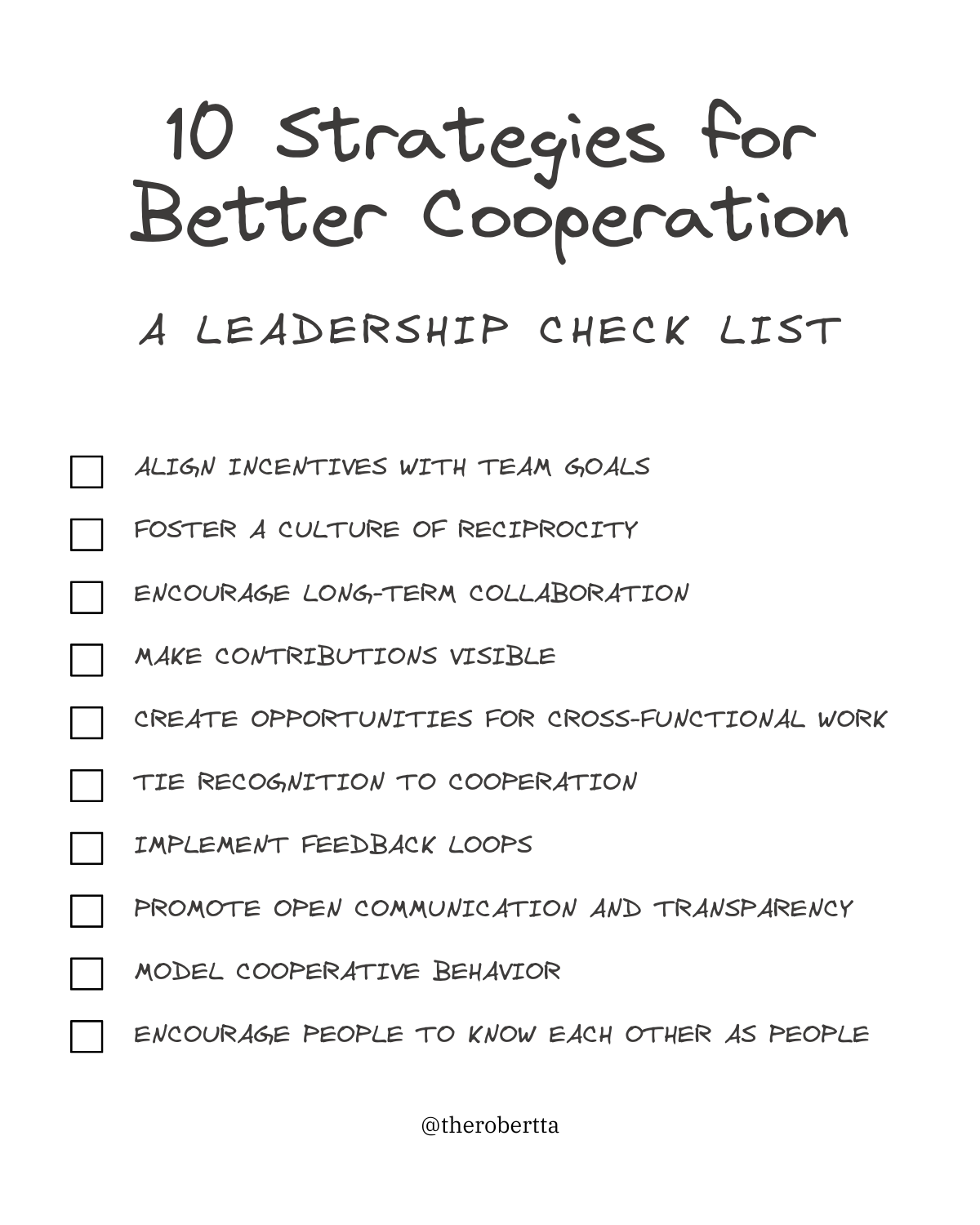
- Align Incentives with Team Goals**→ **Ensure that rewards (bonuses, promotions, recognition) are based on team success rather than individual achievements. This shifts the focus from personal performance to collective outcomes, encouraging cooperation.
- Foster a Culture of Reciprocity→ Regularly encourage team members to help each other out and publicly recognize when someone has contributed to the success of another. Reinforce that giving and receiving help should be the norm, not the exception.
- Encourage Long-Term Collaboration→ Promote the idea that the team will be working together on multiple projects, emphasizing that consistent cooperation will be necessary for future success. When people know they’ll work together repeatedly, they invest more in building relationships.
- Make Contributions Visible→ Use tools or meetings to highlight who contributed to what. Create intentional space for this. Visibility builds accountability, making it clear that everyone’s actions are noticed and appreciated, which motivates further cooperation.
- Create Opportunities for Cross-Functional Interactions Work→ Set up regular opportunities for cross-functional teams to work together on bigger problems. This builds familiarity and trust, helping teams cooperate more effectively when larger initiatives arise. Examples include: Enterprise API Management, Developer Experience, UI/UX Overhauls, Monolithic Decomposition, Master Data Management, and Go-To-Market activities.
- Tie Recognition to Cooperation→ Make cooperation a core part of employee recognition programs. Whether it’s “Team Player of the Month” or shout-outs in meetings, focus on acknowledging those who go out of their way to collaborate and support others.
- Implement Feedback Loops→ Provide regular opportunities for team members to give and receive feedback on how they worked together. Instruct and educate your managers on this as well. This allows for continuous improvement and encourages teams to think critically about their collaboration practices.
- Promote Open Communication and Transparency→ Cultivate a culture where open communication is valued. Write an internal weekly/monthly blog with your “State Of The Union” thoughts. Encourage your leaders to as well, and this will encourage team members to express their challenges, ask for help, and share ideas freely without fear of judgment or repercussion.
- Model Cooperative Behavior→ As a leader, demonstrate cooperative behavior by offering help across departments, being transparent in your decisions, and showing appreciation for cross-functional efforts. Leadership sets the tone for the entire team. Balance this with ruthless prioritization on what is important, so you don’t fall into the “fighting fires” trap.
- Encourage People To Know Each Other As People→ Facilitate opportunities for team members to build relationships outside of work. Make sure to budget for it, and it will be more likely to happen. Informal connections foster trust and make it easier for people to work together cooperatively on formal tasks.
What I Did This Week
I am currently working on transforming our developer experience, for 1500+ developers.
There are big issues to tackle (many elephants in the room): code ownership, table ownership, instrumenting product analytics, and more.
None of these items can be successfully executed upon in silos.
All of these items require great cooperation and alignment.
In the tech industry, many of these types of transformative projects fail more often than succeed—because of lack of alignment and cooperation.
To optimize for success from the start, I spent the week creating a transparent and shared prioritize framework based on collective wisdom.
I ran workshops where teammates and leaders (across 100+ key teammates in a >2000+ R&D organization):
- Agreed to a set of OKRs (Objectives and Key Results)
- Agreed to a list of “Jobs To Be Done” tied to them
- Voted on the relative importance of each Key Result
- Voted on the relative weight of each “Job To Be Done” towards progressing a respective Key Result
The result is a transparent prioritization framework, so we can all collectively be aligned.
When future things pop up (as they always do), that threaten to derail the roadmap, we will more easily cooperate on the priorities.
The subtle influence strategy here was also to get people talking, to form a groundswell, to break down silos, and ensure future cooperation towards these mutual goals.
I’m optimistic about success (:
Challenge: Create Opportunities for Cooperation This Week
This week, focus on one specific aspect of your environment that you can tweak to promote cooperation from the 5 principles:
- Enlarge the shadow of the future
- Change the payoffs
- Teach people to care about each other
- Teach reciprocity
- Improve recognition abilities
Here’s your action plan:
- Choose one area.
- Make a small change.
- Observe how it affects collaboration and iterate based on the results.
→ If you’re in a leadership position, share this article with your team. Make space to talk about promoting cooperation amongst the bigger organization.
Then make an action plan and go execute.
You got this!
Liked this article? 💚 Click the like button.
Feedback or addition? 💬 Add a comment.
Know someone that would find this helpful? 🔁 Share this post.
P.S. Want reminders on growth, empathy, and leadership? Follow me on LinkedIn, Threads, and Twitter.