
**🔤 **This Week’s ABC
📖 Advice: Your brain needs energy
I went to find him.
He was safe, but it was very stressful and chaotic to go through.
5 months ago, he got a new psychiatrist and therapist.
And a new diagnosis: maybe he does not have paranoid schizophrenia, and maybe he has insomnia induced psychosis.
With his new diagnosis, I was at first in disbelief.
They recommended he go off meds to validate this.
Based on his medical history, they noticed a pattern: whenever he had what looked like a schizophrenic relapse full of paranoid delusions—was actually preceded by bouts of insomnia.
One part of me lit up with hope with the idea that my brother might not be condemned to a lifelong diagnosis.
The other part of me clenched with fear.
I’d seen what the abyss looked like. I didn’t want to go back.
So I did what I always do when I’m uncertain.
I started researching.
I read everything on sleep and psychosis I could find.
My problem-solving brain turned to: “How do I mitigate the risk he goes missing as much as possible?”
I learned about mitochondrial dysfunction, about the role of metabolic health in psychiatric illness.
I questioned what I believed:
*What if schizophrenia is a symptom of metabolic disorders of the brain?*What if our energy systems—our sleep, movement, and nutrition—are the missing foundation?
Advice: Your brain needs energy
Breakthrough: BDNF, and the argument for the basics
Challenge: Make the time to take care of yourself
Last year when my brother was off meds, he went manic, then missing.
Brain Energy
I read the book Brain Energy, which turned my whole world upside down when it came to understanding mental disorders like schizophrenia, schizoaffective, PTSD, depression, anxiety, Alzheimers, etc.
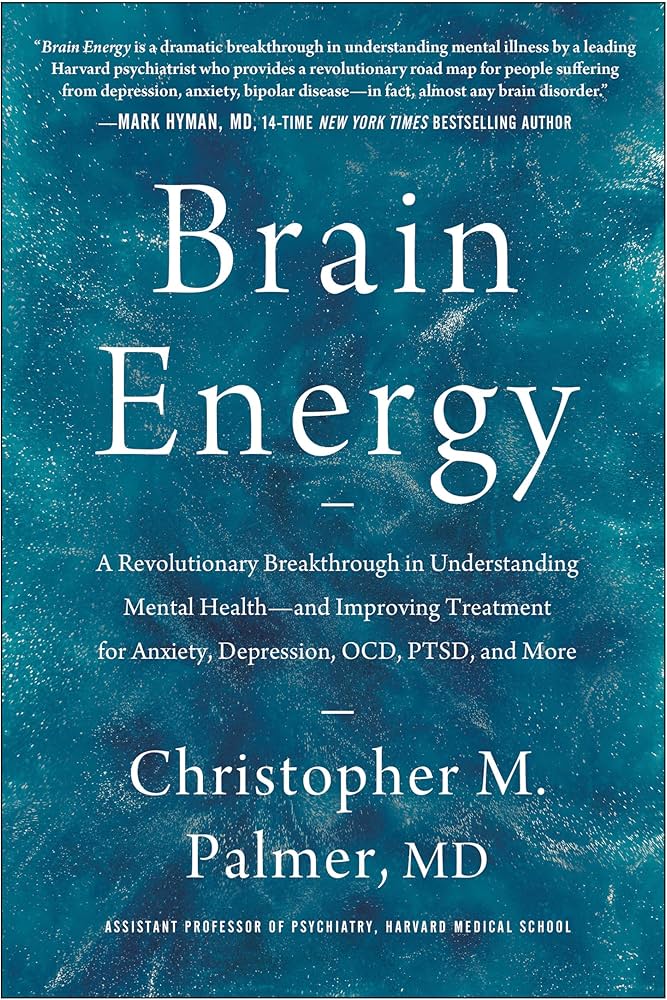
Dr. Chris Palmer makes a compelling case that mental illness is fundamentally a metabolic disorder.
This lens reframes schizophrenia, bipolar disorder, depression, and more, as not solely chemical imbalances or psychological dysfunctions, but as the result of disrupted energy metabolism in the brain.
Meaning, the traditional medicine approach of prescribing antipsychotic medication is only going to get you so far and may even exacerbate the underlying root causes (like I’m finding in my brother’s case).
The solution?
Sleep. Diet. Exercise.
The basics.
The book goes into advanced protocols of “how” to sleep, diet, and exercise. But the fundamental truth is that just focusing on the basics will yield great results.
One example of how deep this could go: there was one story in the book where the doctor prescribed a ketogenic diet, and a patient with schizophrenia had a complete turnaround of their life. The scientific reasoning has to do with shifting from using glucose for energy, to ketones, which is an alternative fuel that bypasses impaired glucose metabolism in the brain.
I won’t get into it more here—read the book if you’re curious.
And for now, just know that sleeping well, eating well, and exercising everyday will keep your body and mind healthy.
My takeaway from this is that we should be a hell of a lot more intentional about our bodies, because what we do with our bodies connects very directly with our minds.
And now we’ve learned that he’s been his own worst enemy.
His unhealthy habits have been leading to his insomnia. Which has been leading to his psychosis.
Because habit change, is hard.
Anxiety has been my background music the past few months. I have been very scared that he may go missing again.
I live with a hyper vigilance around this.
Focusing on what’s in my control, I bought him a Whoop and we started diving into learning about the science of sleep and its relation to diet and exercise.
I tried to make it fun.
We made a little Whoop team together so we can literally check on each other’s sleep and whether we got good sleep.
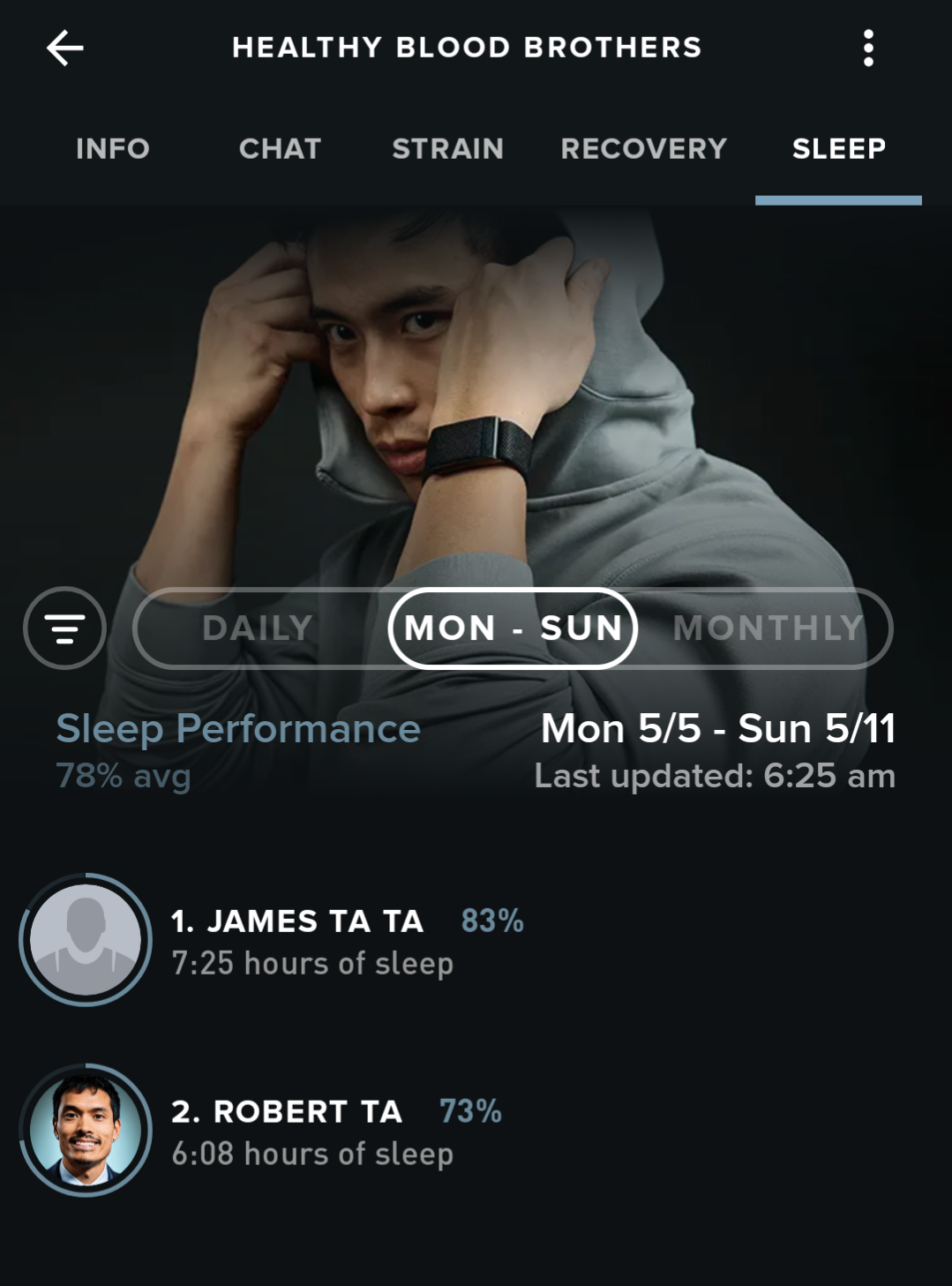
A few months later, my brother is sleeping better than he has in his whole life.
And I am too (except for the above screenshot)!
I used to regularly get 5ish hours a night. Now I’m regularly getting above that, and my sleep is getting much more consistent as well.
Some quick tactics I added to my sleep protocol (which is focused on consistency and maximizing restorative sleep):
- Sleep and wake up within the same half hour window everyday
- Don’t eat 3 hours before bed
- Get sunlight (or bright lights) in your eyes when you wake up
- Avoid blue light 1-2 hours before bed (no screens especially)
- Have a wind down routine before bed, and stick to it
(I can do a bigger article on my sleep and general health & longevity protocol as well, let me know if that would be of interest!)
For years now, I felt like I lost my brother in his haze with psychiatric medication.
And now I feel like I have him back, and we’re talking about being healthier together (one of my favorite topics!).
It’s wonderful.
He’s sleeping better than he has in his life and he’s incrementally picking up healthier habits as time progresses.
And it’s especially hard to make these micro choices for yourself day to day when you are depressed, and anxious—other mental health issues I know he deals with.
- Leading a big transformation project at Dayforce
- Landing our first use case with Epistemic Me
- Trying to climb a V10 boulder
- And other side quests (:
Amidst all of this, I’ve found some time to reflect on what helped me get through the initial psychotic episode all those years ago.
And the same things helping me back then, are the same things helping me navigate this as gracefully as possible now.
🚀 Breakthrough: More on Brain Health
I always try to keep learning and executing upon what I learn, when it comes to health.
My reasoning is that philosophy will keep me happier and alive longer.
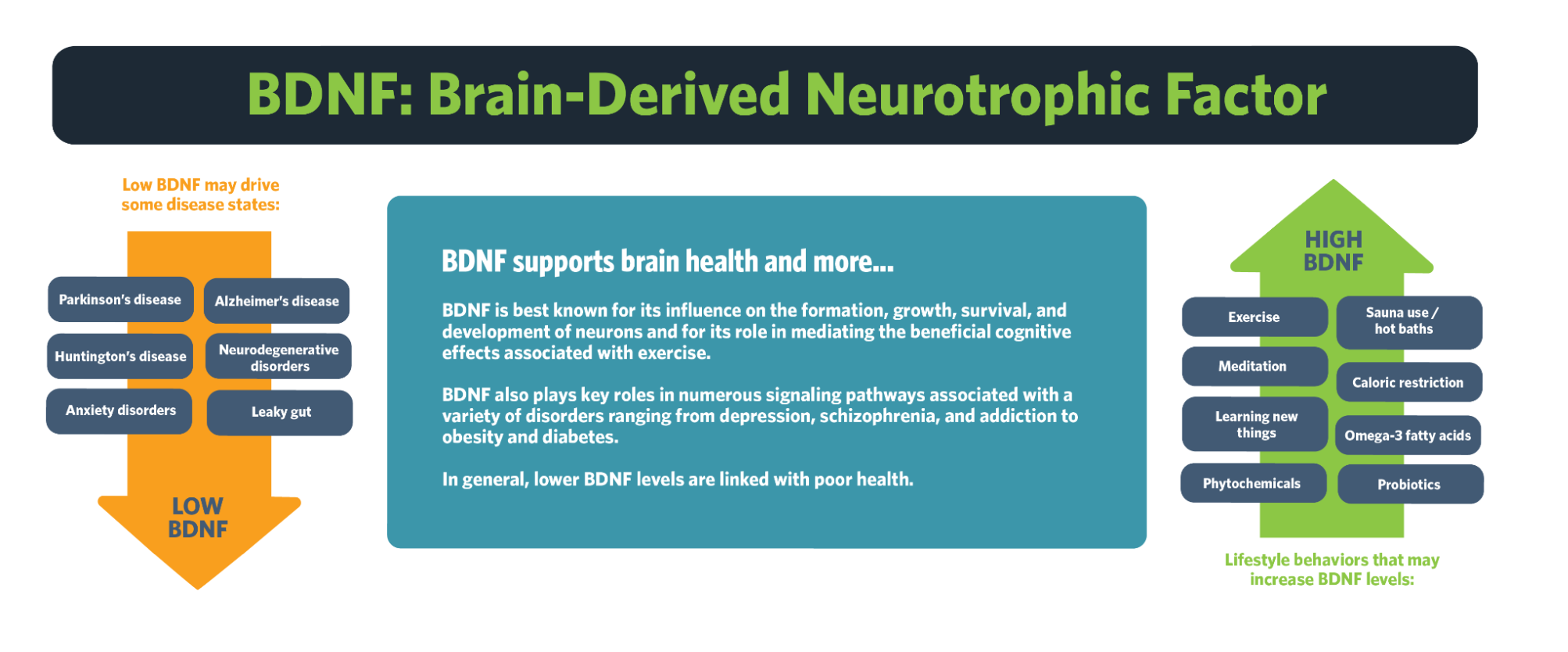
In this week’s breakthrough, I’m sharing a key learning about the BDNF (Brain-derived neurotrophic factor) protein and gene.
Shoutout to my Co-Founder Jonathan who just showed me the work of Dr. Rhonda Patrick.
Dr. Patrick has emphasized the deeply interconnected relationship between sleep, nutrition, exercise, and cognitive health—pillars of well-being that directly impact mitochondrial function and, by extension, mental clarity and emotional regulation.
Her work ties this all together through a protein encoded by the BDNF gene.
It’s kind of crazy and fascinating to me how things like brain fog, or feeling lack of motivation, can all be traced to physical things that happen.
And there are levers in your control. It’s great to learn the levers.
I try to take a beginner’s mindset about everything—and I especially apply that to my health and longevity protocol.
She has a 9-page Cognitive Enhancement Blueprint that’s free here, that I found very helpful to read through and understand the levers to move here.
I find it really energy giving to do what’s in my control to help my brother in this point of his journey—so learning more about the brain is very energizing to me.
Right now I have a very demanding schedule, and I’ve been privileged enough to get after my dreams in some capacity while still contributing financially and as a caregiver to my immediate family throughout the years since my brother was initially diagnosed with paranoid schizophrenia.
*“How did you sleep last night?” * “How can we sleep better?” *“What’d you do at the gym today?”*And it could potentially prevent or solve really bad mental disorders. In my brother’s case—all of his life he has had bad habits around sleep, diet, and exercise.
After all my research, I realized the path ahead of us is hard.
We ask each other questions like:
I’m proud of him, because I know it’s hard to change.
I’ve been juggling the above with my brother, and my own pursuits:
Continue reading
Get the full newsletter, free.
Join founders and builders who read Self Aligned every week.
It hasn’t been perfect.
Sunshines and rainbows are not fully here yet.
Just the past month, he’s fallen off the wagon more than a few times. And he’s gotten paranoid delusions again.
And it’s been difficult, again.
I’ve had to juggle, again.
I stay optimistic though.
He’s on a life changing trajectory when I zoom out.
When we brainstormed things, we realized that the amount of habit changes to make seemed like a mountain to him.
And for someone dealing with what he does, that mountain seems insurmountable.
So I changed it up and just gave him guidance to focus on exercising every single day.
Just do that singular thing, and call it success. Don’t worry and get anxious about the rest.
And the results, even this early on, are promising.
As he builds this one habit, his sleep is improving.
He’s falling asleep faster and staying asleep longer.
It’s been a brutal up-and-down journey, and now I see some light at the end of the tunnel.
When I reflect on how I’m able to juggle this chaos, the biggest breakthrough is just the basics:
- I go to the gym.
- I go to the mental health gym (therapy).
- I eat healthy (plant based).
- I (now) sleep well.
- I meditate and journal.
- I (have learned to) lean on friends and my support system.
And I’m always trying to continuously improve (like learning about BDNF!).
My biggest lesson learned: if I had not been so obsessive about taking care of my own health, I would not have been able to take care of my brother.
And my brother’s biggest lesson learned: he needs to be obsessive about his health.
You can’t pour from an empty cup.
You can’t fill a broken cup.
You have to take care of your cup.
💥 Challenge: Make the time to exercise
Go exercise. Everyday.
This could be a long walk.
This could be a short run.
This could be a marathon.
At whatever level you’re at, just get started.
Take care of your cup.
Liked this article?
💚 Click the like button.
Feedback or addition?
💬 Add a comment.
Know someone that would find this helpful?
🔁 Share this post.
ABCs for Growth by Robert Ta is a reader-supported publication. To receive new posts and support my work, consider becoming a free or paid subscriber.
P.S. If you haven’t already checked out podcast, ABCs for Building The Future, where I reflect on my founder’s journey building a venture in the open. Check out my learnings on product, leadership, entrepreneurship, and more—in real time!
P.S.S. Want reminders on entrepreneurship, growth, leadership, empathy, and product?
Follow me on..