
This Week’s ABC…
- A: Advice of the Week - I share how I manage my time effectively to achieve my goals.
- B: Breakthrough Recommendation - Explore a book that changed my life around habit building, that provides practical strategies to regain control over your time.
- C: Challenge - Evaluate your current schedule management habits and take steps to reclaim your time. Make sure your schedule doesn’t manage you.
Advice of the Week: Take Control of Your Schedule
Manage your schedule.
To first effectively manage your time, you literally must prioritize SETTING UP TIME TO MANAGE TIME! 🤯
Let’s get tactical - this is how I do it: quarterly, weekly, and daily planning & prioritization.
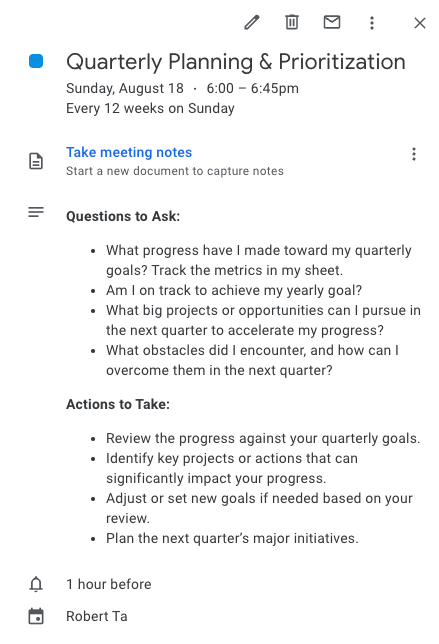
Quarterly: I have a 45 minute quarterly goal setting session in my calendar to review my progress against my goals.
- Set quarterly goals: For example, I set a goal in 1 year to reach 50,000 newsletter subscribers.
- Track against them: I track against this weekly, and quarterly I review progress and look at the bigger “projects” I can take on towards that goal such as guest posting in other newsletters.
- Recurring: This is a recurring time block on my calendar every 12 weeks.
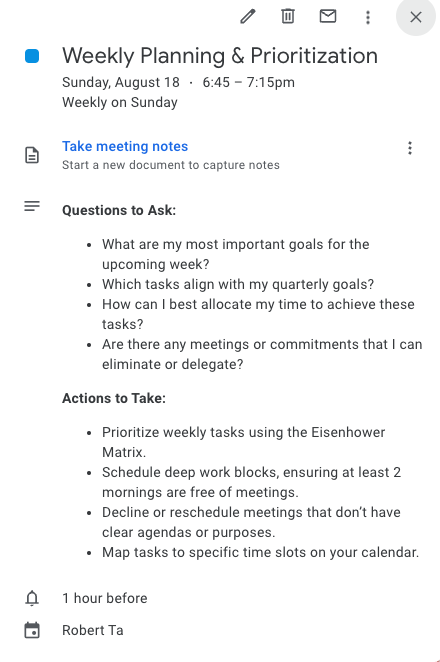
Weekly: on Sundays, I will dedicate 30 minutes to look at the next week. This is where the meat of the planning is.
- Prioritize time against tasks: I look at my quarterly goals, and my todo list (using the Eisenhower Matrix), and I prioritize my time for the week of when I will take care of these things. I literally put calendar events down mapped to tasks I do. I make an effort to…
- Keep at least 2 mornings free of meetings: I generally have a standing rule to have at least 2 mornings free of meetings so I could do deep work. This is because much of my knowledge work contributions, require me to think deeply and formulate my thoughts into documentation or diagrams.
- Eliminate meetings that don’t matter: Any meetings that don’t have agendas or clear purposes, I decline politely. Any meetings that don’t help me meet my goals in the short or long term, I decline politely. I move these into “async” catchups either in DMs or emails.
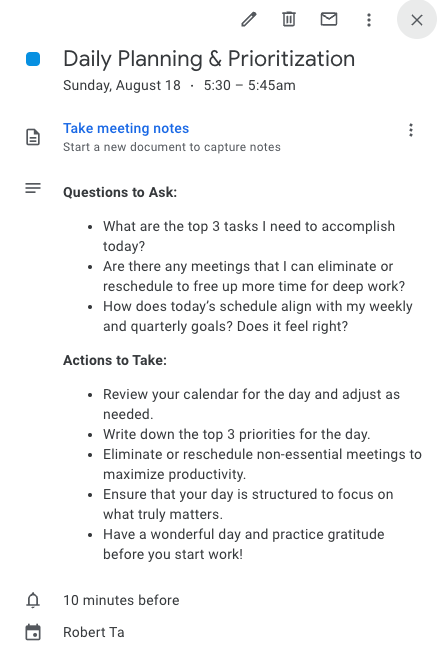
Daily: before the chaos of the day starts, as part of my morning routine, I set aside 15 minutes to review my calendar.
- Pick your top 3: I write down the top 3 things I need to get done.
- Again, Eliminate meetings that don’t matter: I eliminate meetings that are not important or urgent. Again, politely decline the ones that do not move the needle on your goals.
- **Practice some gratitude: **I ALWAYS take a moment and appreciate things like being able to breathe, to walk my dog, and my health. It sets me up in a better mood to tackle the day. I call it “putting on my armor” for the day’s bullshit (because let’s face it, there’s lots of BS in the world taking up your energy).
This might seem daunting, though honestly I actually find it MUCH easier to systemize my life this way. I bet you will too.
Remember, your schedule is a tool to help you achieve your goals—not a cage that traps you in endless busywork.
You need to start small to build good habits to fuel your happiness and success. Find your own rhythm to get started.
More on habits next…
Breakthrough Recommendation: “Atomic Habits” by James Clear
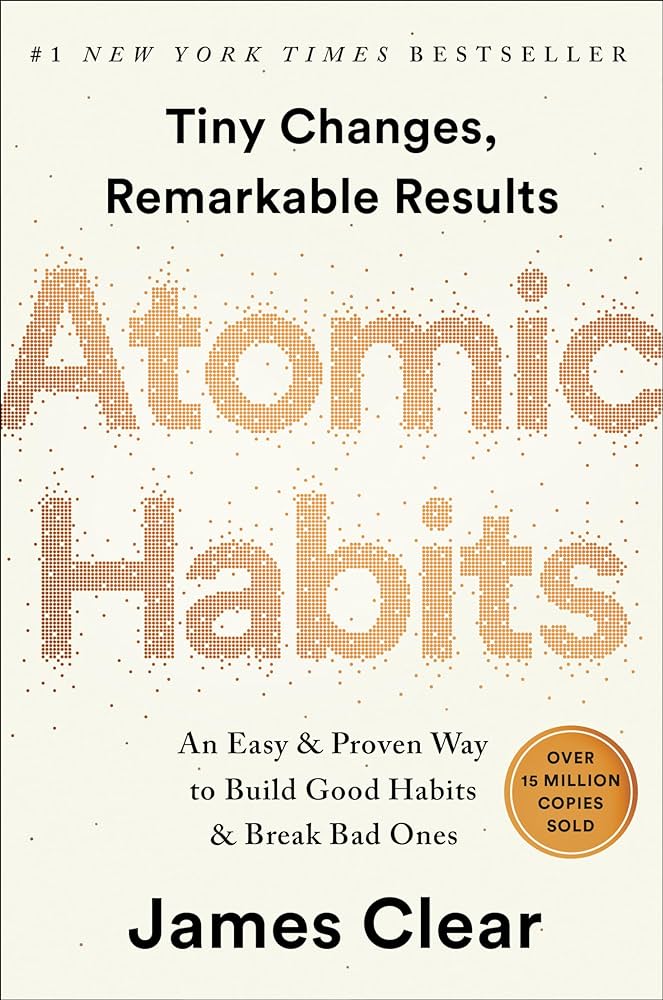
James Clear’s “Atomic Habits” is a must-read for anyone looking to make meaningful changes in their life, including how they manage their schedule. It changed my life and the way I think about building habits.
I think it’s a must read for anybody regardless of your profession or lot in life.
Clear explains how tiny, incremental changes can lead to significant improvements over time.
By focusing on small habits, like setting aside a few minutes each day to plan your schedule, you can gradually take control of your time and boost your productivity.
Big changes come from small adjustments—like committing to time blocking or reducing the number of meetings you attend—you can create a schedule that works for you, rather than against you.
Don’t have time to read the book?**Watch this 9 minute video.
It’s a simple framework, and it works for me. Take control of your time, and you’ll find that you have more of it than you think.
Clear’s approach emphasizes that big changes don’t happen overnight.
Instead, they are the result of consistent, small habits that compound over time.
Don’t let your schedule manage you.
It sounds simple - because it is!
0
newsletter subscribers
My Favorite Quotes:
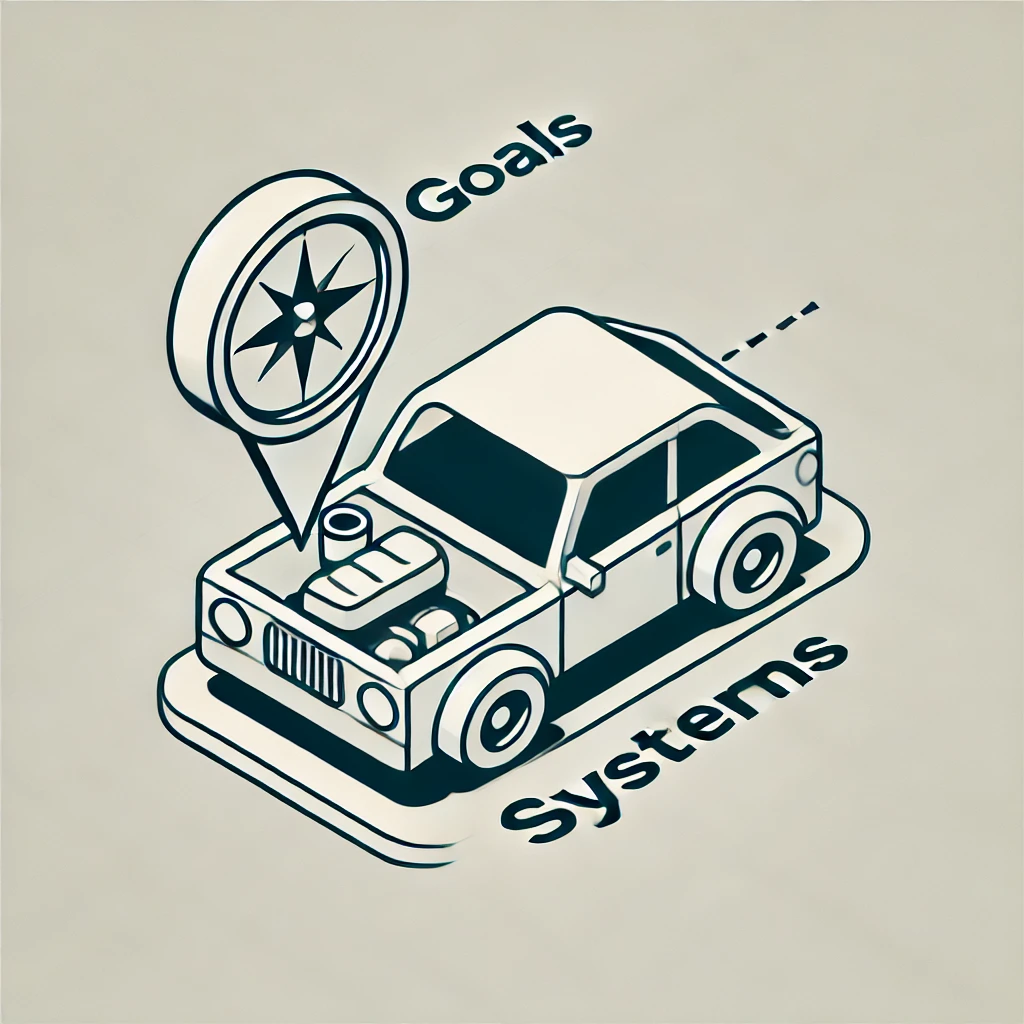
Your systems are goal setting, task prioritization, time management. If those are not a well-oiled machine, then it doesn’t matter what’s on the GPS.
You won’t get there.
Just like a car’s engine determines if you reach your destination, your systems determine whether you actually achieve your goals and drive meaningful outcomes.
Actionable Takeaways
- Schedule Time, To Schedule Time: Start by creating a daily and weekly recurring calendar event that you use to honor weekly and daily planning. You will feel like the “I totally got this” Dog instead of the “This is Fine” Dog burning in hell.
- Prioritize What Matters: Identify the key tasks that align with your goals. Schedule these tasks first, and let everything else fit around them. Use the Eisenhower Matrix.
- Use Time Blocking: Allocate specific time blocks for focused, deep work. Protect these blocks from interruptions and distractions. You need to plan these ahead of time if you’re in any profession that requires deep thinking.
- Small Actions, Big Outcomes: Implement small habits that will gradually help you take control of your schedule. Over time, these small changes will lead to big improvements in your life. Guaranteed.
“You do not rise to the level of your goals. You fall to the level of your systems.” **“Habits are the compound interest of self-improvement.”**I LOVE the these quotes - they really appeal to the systems thinker in me. These quotes highlight the importance of creating systems and habits that support your goals. When it comes to managing your schedule, small, consistent actions can make all the difference.
It’s like a car: I kind of think of it like this… Your goals are like the destination on a GPS, but your systems are the actual engine of the car.
No matter how great your destination or vision is, if your engine (the systems) isn’t reliable and well-maintained, you won’t get there.
Systems are what keep the machine running smoothly, ensuring you reach your goals.
Continue reading
Get the full newsletter, free.
Join founders and builders who read Self Aligned every week.
What I Did This Week
This week, I realized my schedule was getting out of hand with too many meetings and not enough time for deep work.
I decided to implement time blocking more rigorously.
I scheduled my most important tasks first and made sure to protect those time blocks from distractions.
The result?
I felt more in control, less stressed, and more accomplished by the end of the week.
“I Got This” Dog mode, activated.
Challenge: Take Back Your Time
This week, take a hard look at your schedule.
Are you managing it, or is it managing you?
Identify one non-essential task or meeting that you can eliminate or delegate. Then, use that freed-up time for something that truly matters. Start small, then grow your habit of time management.
Share your experience in the comments—I’d love to hear how taking control of your schedule impacts your productivity and well-being!
Why Subscribe?
Each week, you’ll receive 1 ABC (Advice, Breakthrough, and Challenge) that will save you months of time and speed up your growth:
- Advice:* Simple life lessons and stories with actionable steps to level up your personal development and leadership skills.*
- Breakthrough Recommendation:* Curated insights or resources to accelerate your growth and career.*
- Challenge:* Exercises, reflections, or mental models you can immediately apply in your daily life to improve your leadership, transform your communication, and master your emotions.*
Join a community of like-minded people who are all about growth!
Thanks for reading! You can get more actionable insights and advice to help you grow in my newsletter. Each week, I share 1 piece of advice, 1 breakthrough recommendation, and 1 challenge for people interested in growing. Join us!
Stay tuned for next week’s edition!
P.S. Want reminders on growth, empathy, and leadership? Follow me on LinkedIn.