
Advice of the Week: Politics is Everywhere
I find that the larger the N number of humans there are to coordinate, the higher the odds are for miscommunication and politics.

Don’t believe me?
Literally look at the government of whatever country you live in. That’s N = total population, and it’s literally called politics. 😂
If you’re in a relationship or have a family you probably already engage in politics - you just haven’t realized it.
Example:
With your partner—“Hey honey I know you don’t like my parents but it would mean a lot to me for you to see them this holiday. Could you come? I’ll pack all the bags, I’ll take you to that show you wanted to go to, and I’ll even cook dinner and cleanup for a month.”
With your kid—“Okay, I know you don’t want to do your homework right now, but here’s the deal—if you finish your homework, I’ll make you your favorite meal for dinner tonight!” (I’m not a parent yet so my version of this is giving Nibbler treats to be an obedient walker, your mileage may vary with this example)
So yes… politics are everywhere.
So, if you want to thrive, you need to learn the landscape while staying true to yourself.

Now that we’re in agreement that office politics exists… let’s talk about how you might improve your work-life with this understanding…
Breakthrough Recommendation: Understand Social & Political Capital
Today’s Breakthrough is a bit different than usual**—**I’m going to introduce a way of thinking to you that will help give you a new lens on politics.
Navigating office politics is 100% about accumulating and strategically spending social and political capital to influence the outcomes you desire.
But what exactly is this capital?
Social and Political Capital Defined
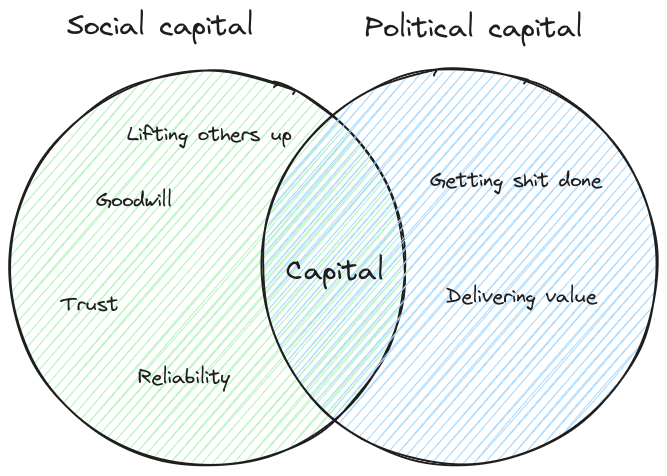
Social capital is the goodwill and trust you build with others, enabling you to influence them and get things done. Simply put - you get more of this if people like you.
Political capital is the influence and credibility you accumulate within an organization, allowing you to sway decisions and push initiatives forward. Simply put - you get more of this as you deliver on impactful projects and make a name for yourself while doing so.
As you can imagine, both of these are very intertwined.
Going back to our previous example… if you want your partner to agree to seeing the in-laws you’re going to have to earn some capital in the relationship.
I’m sure you instinctively know this, and now you have a name for it.
For the purposes of this newsletter, I’m just going to reference them both together as capital.
But here’s the thing—you don’t have to sell your soul to navigate them. Office politics are a reality you can’t ignore.
And I do mean every single workplace.
Every workplace has its power players and hidden dynamics.
Think about it—organizations are simply groups of people who get together to focus on a mission.
Simple in theory—complicated in practice as I’m sure some of you will attest to.
0%
Actionable Takeaways: How to Accrue Capital
Just Be a Great Reliable Teammate and Person.
How might you do this?
- Be Reliable for Delivering: The more you deliver on your commitments and drive results, the more credibility you gain. People notice when you follow through and produce outcomes that benefit the team or organization. Being reliable is a very underrated quality that most don’t think about.
- Build Alliances and Networks: Form strong relationships across teams and levels of leadership. Be the person others want to work with because they know you’re reliable and supportive. Regularly schedule coffee chats with others who are reliable in the organization, and you’ll form a great informal network to get things done faster.
- Help Others Succeed: The fastest way to build social capital is by lifting others up. Offer your expertise, provide mentorship, or assist in critical projects. When you help others win, they remember and are more inclined to back you when you need it.
- Be a Good Person: In most leadership books (and leadership === influence), they talk about charisma, relatability, likeability, etc.. I keep it simple. I find that just being a good, reliable person leads to people liking you (social capital). Some might think they don’t have “charisma” or “relatability” but these are skills you can develop. I’ll write about this in a future newsletter.
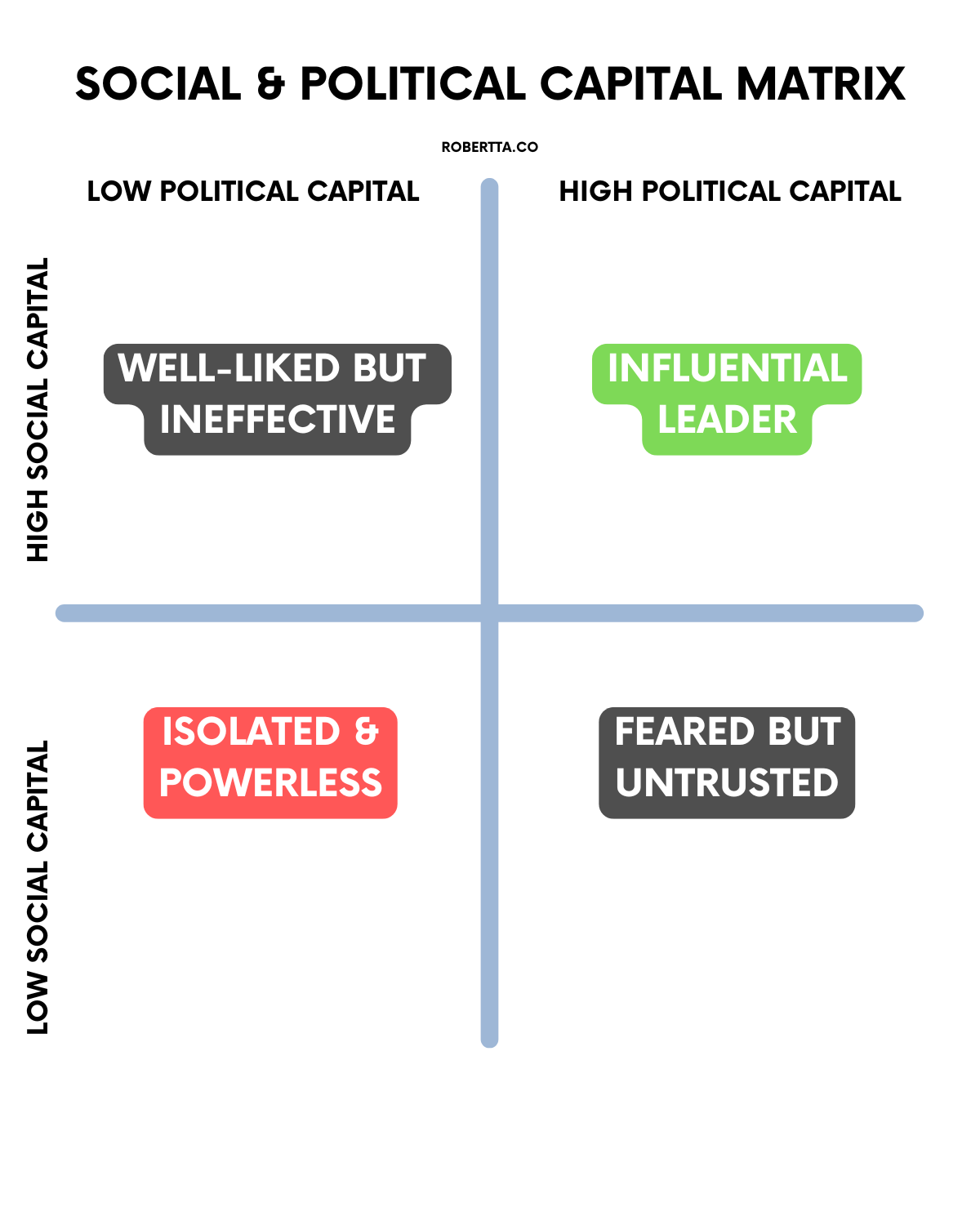
Deciding When to Spend Your Capital:
Did you know you’re spending it whenever you’re voicing an opinion in a meeting?
Are you spending your hard-earned capital wisely?
You can’t be pushing for every initiative or fighting every battle.
- High-Impact Projects: Use your capital to rally support for projects or initiatives that align with your long-term goals for your product (and career). For example, as a product leader, you might spend your political capital to secure resources for a project that drives significant value for the company.
- Critical Moments: Spend your capital when it really matters—like during times of organizational change, product pivots, or key decisions where your input can shape outcomes.
- Defending Your Team: Use your influence to shield your team from unreasonable demands, poorly thought-out initiatives, or distractions that could derail their focus.
Example in Product Leadership:
Imagine you’re leading a new product initiative.
You’ve built political capital by consistently delivering results, fostering cross-functional relationships, and backing others when they needed support.
Now, you need to push for additional resources.
This is where you leverage the goodwill and trust you’ve built.
You make your case by framing the project in terms of organizational goals, rallying key allies behind you, and spending your capital to get buy-in from leadership.
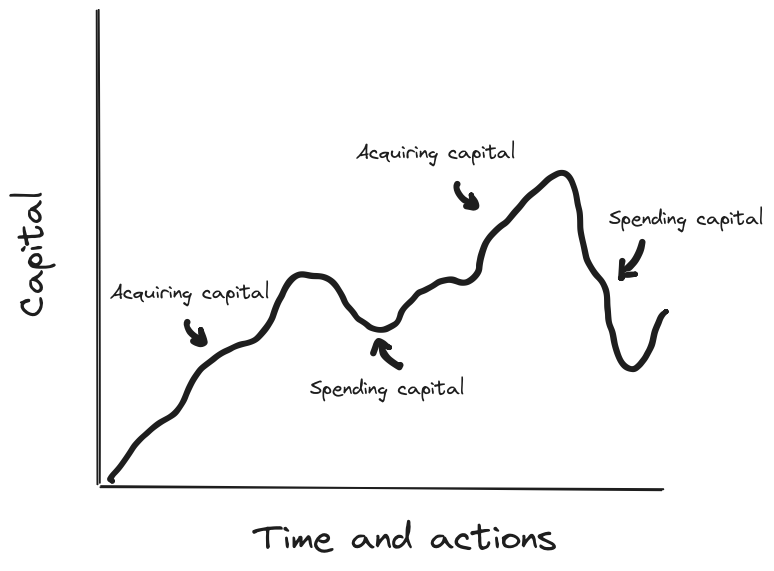
Remember, social and political capital is like money—you accumulate it over time and need to be intentional about how and when you spend it. Don’t waste it on trivial matters or power plays that don’t align with your broader goals.
- Observe Before Acting: Who’s got influence? Who’s just loud? Before jumping in, study the room. This gives you a broader and more informed perspective without getting sucked into drama.
- Build Real Relationships: Office politics are often about alliances—but that doesn’t mean you can’t build genuine ones. Invest time in connecting with people at all levels. It’s not about playing games; it’s about mutual respect. You can do this by leading with vulnerability.
- Choose Your Battles Wisely: Not every hill is worth dying on. Focus on the issues that align with your values and long-term goals. Knowing when to engage and when to let things go is key.
Additionally, here’s a short ~1 minute video I made about navigating office politics and managing conflict with stakeholders as a product leader.
Here are 4 things to think about… Now here’s the interesting part.
Be strategic about when to cash in the capital you’ve built:
The trick is balancing strategy with authenticity:
That’s it—it’s that simple.
You’ve saved up a big bank of capital.
Continue reading
Get the full newsletter, free.
Join founders and builders who read Self Aligned every week.
What I Did This Week:
This week, I practiced mapping out the relationships and influence within a key project team I’m working with.
People were very divided on a big decision for the product.
I was able to navigate a contentious decision by just focusing on the better business outcome.
I just kept asking:
“What’s better for the business?”
“What are the tradeoffs for the business and our customers?”
Eventually, we got to the other side.
By building stronger relationships and mapping common goals, I was able to steer the team toward a better outcome without getting caught up in politics.
Challenge: Build a Strategic Connection
Office politics doesn’t have to be toxic—focus on building connections with integrity.
This week, identify someone you haven’t built a relationship with yet, who is influential in your workplace.
Just think to yourself: “Whose name do I keep hearing in the organization, and I don’t know them personally yet?”
Make a list.
Reach out.
It doesn’t need to be formal—a simple “let’s grab coffee” works.
The goal?
Build rapport naturally and understand their perspective.
You’ll be surprised at how much this opens up opportunities and makes your life easier at work in the future.
An example calendar invite to help you:
Hey there [person], my name is [your name] and I work in [this department]. I wanted to reach out for a virtual coffee connect to get to know you a bit better and see if I can provide value to any of your work. Agenda:
- Let’s exchange stories about our respective work and life journeys
- If you had a crystal ball that could tell you anything about the future, what would you want to know?
- What are some projects you’re working on right now? Can I help out?
The goal is to genuinely connect and create a foundation of trust.
Office politics can be navigated with integrity when you focus on shared interests and long-term goals.
You can’t avoid office politics—but you can navigate them without compromising who you are.
Don’t sell your soul.
Keep your values front and center, play the long game, and watch how your career transforms.
Now here’s a cute picture of Nibbler. I know that’s why you’re **really **here.

What did you think of today’s newsletter? I’d love to hear from you.
Why Subscribe?
Each week, you’ll receive 1 ABC (Advice, Breakthrough, and Challenge) that will save you months of time and speed up your growth:
- Advice:* Simple life lessons and stories with actionable steps to level up your personal development and leadership skills.*
- Breakthrough Recommendation:* Curated insights or resources to accelerate your growth and career.*
- Challenge:* Exercises, reflections, or mental models you can immediately apply in your daily life to improve your leadership, transform your communication, and master your emotions.*
Join a community of like-minded people who are all about growth!
Thanks for reading! You can get more actionable insights and advice to help you grow in my newsletter. Each week, I share 1 piece of advice, 1 breakthrough recommendation, and 1 challenge for people interested in growing. Join us!
Stay tuned for next week’s edition!
P.S. Want reminders on growth, empathy, and leadership? Follow me on LinkedIn.