
This Week’s ABC
Advice: Anger begets more anger
I’ve been reflecting on some of Thich Nhat Hanh’s (known as the father of mindfulness) writings.
I’ve been integrating his thinking into mine to intentionally get better at managing my emotions.
I’ve learned that emotions are simply “a basic physiological state characterized by identifiable autonomic or bodily changes”.
Emotions are just physiological symptoms that occur in the body.
So what IS anger?
The way I experience it:
My forehead tenses.
My chest gets tight.
My heart rate spikes.
My mind starts thinking of all the ways to get away from what’s in front of me.
→ I’ve learned that anger is often a mask for deeper emotions: fear, hurt, or unmet expectations.
This is important to understand because this means that the symptom is anger, and the root cause is something else (fear, in my case most of the time).
For men in particular, I’ve learned that anger comes from 5 sources.
The 5 Sources of Anger for Men
- Seeking revenge: You’re hurt and want to make things fair.
- Preventing disaster: You feel helpless and need control.
- Pushing others away: You’re discouraged and withdraw to avoid judgment.
- Getting attention: You feel disrespected and lash out for acknowledgment or to prove your importance.
- Expressing difficult feelings: You’re overwhelmed and want to reduce your discomfort.
I’ve learned it’s important to identify where it comes from in the moment. When you name it, you keep your power and you keep yourself in control.
There are healthy and unhealthy (toxic) ways of dealing with anger and its primary underlying feelings.
Let me just say to all the men out there: The world will tell you that you should just repress how you feel. That you should be steady and stoic all the time.
The people and the world around you will reinforce this toxic thinking either implicitly or explicitly.
I’ve learned the hard way that it’s NOT healthy to live like this.
Your mind will just end up as a constant pressure cooker trapped with repressed emotions that become visceral with age.
Your anger is valid, your anger is justified.
The feeling itself, is real.
And how you ACT upon that feeling, determines who you are.
You can either deal with your anger in healthy ways or toxic ways.
The choice is yours.
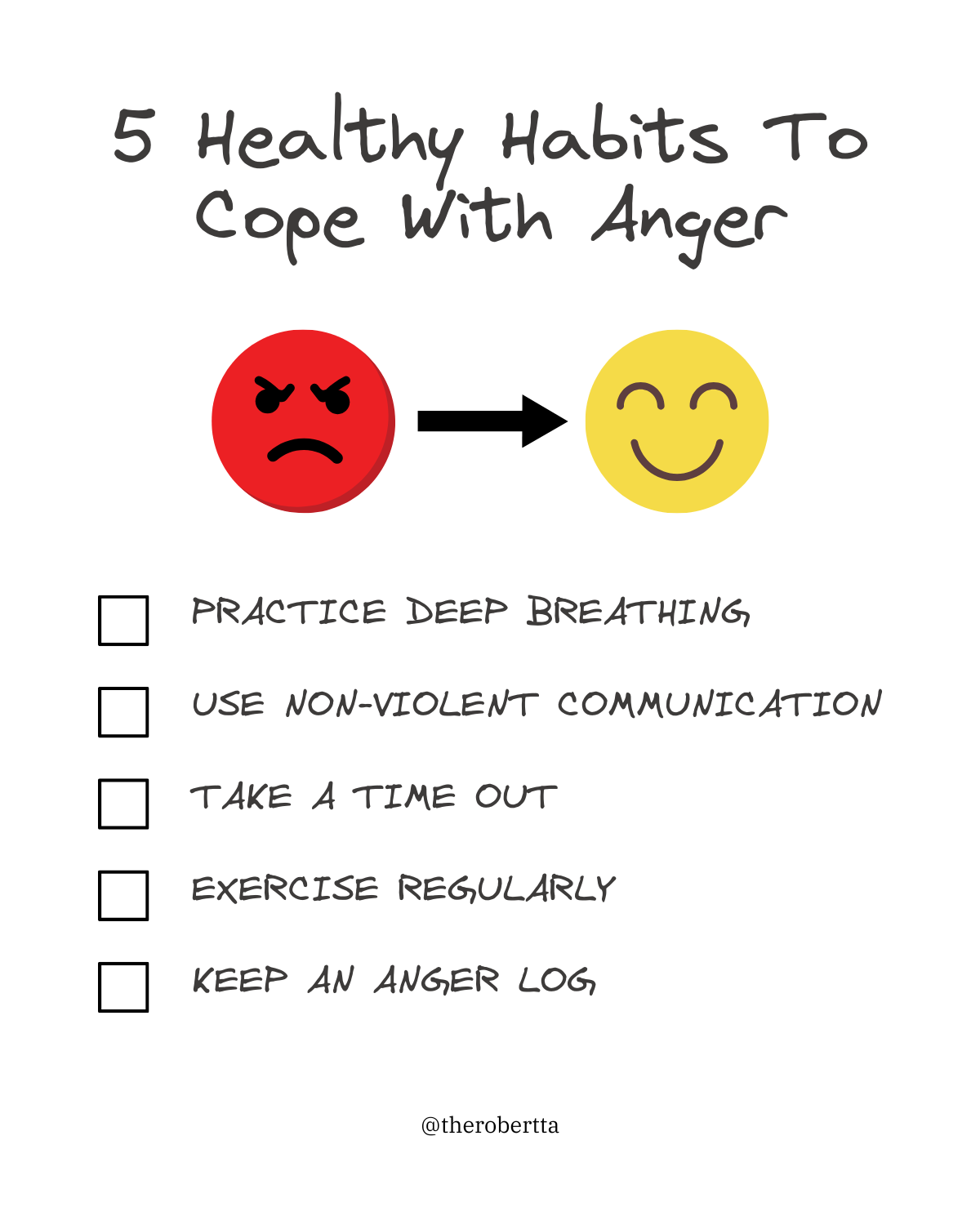
5 Healthy Habits To Cope With Anger
- Practice deep breathing: When you feel anger rising, take slow, deep breaths to help calm your body and mind.
- Use non-violent communication: Express your feelings and needs clearly and respectfully without attacking or blaming others.
- Take a time out: Remove yourself from the triggering situation temporarily to cool down and gain perspective. Taking a pause helps to de-escalate.
- Exercise regularly: Engaging in physical activity helps release tension and reduce stress, making it easier to manage anger. Gym time is sacred time.
- Keep an anger log: Track your anger triggers, feelings, and responses to gain insight into your patterns and develop better coping strategies. I do this in my journal.
Advice: 5 habits to deal with anger.
Breakthrough: Thich Nhat Hanh’s teachings on anger.
Challenge: One small action to turn anger into clarity this week.
5 Toxic Habits To Cope With Anger
- Venting or “blowing off steam”: Yelling and venting can actually keep arousal levels high and can reinforce the anger instead of deflating it.
- Suppressing anger: Bottling up your emotions or denying anger can lead to increased stress and potential health problems.
- Ruminating on the situation: Dwelling on what made you angry without taking constructive action can intensify negative feelings.
- Lashing out verbally: Aggressive outbursts damage relationships and often make the situation worse.
- Using substances to avoid: Turning to alcohol or drugs to deal with anger can lead to worse problems (addiction) and doesn’t address the underlying issues.
Every single time I’ve ever chosen a toxic way to deal with anger, I’ve been full of regret.
Don’t do that. Don’t make the same mistakes I have.
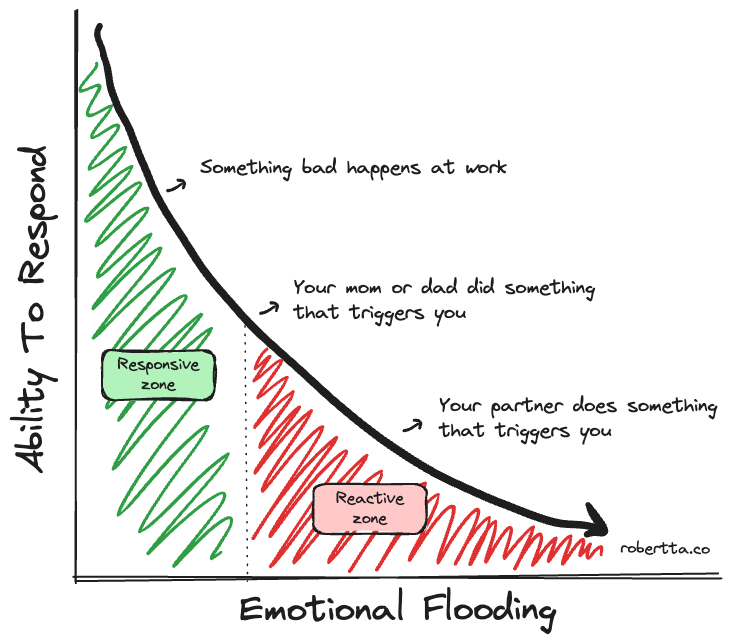
Everybody has triggers that lead them to be emotionally off-balance and emotionally flooded—meaning, you’re so flooded with adrenaline, cortisol release, and your heart rate spiking, that you simply cannot make logical choices.
It makes it easier to choose the healthy ways once you’re there.
“Anger can never remove anger; anger can only promote more anger”“Take care of your anger as you would a child. Nurture it, listen to it, and guide it.” —Thich Nhat Hanh
→ The reason why: the toxic ways to deal with anger only harm myself in the long run.# Breakthrough: The Empty Boat Story
“A monk decides to meditate alone. Away from his monastery, he takes a boat and goes to the middle of the lake, closes his eyes and begins to meditate. After a few hours of unperturbed silence, he suddenly feels the blow of another boat hitting his. With his eyes still closed, he feels his anger rising and, when he opens his eyes, he is ready to shout at the boatman who dared to disturb his meditation. But when he opened his eyes, saw that it was an empty boat, not tied up, floating in the middle of the lake… At that moment, the monk achieves self-realization and understands that anger is within him; it simply needs to hit an external object to provoke it. After that, whenever he meets someone who irritates or provokes his anger, he remembers; the other person is just an empty boat. Anger is inside me.” —Thich Nhat Hanh

Your triggers are determined ultimately by your nature and nurture.
The question only you can answer is why?
Here are 2 questions to reflect on a triggering situation, to help you determine your own why.
2 Questions To Understand Your Anger
1. What elements of this situation remind me of a difficult relationship or dynamic from my past?
→ Am I reacting to this person or behavior because it mirrors something I experienced growing up?
This question has levels to it.
Some elements of a situation can include:
- The type of relationship at hand
- The power dynamics of the relationship
- What was said, and how it was said
- What was done, and how it was done
- The gender of the person
- The race of the person
- … and so many more elements
In my view of the world, your brain has a model that’s constantly updating based on new information and experiences.
A model based on nature, and nurture.
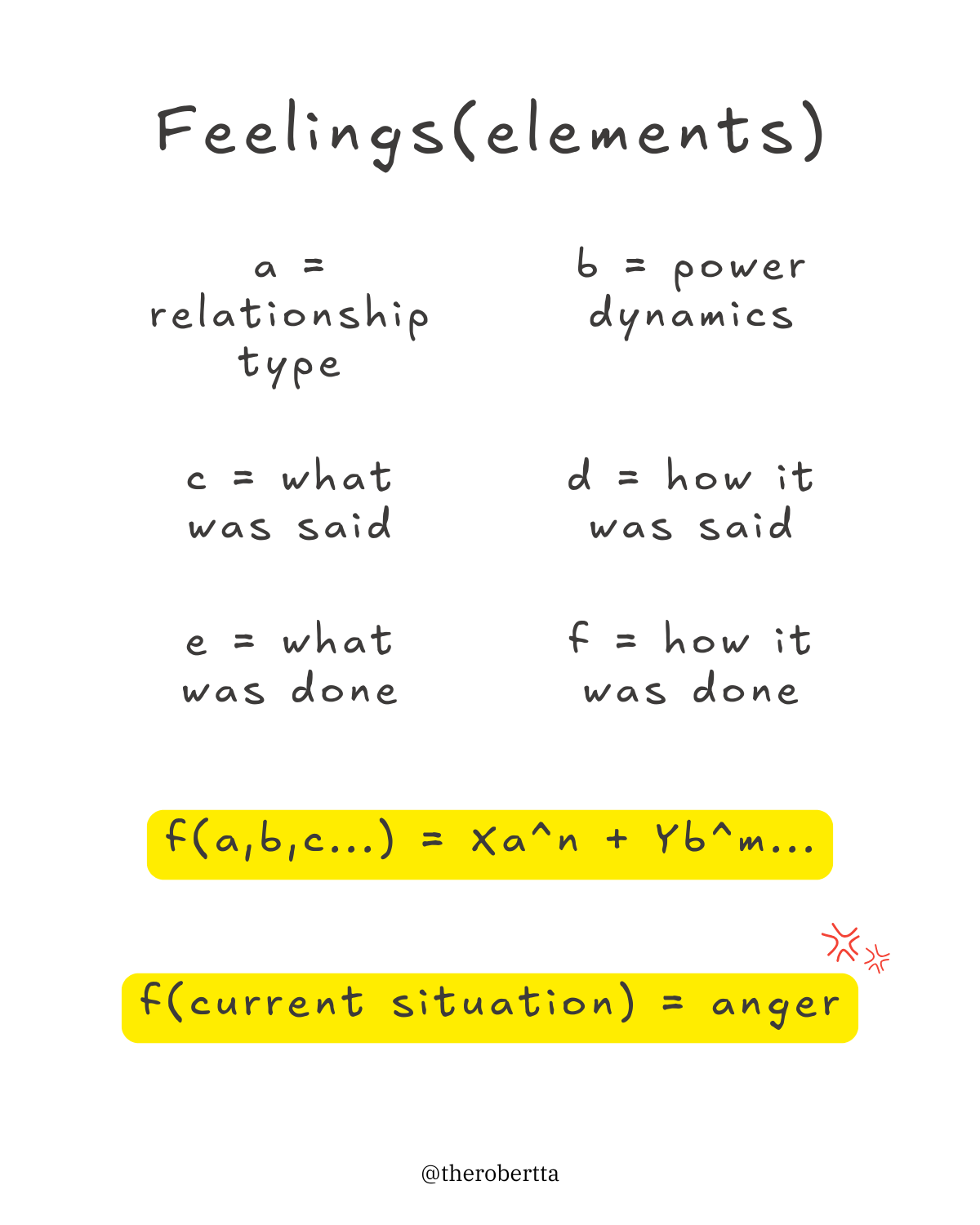
It’s important to break down the elements of the current situation to figure out your model.
Why did you get flooded?
What elements in particular were triggering?
Only you can answer these, to better understand yourself, to be a better person.
2. Am I overextending myself emotionally or physically?
→ Could my anger be a signal that I need to set better boundaries or prioritize my own well-being?
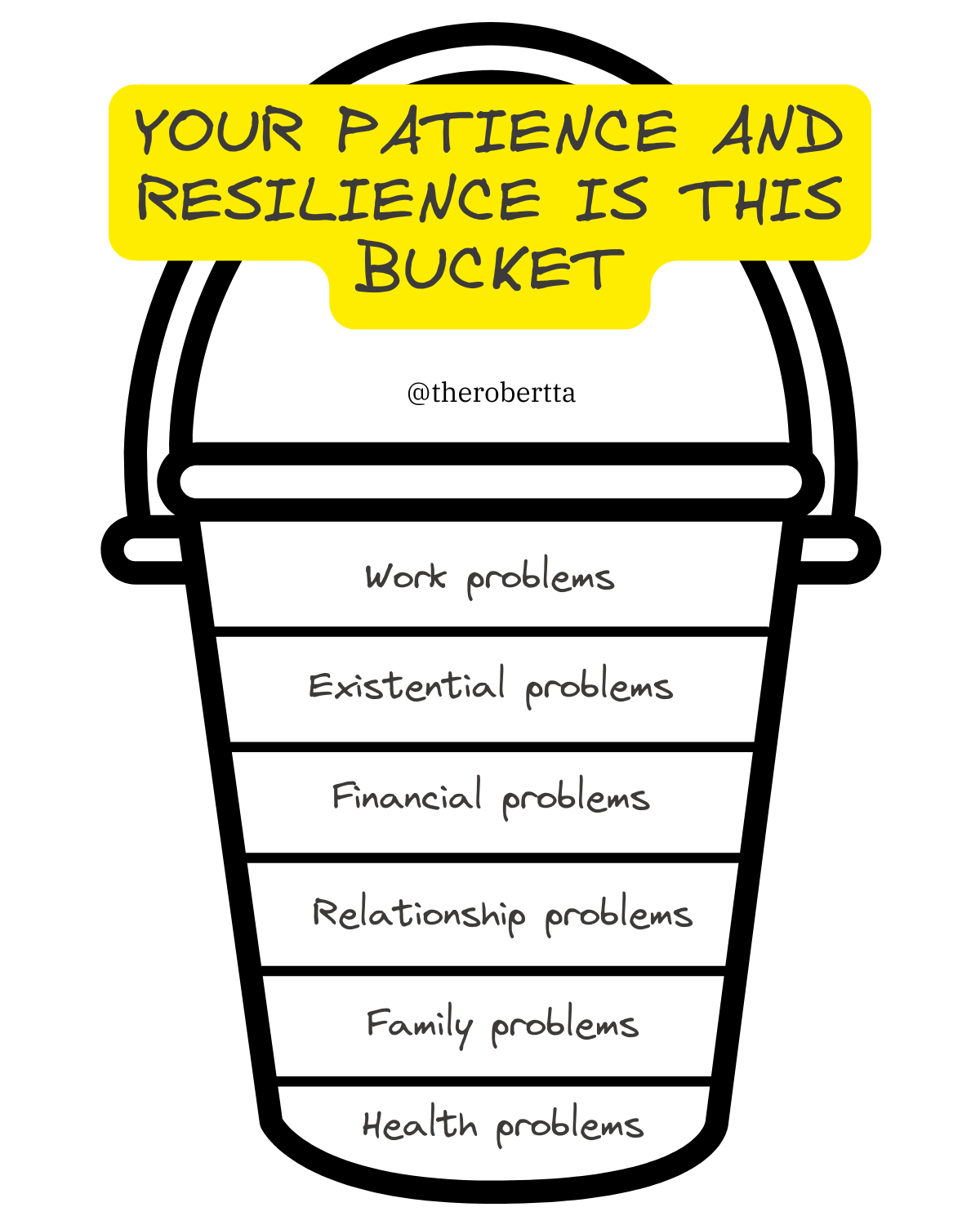
We all have a certain patience bucket, as I like to think of it. Water goes in from different sources and the bucket can overflow.
The overflow is emotional flooding.
I’ve had a lot going into my bucket recently, and I made the mistake of not realizing how limited my patience has been because of it:
- My brother relapsed in his mental health
- My aunt, uncle, and baby cousin were affected by a hurricane
- My job changed
- My living situation changed
I asked my therapist once, “How do I increase my patience?”
**The answer: **You can either make the bucket stronger and bigger (resilience), or stop the water from coming in (boundaries), or transform the water into something else (mindfulness).
Once you’ve properly reflected, then you can take steps to set yourself up for successfully managing your emotions in the future.
What happens when you’ve already lost it and acted out in anger?
There have been many times in my life where I wish I acted differently: with family, with romantic partners, with myself.
In these moments of regret, I’ve come to learn that you can only do a few things.
Anger is like fire—it can either destroy or illuminate, depending on how we manage it. This simple story teaches a powerful lesson: anger lives inside you.
Nobody else is the cause.
You’re not in the right state of mind.
Your number one priority in these moments becomes to get back to center.
The emotional flooding comes from within you.
Continue reading
Get the full newsletter, free.
Join founders and builders who read Self Aligned every week.
1. Take Ownership
→ Acknowledge the harm. Avoid minimizing what you said or did.
Example: “I realize what I said was hurtful, and I deeply regret it. I am sorry for the harm I caused.”
No explanations. No excuses. No justifications. No defensiveness.
2. Commit To Improvement
→ Commit to actionable changes. Let them know you’re working on it and mean it.
Example: “I’ve joined a men’s group or therapy to work on emotional control, and I want to show up differently.”
If you want to be better, you need to do better.
3. Reflect and Understand
Anger is an emotional signal. What triggered you? Was it fear, insecurity, or something unresolved from your childhood?
Example: Why did I lash out? What values did I ignore in that moment? What elements of this situation were similar to other experiences I’ve had?
How you choose to respond defines you.
Nobody can take ownership of your feelings other than you.
What I Did This Week
This week, I had a couple of sessions with my therapist to try to understand why I had so much anger recently.
I’m still working through it.
It’s like a big puzzle piece, and I don’t quite have all the pieces yet. But I know if I keep spending time on it, I will get there.
I still have work to do.
And I’m gonna get after it.
Effort begets results.
And I have effort to give.
Challenge: Pause & Reflect
When you feel next feel anger bubbling, stop what you’re doing:
- Take 5 deep breaths, focusing on extending the exhale.
- Name the emotion: “I’m feeling anger in my body” or “I’m feeling frustration in my body.”
This takes less than 2 minutes and can shift your response entirely.
You got this!
Know someone that would find this helpful? 🔁 Share this post.
ABCs for Growth by Robert Ta is a reader-supported publication. To receive new posts and support my work, consider becoming a free or paid subscriber.
P.S. Want reminders on growth, empathy, and leadership? Follow me on LinkedIn, Threads, and Twitter.