
This Week’s ABC…
- Advice of the Week - How I use deliberate practice to progress faster than others at mastering any skill.
- Breakthrough Recommendation - Explore the book that taught me deliberate practice, which is the ultimate guide to achieving excellence.
- Challenge - Start your journey of deliberate practice with one small, focused action.
Advice of the Week: Master Any Skill with Deliberate Practice
Life Lesson
I asked the coach if I could be the ball boy. Other people thought that would be embarrassing—and honestly I didn’t care.
Before school, I would wake up at 5 AM and practice for a couple hours.
After school, I would practice for another few hours.
I would run liners by myself like a crazy kid, to improve my endurance.
I watched videos of NBA players and how they practiced.
I tried replicating their moves—their shooting form, their crossovers.
I did this everyday for a year.
The next year in 10th grade, I not only made the team…
I started.
I became one of the best 3 point shooters on the team.
Years later, I realized why I got so much better so fast: deliberate practice.
I never made the NBA—I blame my asian parents for forcing me down the typical engineer/doctor path. (JK mom and dad)
But this experience taught me that I could be complete trash at a skill, and through intentionally working hard—I could succeed.
I never thought I was very smart, or good at anything.
But damned if my parents didn’t teach me how to work hard.
That was my only skill and I latched onto it for dear life.
I still do today, in everything I apply myself to.
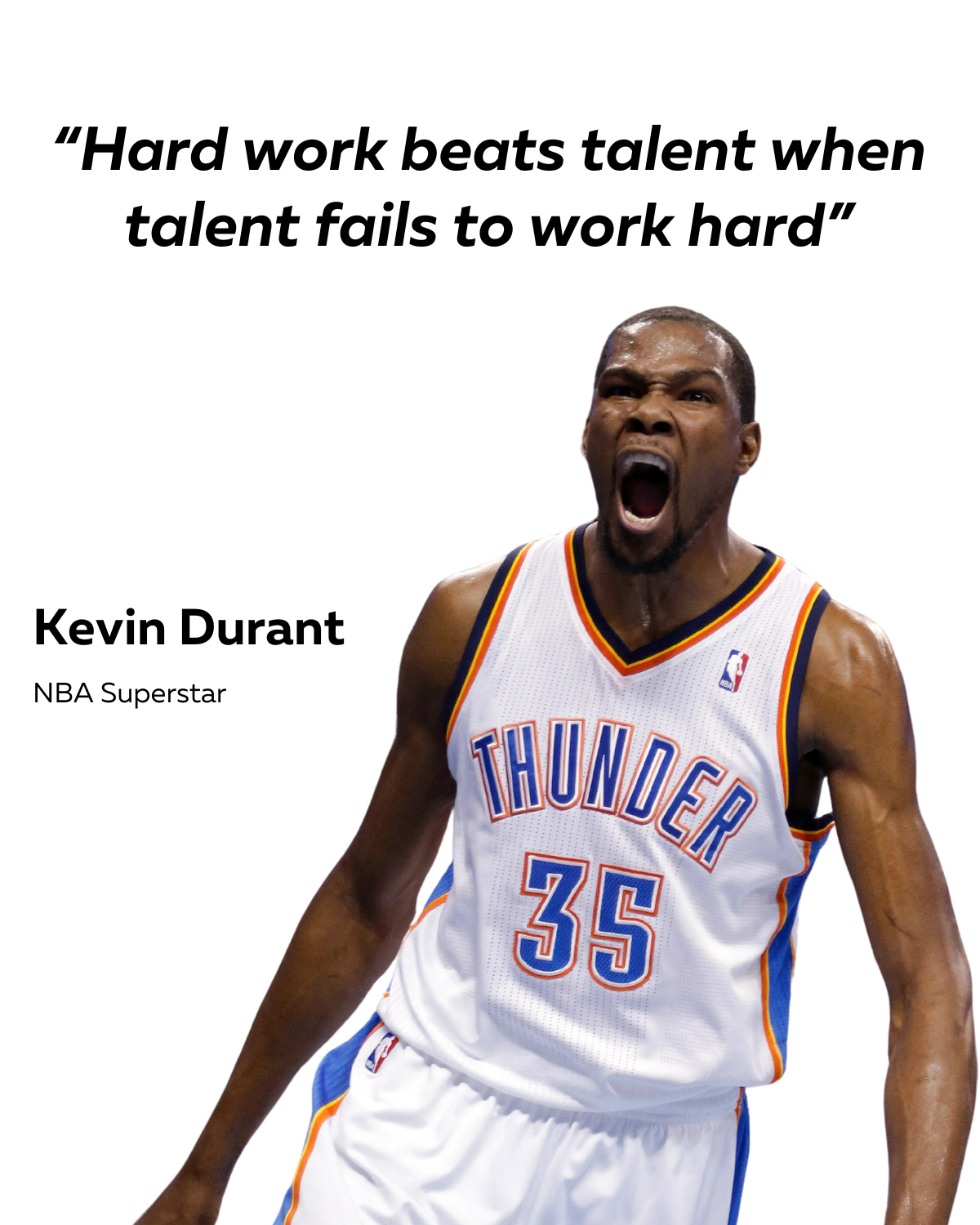
For years, I thought talent was the secret to greatness.
Then, I discovered deliberate practice by accident through basketball, and my perspective changed completely.
Talent might give you a head start, but deliberate practice is what makes you unstoppable.
Putting in the hours is very important—and it’s also about how you use those hours to push your limits and improve intentionally.
That’s what this week’s breakthrough is about.
When I was in 8th grade, I started playing basketball. I loved it, and decided I would try to make the team in the 9th grade.
I didn’t make it… I was devastated.
But it made sense: I had no jumpshot, and my endurance was terrible.
I wanted to be around organized basketball and understand what practicing really meant.
All from having no jumpshot and no endurance.
Breakthrough Recommendation: “Peak” by Anders Ericsson and Robert Pool
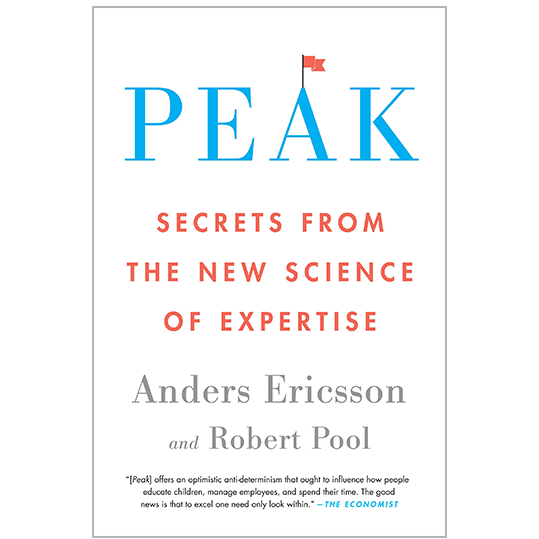
If you want to dive deep into the science of mastering any skill, “Peak” by Anders Ericsson and Robert Pool is the book you need.
He reveals how experts in every field—from chess grandmasters to elite athletes—use specific, structured practice methods to reach the top.
Our brains are capable of forming new neural connections and pathways (skills and skill effectiveness) throughout life—given the right practice, deliberate practice!
3 Types of Practice
The book talks about 3 types of practice that people engage in.
- Naive Practice: Simply repeating an activity with little improvement.
- Purposeful Practice: More structured, with specific goals and feedback, but still limited.
- Deliberate Practice: The most effective form, characterized by…
- Specific, well-defined goals
- Intense focus
- Immediate feedback
- Constant adjustment
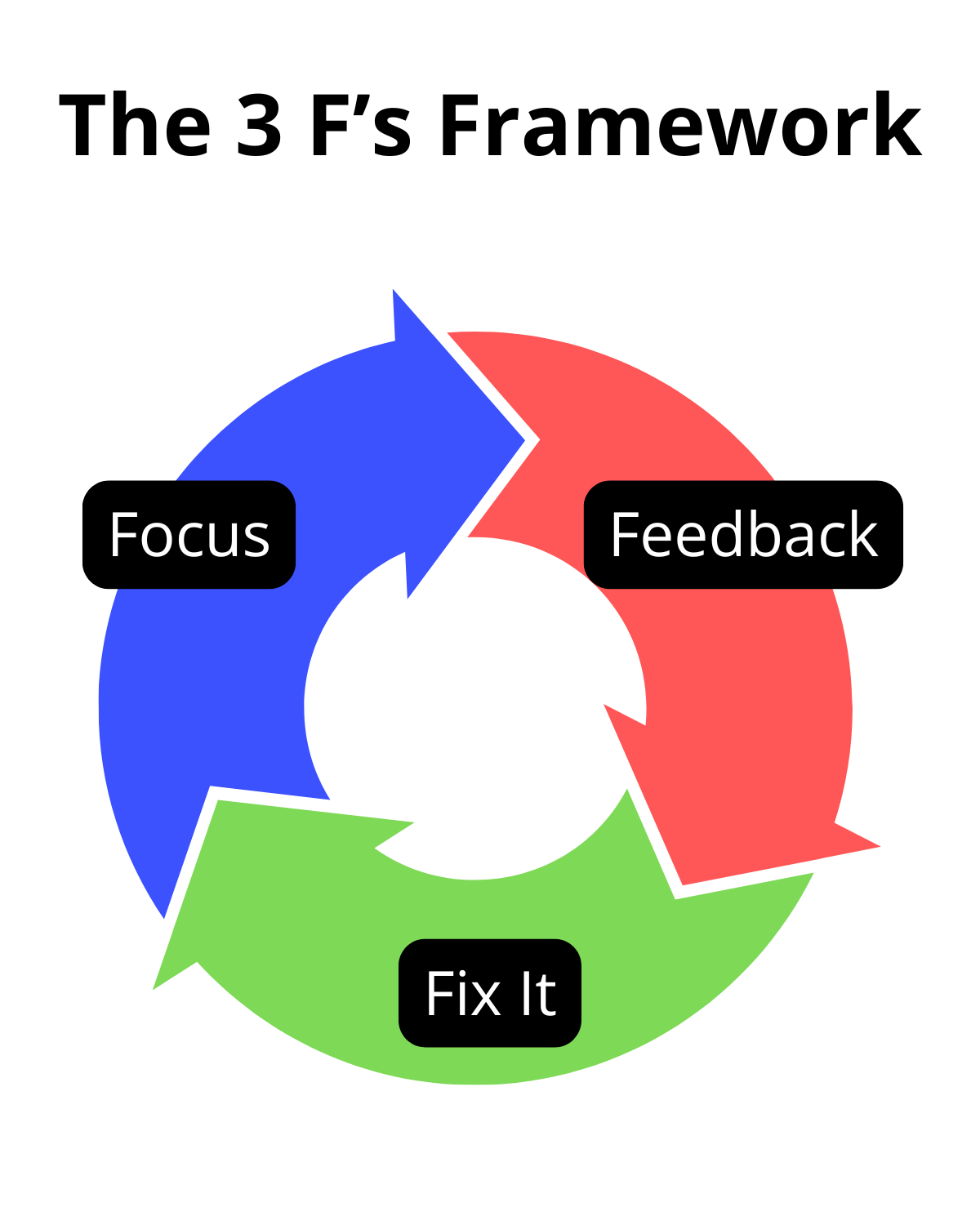
Further, the book gives you a simple framework for deliberate practice.
The 3 F’s Framework To Improve At Anything
- Focus: Deliberate practice is about targeted effort. Identify specific areas of weakness and work on them with full concentration. You’re not just doing something over and over mindlessly; you’re refining your approach every time, intentionally.
- Feedback: Seek immediate feedback. Whether it’s from a coach, mentor, or even self-reflection, you need to know what you’re doing wrong to correct it. Don’t just rely on how it feels—get concrete insights into your progress.
- **Fix It: **Integrate your learnings from the feedback and try again intentionally. Use mental representations (the mental image of what a successful performance or execution looks like) to improve.
Mental Representations are EVERYTHING.
As your skills improve, your mental representations become more refined, helping you identify mistakes and provide better feedback.
Experts, whether chess players or athletes, rely on these advanced mental models for faster, more accurate decision-making in high-pressure situations.
Why?
If you excel at this, you can effectively identify your mistakes in performance and can zoom in on them to improve further.
Better mental representations lead to better feedback, and better training, which leads to better mental representations, and on and on.
Makes sense.
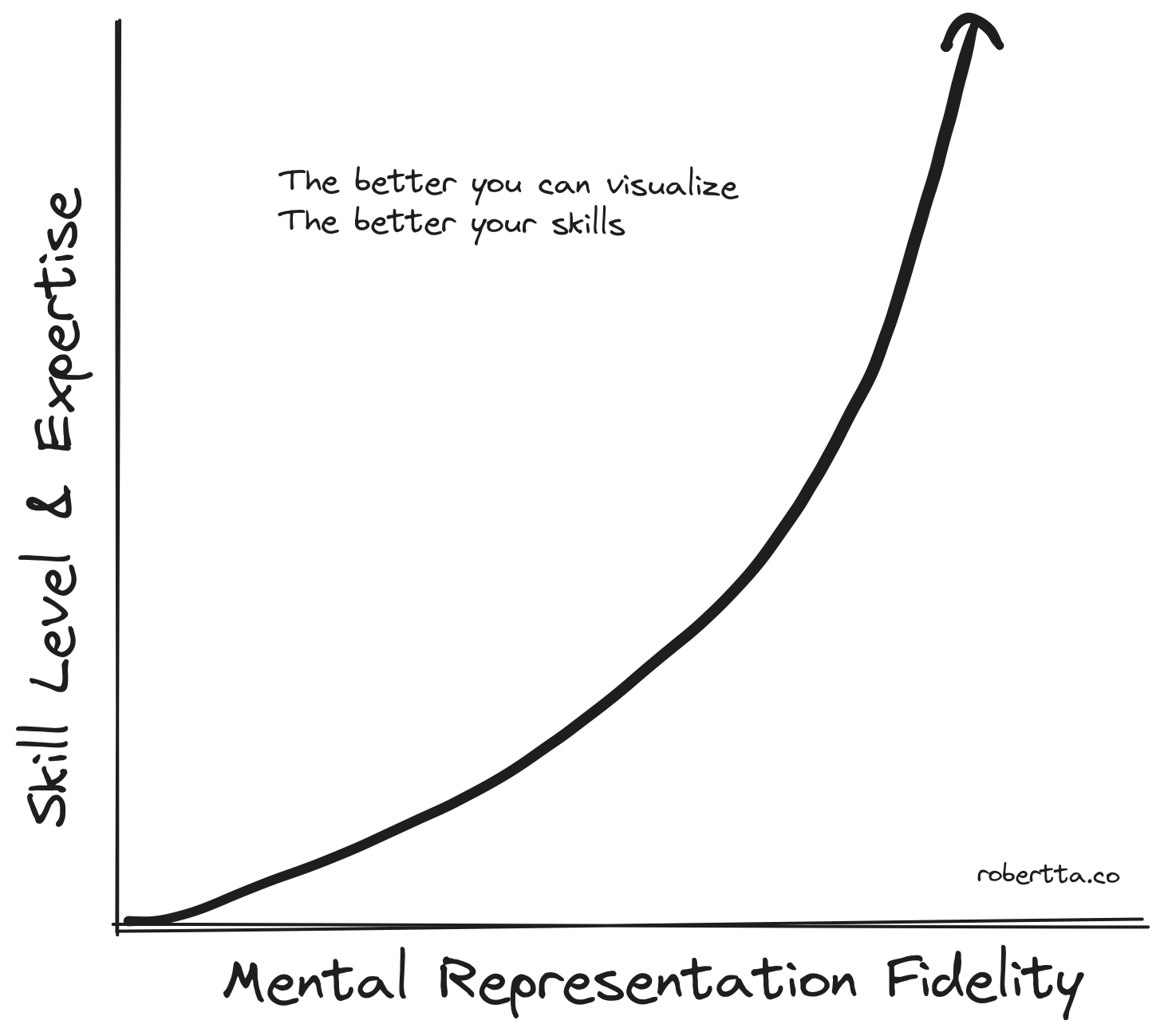
I think of it as visualization—the clearer the picture or video in the your head (higher fidelity), the better you are and faster you will improve at the skill.
It’s not about practicing more; it’s about practicing smarter. Ericsson’s research on deliberate practice is groundbreaking, and his book is empowering.
He shows that the human brain is highly adaptable.
In the book, the author describes a simple framework you can use IMMEDIATELY.
One of my biggest takeaways from this book is that developing effective mental representations is the key purpose of deliberate practice.
You can make exponential progress in whatever you’re doing, just through visualization.
Continue reading
Get the full newsletter, free.
Join founders and builders who read Self Aligned every week.
Examples in a business setting…
This could be a visualization of how a public speaking performance will turn out.
What does the audience look like? What does the setting look like? If you trip on a word, how might that feel?
Or how well you do user research.
How might the opener go? If you succeed at gaining great insights, how will you feel? If the conversation flows well, what does that look like?
Or how well you communicate in a decisive meeting.
How might you feel during the high stakes meeting? If you communicate clearly and convey your intentions decisively, what might that look like? Will it be virtual or in person? Will you be standing or sitting? Will you have slides or a document to present, or just yourself?
Or how well you facilitate a large group of engineers to work together towards a common goal with quarterly planning.
What will it feel like to address everybody? What might it feel like to get everybody moving the same way? What quotes or data points will back your influence strategy?
The above are several examples of how I have used deliberate practice to accelerate in my career by visualizing success and everything it takes to get there.
It’ll work for you too.
My Favorite Quote
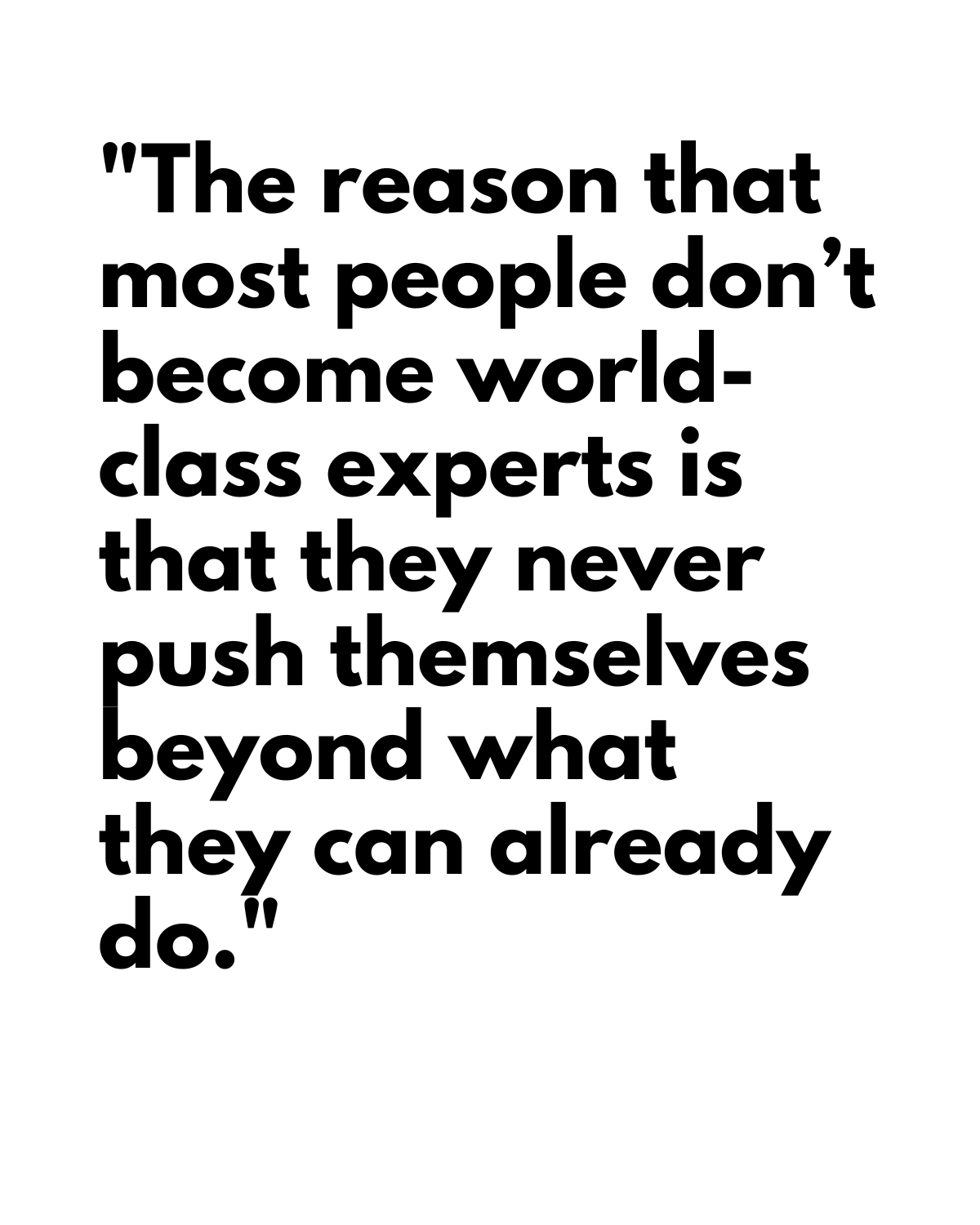
We all hit plateaus.
This quote hits home because it underscores the importance of pushing past the plateaus we all encounter at some point.
It’s a powerful reminder that deliberate practice is the difference between mediocrity and mastery.
Keep pushing.
What I Did This Week
This week, I came back to a boulder I saw years ago at in Tahoe but deemed too high for me.
It was too scary and my mental game wasn’t there.
This time… it didn’t look so high.
It went first try.
I warmed up on it honestly.
Past me would’ve been shocked to hear that.
I had improved in every facet of my climbing: tactics, strategy, movement, strength, and most importantly mental game.
The few years in between I had worked on everything I could and I could FEEL the progress.
The rock hadn’t changed.
I changed.
I improved.
Damn I love the feeling of progress.
It felt GREAT.
Challenge: Start Deliberate Practice Today
This week, identify one skill you want to master.
It could be anything you’re already working on—coding, communication, leadership, etc.
Now, apply the principles of deliberate practice and execute the skill intentionally:
- Focus: go execute on the skill - actually do the thing!
- Feedback: garner feedback on how you did by asking a mentor, or even record yourself and watch. Practicing in a mirror helps too. Feels weird. But it helps (I’ve tried).
- Fix it: now that you know where you can improve, visualize how it might go better.
- Then do it all over again.
Document your progress, and reflect on what worked and what didn’t.
Remember, greatness isn’t about being the best—it’s about being better than you were yesterday.
Deliberate practice means constantly challenging yourself with tasks just beyond your current abilities. That’s where real growth happens.
Start small.
Be consistent.
Work hard.
Practice intentionally.
GET AFTER IT.
You got this!
Liked this article? 💚 Click the like button.
Feedback or addition? 💬 Add a comment.
Know someone that would find this helpful? 🔁 Share this post.
Please take a 5 second survey to help me make this newsletter better for you.
P.S. Want reminders on growth, empathy, and leadership? Follow me on LinkedIn, Threads, and Twitter.